Quantum computing is entering one of the most significant periods in its history. After years of research, experimentation, and incremental progress, the launch of Next-Generation Quantum Processors in 2026 is expected to push quantum technology into a new phase of commercial and scientific relevance.
Unlike earlier experimental systems, these advanced quantum processors are being designed with improved qubit stability, stronger error correction, higher scalability, and enhanced computational capabilities. Researchers, enterprises, governments, and technology companies increasingly view 2026 as a turning point that could redefine the future of computing.
The growing maturity of quantum hardware is attracting investments across healthcare, finance, manufacturing, cybersecurity, artificial intelligence, and scientific research. Organizations are preparing for a world where quantum processing units (QPUs) can solve highly complex problems that remain impractical even for the most powerful classical supercomputers.
As quantum innovation accelerates, businesses and policymakers are asking critical questions:
What makes next-generation quantum processors different?
How will industries benefit?
What challenges still remain?
How will cybersecurity evolve?
What comes after 2026?
This comprehensive guide explores the technologies, opportunities, risks, and long-term implications surrounding the launch of Next-Generation Quantum Processors and their impact on the global technology landscape.
What Are Next-Generation Quantum Processors and Why Are They Important in 2026?
Next-Generation Quantum Processors represent a major advancement in quantum computing, offering higher qubit counts, improved stability, stronger error correction, and greater scalability than previous generations of quantum chips. Their importance in 2026 stems from their ability to move quantum computing closer to practical, real-world applications across industries.
Quantum computing has long promised transformative capabilities, but hardware limitations have slowed widespread adoption. Earlier quantum chips demonstrated scientific potential but struggled with noise, instability, and short coherence times.
The new generation of quantum hardware aims to overcome many of these barriers.
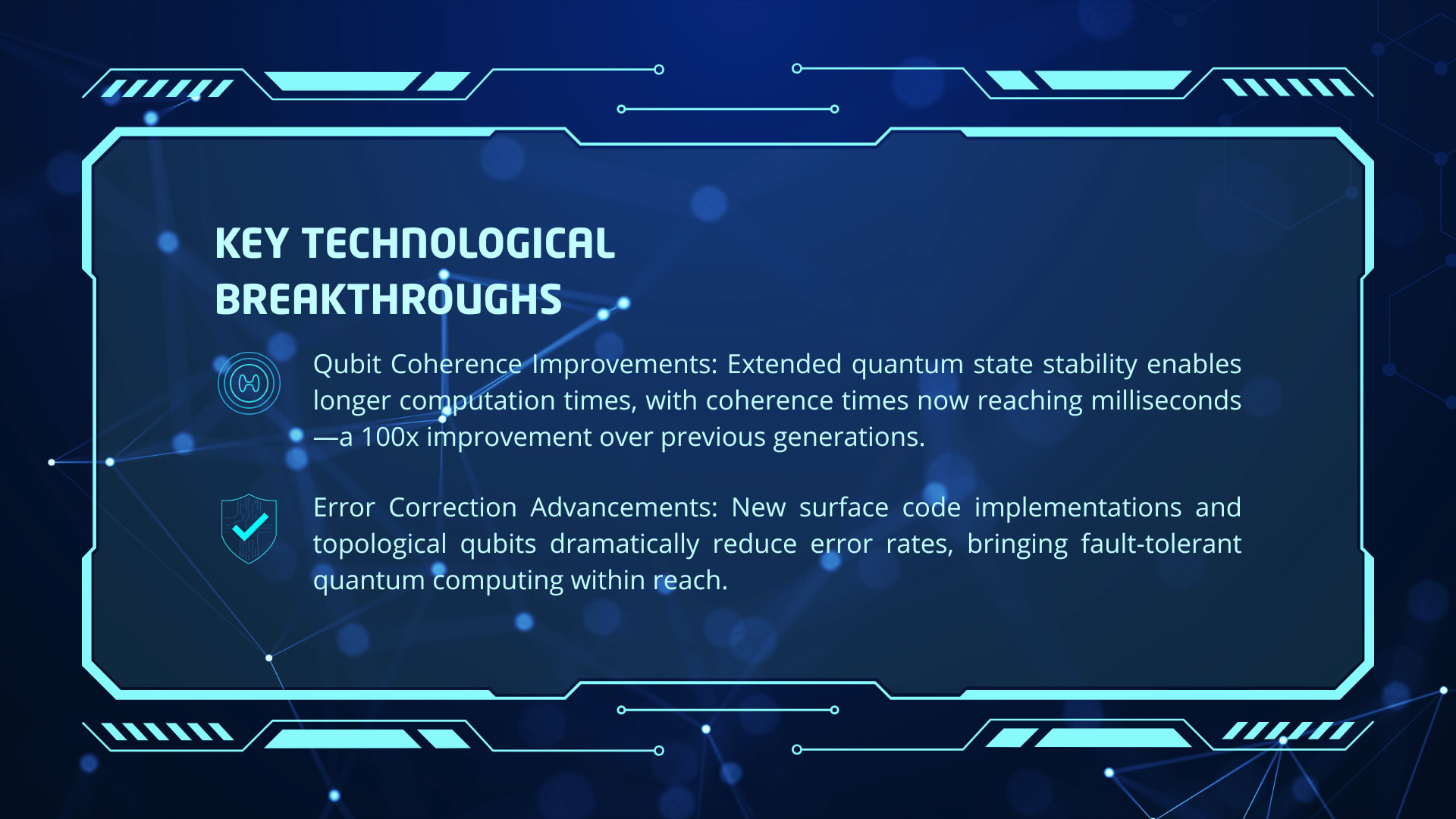
Key improvements include:
Increased qubit quality
Enhanced quantum architecture
Better error correction techniques
Longer coherence times
More reliable quantum algorithms
Greater enterprise readiness
The significance of 2026 lies in the convergence of years of research, investment, and engineering breakthroughs that are bringing practical quantum computing closer to reality.
What makes next-generation quantum processors different from earlier quantum chips?
Next-Generation Quantum Processors differ from earlier quantum chips through improved reliability, larger qubit systems, superior error correction, and enhanced scalability. These advancements enable more meaningful computations and reduce the limitations that historically constrained quantum performance.
Earlier quantum systems primarily served as research platforms. They demonstrated concepts such as superposition and entanglement but struggled to perform useful computations consistently.
Modern processors improve upon earlier designs by:
Reducing operational errors
Extending coherence times
Supporting larger qubit networks
Enhancing processor connectivity
Improving computational fidelity
The result is a more capable quantum computing environment suitable for enterprise and scientific applications.
How have quantum processing units evolved over the past decade?
Quantum processing units have evolved dramatically over the last ten years.
Major milestones include:
Early demonstrations of programmable qubits
Development of superconducting quantum chips
Emergence of trapped-ion systems
Achievement of limited quantum supremacy demonstrations
Growth in cloud-accessible quantum computing platforms
Integration of advanced quantum control systems
Researchers have steadily increased qubit counts while improving reliability and reducing noise.
The evolution resembles the early history of classical computing, where each generation delivered greater capability and broader applicability.
Which technological breakthroughs are enabling quantum hardware advancements in 2026?
Several breakthroughs are driving progress:
Advanced superconducting materials
Improved cryogenic engineering
Quantum error correction frameworks
Better fabrication techniques
Novel quantum architectures
Enhanced qubit control systems
AI-assisted quantum optimization
These innovations collectively contribute to more stable and scalable quantum hardware.
How do next-generation quantum processors work compared to classical processors?
Next-Generation Quantum Processors operate using qubits that exploit quantum mechanics, whereas classical processors rely on binary bits. This allows quantum systems to process certain complex calculations far more efficiently than conventional computing systems.
Classical computers use bits represented as either 0 or 1.
Quantum systems use qubits that can exist in multiple states simultaneously.
This capability enables:
Parallel computational exploration
Complex optimization
Advanced simulation
Large-scale data analysis
The distinction creates opportunities for solving problems that overwhelm traditional computing infrastructure.
What role do qubits play in modern quantum computing systems?
Qubits are the foundational building blocks of quantum computing.
Their importance includes:
Information storage
Quantum state manipulation
Parallel computational pathways
Entanglement-based processing
Higher-quality qubits directly improve processor performance and reliability.
Modern quantum processors increasingly focus on creating logical qubits that remain stable despite environmental interference.
How do superposition and entanglement improve computational performance?
Two core principles drive quantum advantages:
Superposition
Allows qubits to represent multiple states simultaneously.
Entanglement
Creates correlations between qubits that enable coordinated computational behavior.
Together, they help quantum systems:
Explore multiple possibilities at once
Optimize complex systems
Accelerate specific calculations
Enhance simulation capabilities
These properties form the foundation of quantum computing power.
Why is 2026 considered a milestone year for quantum computing innovation?
The year 2026 is considered a milestone because multiple technology companies, research institutions, and governments are expected to introduce significantly more capable quantum processors that move beyond experimental demonstrations toward practical implementation.
Several trends are converging:
Increased private investment
Government quantum initiatives
Maturing quantum hardware
Commercial software ecosystems
Enterprise pilot programs
The industry increasingly views 2026 as a transition from research-focused systems to commercially meaningful platforms.
Which major quantum computing developments are expected in 2026?
Expected developments include:
Larger logical qubit systems
Improved fault tolerance
Enterprise quantum applications
Better quantum cloud platforms
Expanded quantum research collaborations
New quantum algorithms
These developments could substantially increase real-world adoption.
How are technology companies accelerating quantum processor development?
Leading organizations are investing heavily in:
Quantum hardware research
Processor fabrication
Error correction technologies
Quantum software ecosystems
Cloud-based access models
Collaboration between academia, startups, and large technology companies continues to accelerate innovation.
What challenges have researchers overcome to launch advanced quantum processors?
Researchers have addressed major obstacles including qubit instability, hardware noise, limited coherence times, and inefficient error correction. These advances have enabled the development of more practical and scalable quantum systems.
Quantum systems are extraordinarily sensitive to environmental disturbances.
Years of engineering improvements have reduced many of these limitations.
Key achievements include:
Better isolation techniques
Advanced calibration methods
Enhanced chip manufacturing
Improved quantum control mechanisms
How has error correction improved in modern quantum architectures?
Error correction has become one of the most important areas of quantum research.
Recent advancements include:
Surface code implementations
Logical qubit architectures
Real-time correction systems
Improved detection mechanisms
These developments move the industry closer to fault-tolerant quantum computing.
What advances have been made in qubit stability and coherence times?
Researchers have achieved:
Longer coherence durations
Reduced environmental interference
Better cryogenic performance
Improved material engineering
Greater stability allows more computational operations before errors occur.
How Will Next-Generation Quantum Processors Impact Industries, Businesses, and AI Applications?
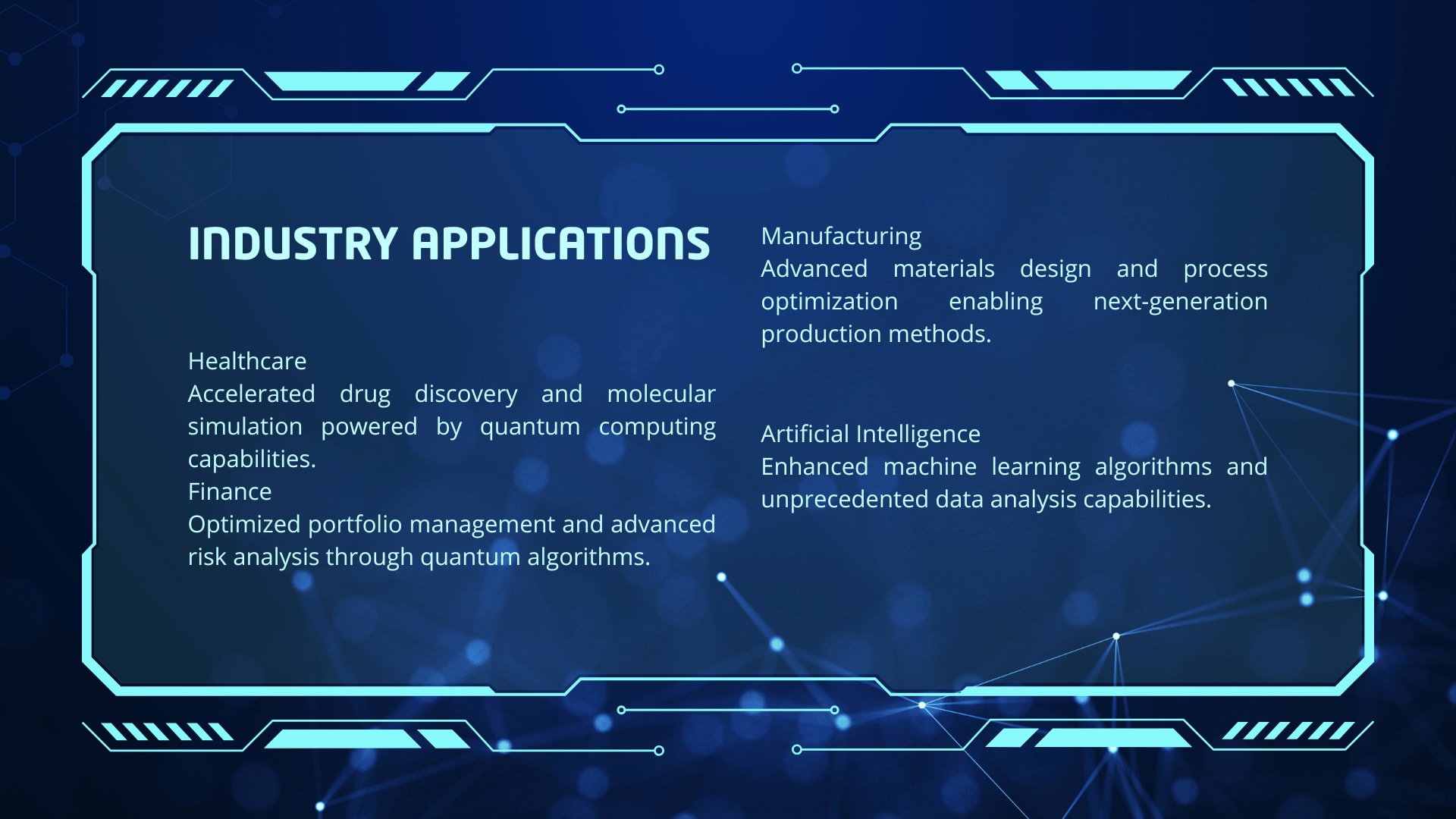
Next-Generation Quantum Processors are expected to transform industries by enabling faster optimization, advanced simulations, improved artificial intelligence, and more efficient decision-making processes. Businesses that adopt quantum technologies strategically may gain significant competitive advantages.
Industry leaders increasingly recognize that quantum computing may become a major driver of innovation.
Applications span multiple sectors:
Healthcare
Finance
Manufacturing
Logistics
Energy
Artificial intelligence
The combination of AI and quantum computing is particularly attracting attention due to its transformative potential.
Which industries will benefit most from next-generation quantum processors?
Healthcare, finance, manufacturing, logistics, energy, and scientific research are among the industries expected to benefit most from advanced quantum processors.
Quantum systems excel at solving highly complex optimization and simulation problems.
These capabilities align directly with challenges faced by many industries.
How can healthcare and pharmaceutical companies use quantum computing?
Healthcare organizations may use quantum computing to:
Accelerate drug discovery
Model molecular interactions
Optimize clinical trials
Improve treatment development
Quantum simulations could significantly reduce research timelines and development costs.
What opportunities will quantum technology create for financial institutions?
Financial firms may leverage quantum systems for:
Portfolio optimization
Risk modeling
Fraud detection
Market forecasting
Advanced quantum algorithms could provide faster and more accurate analyses than traditional methods.
How could manufacturing and logistics become more efficient with quantum systems?
Potential benefits include:
Supply chain optimization
Inventory management
Route planning
Production scheduling
Quantum-powered optimization could reduce costs while increasing operational efficiency.
How will next-generation quantum processors enhance artificial intelligence and machine learning?
Next-Generation Quantum Processors could significantly enhance artificial intelligence by improving optimization, accelerating training processes, and enabling new approaches to machine learning challenges.
AI models continue growing in complexity.
Quantum systems may help address computational bottlenecks that limit performance.
Potential improvements include:
Faster optimization
Improved pattern recognition
Enhanced data processing
Advanced model development
Can quantum computing accelerate AI model training and optimization?
Researchers believe quantum-enhanced machine learning could:
Reduce optimization complexity
Improve parameter selection
Accelerate large-scale training
Enhance resource efficiency
Although still emerging, this area represents one of the most promising intersections of AI and quantum computing.
How might quantum AI improve decision-making and predictive analytics?
Quantum AI may improve:
Forecasting accuracy
Risk assessment
Recommendation systems
Strategic planning
Organizations handling massive datasets could benefit significantly.
What opportunities will enterprise organizations gain from advanced quantum hardware?
Enterprise quantum computing could provide businesses with superior optimization capabilities, accelerated innovation cycles, improved risk analysis, and access to new computational methods unavailable through traditional infrastructure.
Early adoption may create strategic advantages.
Companies exploring quantum technologies today are positioning themselves for future opportunities.
How can businesses prepare for enterprise quantum computing adoption?
Preparation strategies include:
Building internal expertise
Exploring quantum cloud platforms
Developing pilot projects
Evaluating potential use cases
Establishing partnerships
Organizations that start early may achieve smoother adoption.
What competitive advantages could quantum-powered organizations achieve?
Potential advantages include:
Faster innovation
Improved efficiency
Better forecasting
Enhanced optimization
Stronger research capabilities
Quantum adoption could become a differentiating factor in highly competitive industries.
How will quantum processors influence scientific research and innovation?
Quantum processors could dramatically expand scientific discovery by enabling simulations and calculations that are currently impossible or impractical for conventional supercomputers.
Scientific advancement often depends on computational capability.
Quantum systems may unlock entirely new areas of research.
Could quantum computing solve problems beyond the reach of supercomputers?
Potential applications include:
Molecular simulation
Advanced materials research
Climate modeling
Quantum chemistry
Some problems that require centuries of classical computation could become manageable.
How will quantum simulations accelerate discoveries across industries?
Quantum simulations may accelerate:
Drug development
Battery research
Semiconductor design
Energy innovation
The ability to model atomic-level interactions could revolutionize research workflows.
What new jobs and career opportunities could emerge from quantum technology growth?
The expansion of quantum computing is expected to create demand for quantum engineers, researchers, software developers, cybersecurity specialists, data scientists, and technology strategists.
The workforce implications are significant.
Entirely new career paths are emerging around quantum innovation.
Which quantum computing skills are expected to be in highest demand?
High-demand skills include:
Quantum algorithms
Quantum programming
Quantum hardware engineering
Mathematics
Machine learning
Cybersecurity
Interdisciplinary expertise will be especially valuable.
How can professionals prepare for careers in the quantum era?
Professionals can prepare by:
Learning quantum fundamentals
Studying mathematics and physics
Exploring quantum software platforms
Developing AI and data science expertise
Following quantum technology trends
Continuous learning will be essential.
What Risks, Challenges, and Future Trends Will Shape Next-Generation Quantum Processors Beyond 2026?
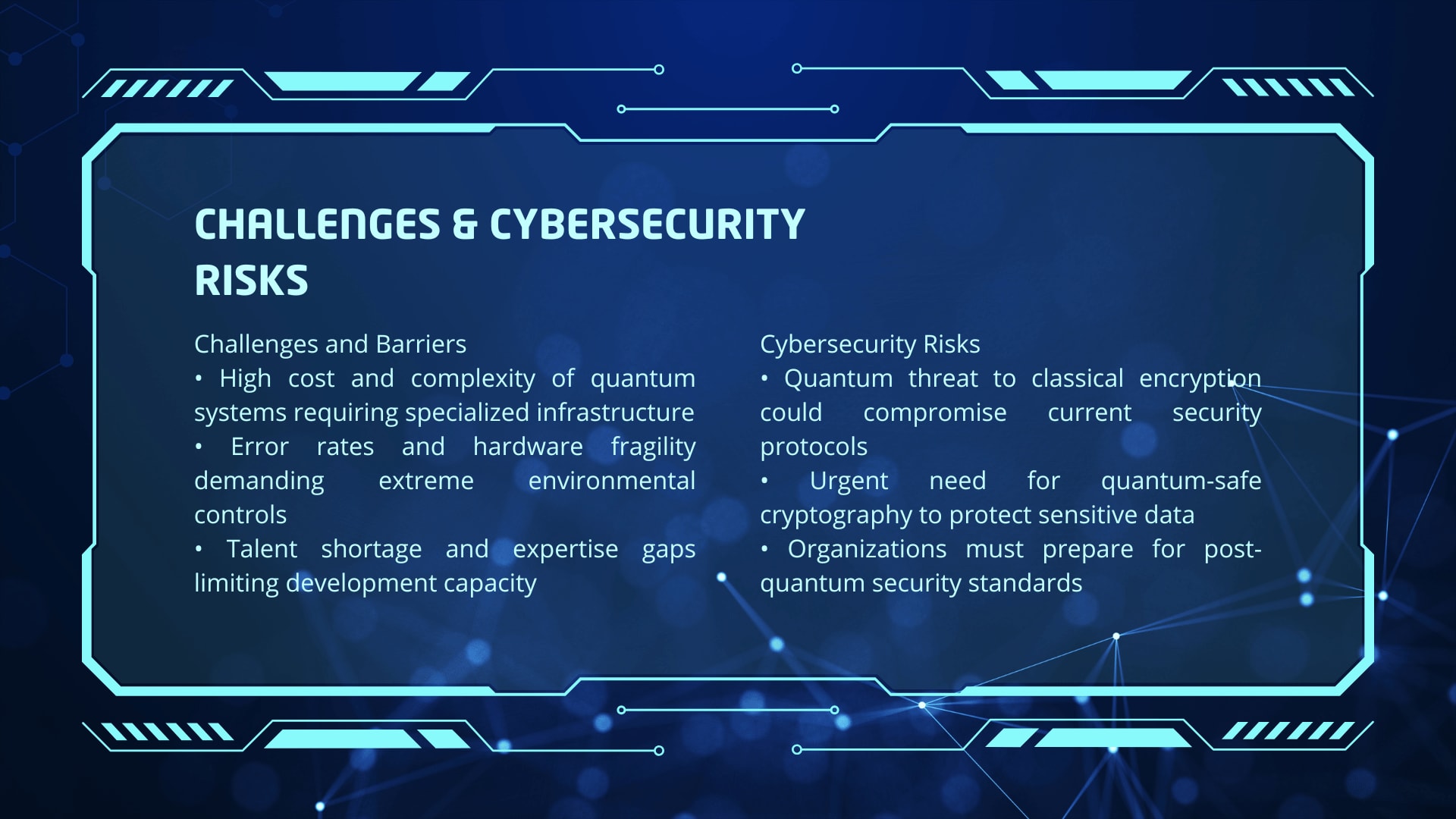
Despite enormous potential, Next-Generation Quantum Processors face challenges involving cybersecurity, scalability, infrastructure costs, and technical limitations. Future success will depend on continued advances in hardware, software, networking, and fault-tolerant architectures.
The road ahead remains complex.
Quantum computing is progressing rapidly, but widespread deployment will require overcoming substantial barriers.
Traditional Processors vs Classical Supercomputers vs Next-Generation Quantum Processors
FeatureTraditional ProcessorsClassical SupercomputersNext-Generation Quantum ProcessorsComputing ModelBinary bitsMassive parallel classical processingQuantum qubitsScalabilityHighVery highEmergingOptimization TasksModerateStrongPotentially transformativeMolecular SimulationLimitedExpensiveHighly promisingEnergy EfficiencyModerateHigh consumptionPotential future advantagesError SensitivityLowLowHighAI EnhancementCurrent standardAdvancedExperimental but promisingFuture Growth PotentialIncrementalSignificantRevolutionary
What cybersecurity challenges could arise from more powerful quantum processors?
More powerful quantum processors may eventually threaten widely used encryption systems, creating urgent cybersecurity challenges for governments, businesses, and consumers.
Current security infrastructure depends heavily on cryptographic algorithms.
Quantum capabilities could alter that landscape.
How might quantum computing affect modern encryption standards?
Potential impacts include:
Faster cryptographic attacks
Vulnerability of legacy systems
Increased security modernization efforts
Organizations must begin evaluating quantum-related risks today.
What is post-quantum cryptography and why is it becoming essential?
Post-quantum cryptography refers to encryption methods designed to withstand quantum attacks.
Benefits include:
Long-term data protection
Regulatory preparedness
Future-proof security frameworks
Many organizations are already beginning migration planning.
What technical limitations still prevent widespread quantum computing adoption?
Quantum computing still faces challenges involving error rates, scalability, infrastructure complexity, and limited fault tolerance. These barriers restrict widespread commercial deployment despite significant progress.
Several hurdles remain.
Researchers continue working toward more practical systems.
Why is quantum error correction still a major challenge?
Error correction remains difficult because:
Qubits are highly sensitive
Environmental noise causes instability
Large correction overheads are required
Achieving scalable fault-tolerant quantum computing remains a major objective.
What infrastructure barriers must organizations overcome?
Key infrastructure challenges include:
Specialized facilities
Cryogenic environments
High operational costs
Skilled workforce requirements
These factors limit accessibility today.
How expensive will next-generation quantum processors be for businesses and researchers?
Next-Generation Quantum Processors will initially remain expensive, but cloud-based access models and growing competition are expected to make quantum computing increasingly accessible over time.
Ownership costs remain substantial.
However, accessibility is improving.
Will quantum computing become more accessible in the coming years?
Several factors suggest increasing accessibility:
Cloud delivery models
Lower entry barriers
Improved software ecosystems
Commercial competition
Access may expand significantly beyond research institutions.
How are cloud-based quantum platforms reducing adoption costs?
Cloud quantum services provide:
Pay-as-you-use access
Lower capital expenditure
Global availability
Faster experimentation
This approach is accelerating enterprise quantum computing adoption.
What future innovations could emerge after the launch of next-generation quantum processors?
The launch of advanced quantum processors may pave the way for fault-tolerant quantum computing, quantum networking, quantum internet technologies, and entirely new computational paradigms.
Innovation is unlikely to stop in 2026.
Instead, the launch may represent the beginning of a larger transformation.
Could fault-tolerant quantum computing become mainstream by 2030?
Many experts view the next several years as critical.
Potential milestones include:
Large-scale logical qubits
Reliable error correction
Commercial quantum applications
Expanded enterprise deployment
While uncertainty remains, progress is accelerating.
What role will quantum networking and the quantum internet play in the future?
Quantum networking could enable:
Ultra-secure communications
Distributed quantum computing
New information-sharing models
The long-term vision includes a global quantum internet.
How will next-generation quantum processors reshape the global technology landscape?
Next-Generation Quantum Processors may become a strategic technology comparable to semiconductors, artificial intelligence, and cloud computing, influencing economic competitiveness and national innovation capabilities.
Countries worldwide are investing heavily in quantum research.
Leadership in this field may influence future technological power.
Which countries are leading the race for quantum computing leadership?
Major participants include:
United States
China
Canada
Germany
United Kingdom
Japan
Australia
Government-backed research programs continue expanding globally.
How could quantum breakthroughs influence economic growth and technological competitiveness?
Potential impacts include:
New industries
Increased productivity
Scientific leadership
Strategic advantages
Quantum innovation may become a major economic driver over the next decade.
What should businesses, governments, and consumers expect from the future of quantum computing?
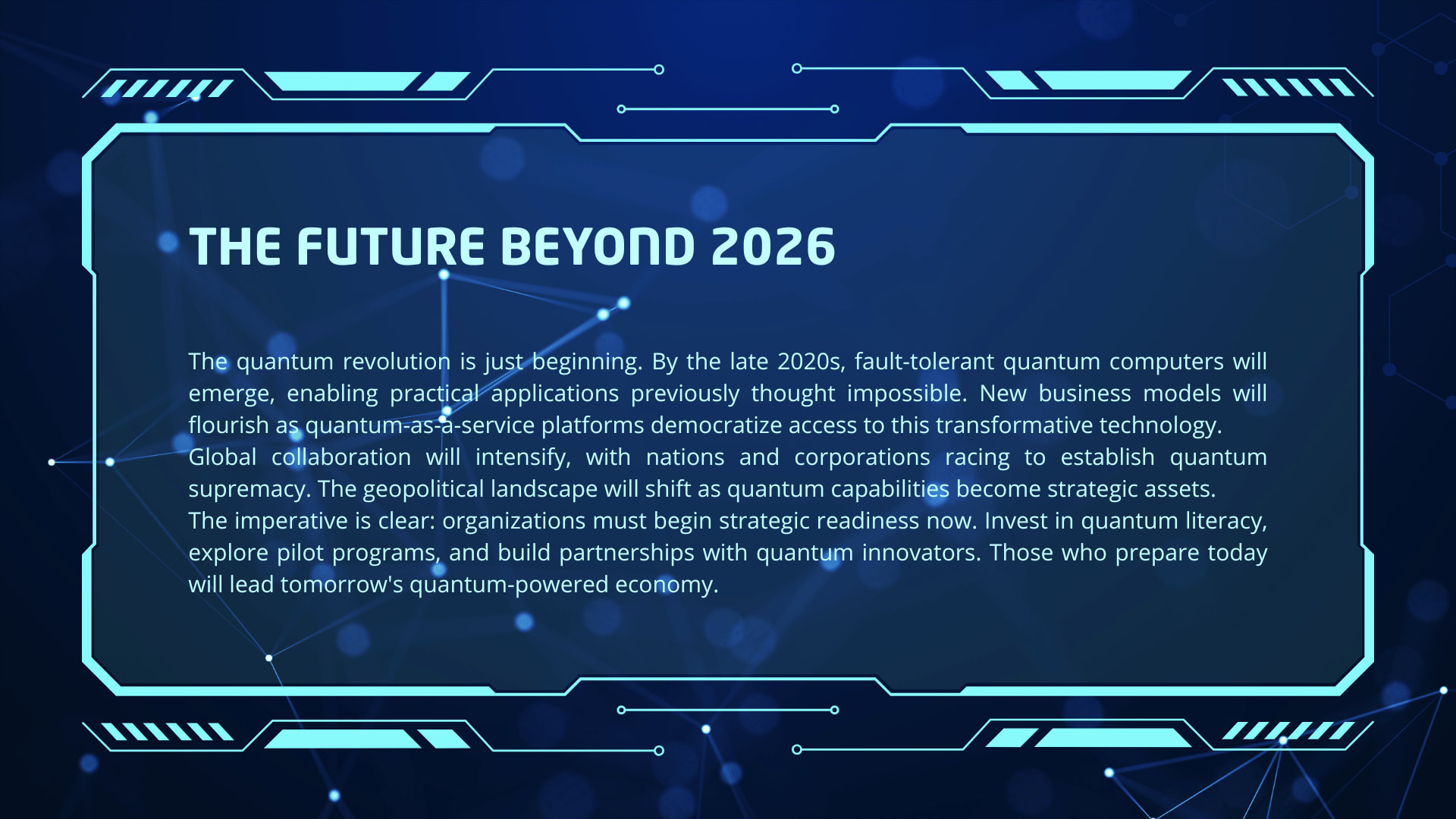
Businesses, governments, and consumers should expect steady progress toward practical quantum applications, stronger cybersecurity requirements, expanding commercial opportunities, and growing integration with AI technologies.
The transition will likely occur gradually rather than overnight.
Organizations that monitor developments closely will be better positioned to benefit.
What are the most important predictions for quantum technology beyond 2026?
Key predictions include:
Improved fault tolerance
Expanded enterprise adoption
Growth of AI and quantum computing integration
Increased government investment
Stronger post-quantum security initiatives
Emergence of quantum networking ecosystems
These trends could shape the next era of digital transformation.
How can organizations stay ahead of emerging quantum computing trends?
Organizations can remain competitive by:
Monitoring quantum research
Building internal expertise
Investing in workforce development
Exploring pilot programs
Following technology trend analysis
Industry leaders frequently rely on innovation-focused resources and emerging technology platforms such as https://www.yoursitechat.com/ to track developments in artificial intelligence, advanced processors, and future computing technologies.
Conclusion
The launch of Next-Generation Quantum Processors in 2026 represents far more than another hardware upgrade. It marks a pivotal stage in the evolution of quantum computing and the broader future of computing.
Advancements in quantum hardware, quantum architecture, error correction, and quantum processing units are bringing the industry closer to practical applications that once seemed decades away. Healthcare organizations may accelerate drug discovery. Financial institutions could improve risk analysis. Manufacturers may optimize supply chains. Researchers might solve scientific challenges previously beyond the reach of classical supercomputers.
At the same time, important challenges remain. Cybersecurity concerns, infrastructure requirements, workforce shortages, and fault tolerance issues will continue shaping the pace of adoption. Organizations that prepare early, invest in quantum literacy, and monitor emerging quantum technology trends will be best positioned to benefit.
Beyond 2026, the convergence of quantum innovation, artificial intelligence, advanced processors, quantum algorithms, and enterprise quantum computing could fundamentally reshape industries, economies, and technological competitiveness worldwide.
While the journey toward fully mature quantum systems is still unfolding, one reality is becoming increasingly clear:Next-Generation Quantum Processors are poised to become one of the defining technological breakthroughs of the coming decade.