
When we talk about Master Chatbot ROI, we’re not just looking at a number on a report; we’re talking about understanding whether your chatbot truly moves the business needle. Too often, teams celebrate conversation counts or chat engagement while ignoring revenue impact or cost savings. We’ve seen businesses spend months on bots without knowing if they actually reduce support load or generate qualified leads. Getting a handle on chatbot return on investment means knowing where every interaction adds value — in sales, in efficiency, or in customer satisfaction. It’s practical, measurable, and gives leadership confidence that the technology is not just flashy, but profitable. With the right approach, Master Chatbot ROI can become a clear, ongoing tool for scaling smarter, not just faster.
What Does Master Chatbot ROI Really Mean?
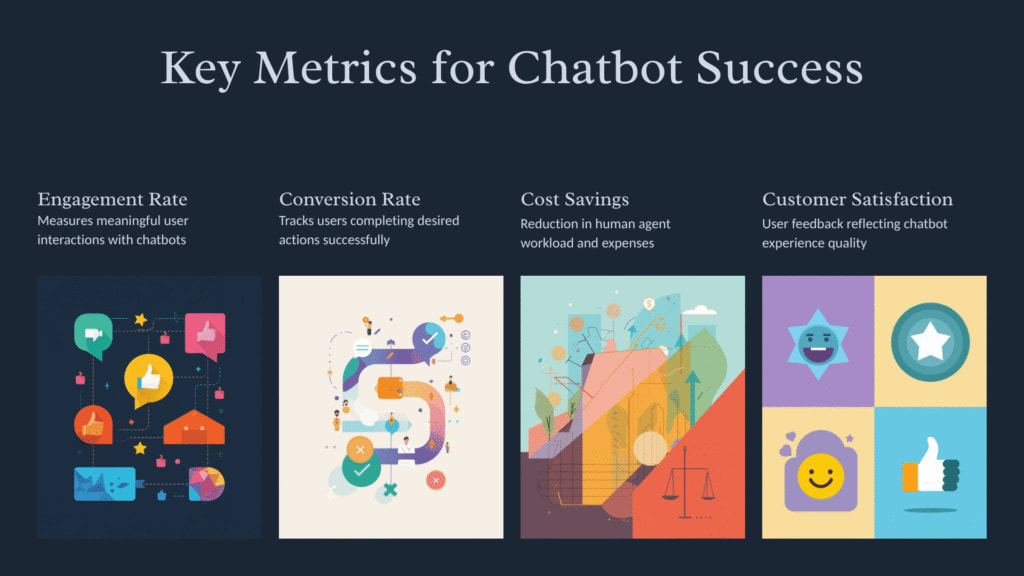
To us, Master Chatbot ROI is about clarity, not complexity. It’s about seeing which chatbot interactions drive real results and which just fill dashboards with numbers that don’t translate to business outcomes. We often hear founders ask, “Are these bots really paying for themselves?” The answer lies in understanding beyond surface metrics — it’s revenue influenced, support costs reduced, and customers retained. By digging into AI chatbot analytics, we can uncover where the bot creates impact and where it’s a cost center. Ultimately, mastering ROI is less about perfect automation and more about reliable insight, so decisions are informed, not hopeful guesses.
Definition of chatbot return on investment
When we define chatbot return on investment, we’re talking about the money saved plus the revenue influenced, minus the total costs of building and running the bot. It’s simple in concept but often overlooked in practice. Many companies only track conversations, which doesn’t pay the bills. A true ROI calculation includes chatbot cost savings from fewer support tickets, faster responses, and operational efficiencies, plus any incremental revenue from leads or sales the bot assists. If we ignore those factors, the bot looks ineffective even when it isn’t. Defining ROI properly gives us a framework to optimize and scale with confidence.
Difference Between ROI and chatbot performance metrics
We often see confusion between ROI and chatbot performance metrics. Metrics like session length, message volume, or response time are important, but they don’t directly show the bot’s business impact. ROI is the bottom-line view — dollars saved or earned because the chatbot exists. Metrics feed into ROI calculations but are only pieces of the puzzle. Understanding this difference allows us to focus on what actually matters: which conversations generate revenue, reduce costs, or improve retention. When clients grasp this, their decisions stop being guesswork and start becoming strategic.
Why Businesses Struggle to Measure Chatbot Return on Investment
Businesses struggle with measuring chatbot return on investment because most bots were launched without clear financial goals. They track engagement but not conversions, or cost savings but not revenue impact. Hidden operational costs often sneak in — like updates, monitoring, or integrations — and analytics systems are incomplete, leaving blind spots. We’ve seen teams frustrated, wondering why their bot isn’t “working,” when in reality the measurement framework was missing. To master ROI, we help clients uncover both visible and hidden factors, so the chatbot’s true value can be quantified and optimized.
Hidden operational costs
Hidden costs are one of the sneakiest ROI killers. Licensing fees, maintenance, content updates, or even time spent by teams reviewing chatbot conversations all add up. Without accounting for these, a bot might appear profitable when it’s quietly draining resources. We always dig into operational overhead before claiming chatbot cost savings, ensuring the numbers are realistic. Understanding these costs gives us a foundation to optimize workflows and truly master ROI instead of chasing inflated assumptions.
Incomplete AI chatbot analytics tracking
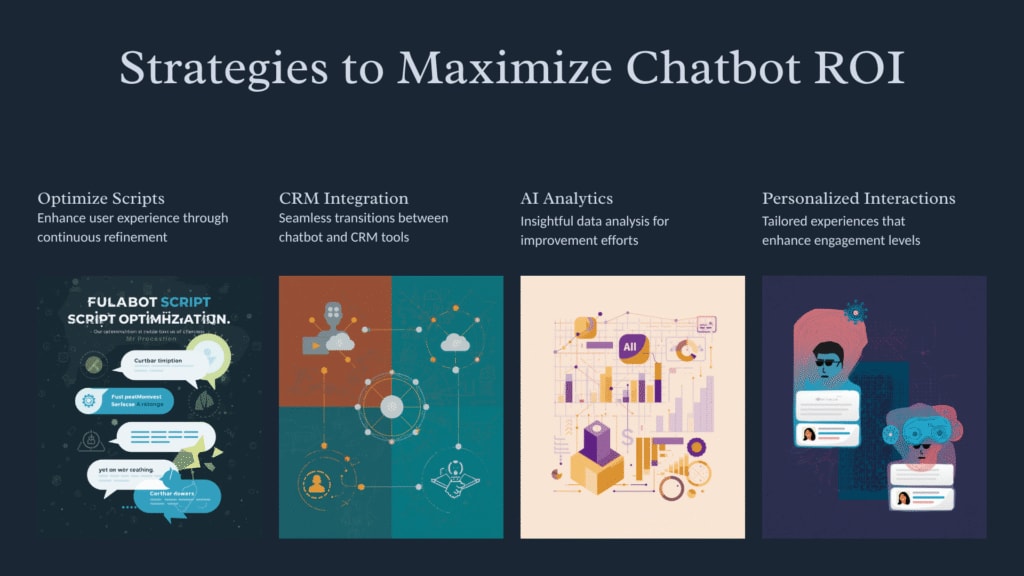
Incomplete AI chatbot analytics is another reason ROI remains a mystery. Many bots log conversations but miss tracking revenue, lead quality, or escalation paths. Without this, calculating chatbot return on investment is guesswork. We help businesses connect bot data with CRM, sales, and support systems so every interaction’s impact can be traced. Once analytics are complete, we can confidently say which parts of the bot are driving results and where improvements are needed — a key step to Master Chatbot ROI.
How Master Chatbot ROI Impacts Revenue, Cost, and Customer Experience
Mastering chatbot ROI isn’t just about dollars — it affects revenue, operational cost, and customer experience simultaneously. We’ve worked with clients who discovered hidden revenue opportunities after connecting their bots to sales pipelines, while others cut costs dramatically by offloading routine support. Even more surprising is how customer satisfaction shifts when bots resolve questions quickly and accurately. By measuring ROI properly, we see the full picture: revenue influence, chatbot cost savings, and loyalty gains. That’s why Master Chatbot ROI matters — it translates digital engagement into tangible business outcomes.Revenue generation opportunities
Revenue often hides in bot interactions we barely notice. Lead qualification, abandoned cart reminders, and upsell suggestions are just a few opportunities. Using AI chatbot analytics, we pinpoint where bots contribute to sales and adjust flows to capture more. When companies see the revenue these interactions generate, ROI discussions become concrete rather than hypothetical. Mastering these opportunities means the chatbot doesn’t just assist — it actively drives growth.
Chatbot cost savings in support teams
Support teams benefit immediately from chatbot cost savings. By automating repetitive inquiries, bots free agents to handle complex issues, reducing payroll pressure and overtime. We quantify this by calculating human hours saved, then factor it into ROI. Companies often overlook this, but it’s one of the fastest ways to see financial impact. Even small efficiency gains add up over time, proving that Master Chatbot ROI isn’t just about revenue, but sustainable operations.
Customer satisfaction and retention impact
We always emphasize that ROI includes customer experience. Quick, accurate responses improve satisfaction, and happy customers stick around longer. AI chatbot analytics helps us measure drop-off rates, follow-up actions, and resolution satisfaction. When clients see these numbers alongside cost savings and revenue impact, the ROI story becomes complete. Mastering chatbot ROI is about balancing profit and experience, not just chasing efficiency or flashy metrics.
How to Measure Master Chatbot ROI Step by Step
Measuring ROI doesn’t have to be mystifying. We guide clients through a step-by-step approach that combines chatbot performance metrics, cost savings, and AI analytics. It starts with defining what success looks like for your bot, then tracking, calculating, and optimizing systematically. We’ve seen businesses transform from “I think it’s helping” to confident, data-backed ROI reporting. Following this process lets us master ROI, identify gaps, and continuously improve results — not just guess.
Step 1: Define Clear Chatbot Performance Metrics
The first step is often the hardest: deciding which metrics actually matter. We focus on chatbot performance metrics that tie directly to outcomes — conversions, resolution speed, engagement quality, and escalation rates. Metrics that don’t relate to business value get ignored. When we define these clearly, clients finally see what the bot is doing well and where it struggles. This foundation is critical to Master Chatbot ROI, because you can’t optimize what you don’t measure.
Conversion rate
Conversion rate is a core metric we track closely. It’s not just about completed chats; it’s about actions the bot influences — purchases, leads, or sign-ups. By linking chats to revenue outcomes, we quantify real impact. Over time, small tweaks to conversation design can noticeably lift conversions, directly improving chatbot return on investment. Without this, ROI discussions remain abstract and unconvincing.
Cost per interaction
Cost per interaction tells us how efficiently the bot handles inquiries compared to humans. We include maintenance, licensing, and labor in the calculation. When clients see this number, they understand exactly where chatbot cost savings are occurring and where improvements are needed. Optimizing for lower cost per interaction is a practical way to strengthen ROI without sacrificing experience.
Average resolution time
Average resolution time matters more than most realize. A quick, accurate response boosts satisfaction and frees agents for complex cases. We track this using AI analytics, comparing bot vs. human handling times. Faster resolutions not only improve retention but contribute directly to Master Chatbot ROI by showing tangible efficiency gains that leadership can trust.
Step 2: Calculate Chatbot Cost Savings Accurately
Once metrics are clear, we turn to cost savings. It’s tempting to guess, but we quantify hours saved, tickets avoided, and operational efficiencies. True chatbot cost savings factor in hidden costs like updates and integrations. Accurate calculation gives businesses a defensible view of ROI and helps prioritize bot improvements that yield real financial impact.
Support automation savings formula
We use a simple formula: hours automated × average agent hourly cost = support savings. It’s straightforward, but many teams overlook it. Combining this with AI chatbot analytics ensures the bot’s contribution is measured precisely. Over time, these savings compound, making ROI tangible and actionable.
Reduction in human agent workload
Bots reduce human workload beyond just ticket volume. They handle repetitive tasks, freeing teams to focus on high-value activities. Measuring the workload shift is essential to Master Chatbot ROI, because it highlights efficiency improvements that aren’t immediately obvious from revenue alone.
24/7 availability value calculation
One of the most underrated ROI factors is the bot’s around-the-clock availability. We calculate potential revenue or support hours saved outside normal business hours. For clients with global customers, this alone can tip ROI into positive territory. Accounting for it makes the bot’s value undeniable.
Step 3: Use AI Chatbot Analytics to Track ROI
Analytics are the backbone of ROI measurement. AI chatbot analytics lets us track assisted conversions, lead quality, engagement, and drop-offs. We link this to revenue and cost data to see where the bot succeeds and where it needs work. Without this, ROI is guesswork; with it, we can confidently optimize for results.
Tracking assisted conversions
Assisted conversions are often hidden in multi-touch journeys. The bot might not close a sale directly but nudges leads toward purchase. Tracking these interactions reveals true impact, making Master Chatbot ROI more accurate and actionable.
Measuring lead qualification improvements
Bots can pre-qualify leads before they reach sales. Measuring improvements in lead quality — fewer unqualified prospects, higher conversion likelihood — helps quantify revenue contribution. This is a practical metric that directly feeds into ROI.
Monitoring engagement and drop-off rates
Engagement and drop-offs tell us if the bot is delivering meaningful interactions. High drop-off signals friction or irrelevance, which hurts ROI. By monitoring patterns over time, we can tweak flows to maximize revenue influence, cost savings, and satisfaction simultaneously.
Step 4: Master Chatbot ROI Calculation Formula
We simplify ROI calculation for clients so it’s actionable. Mastering chatbot ROI requires both a basic and advanced view: dollars saved plus revenue influenced minus cost, then divided by investment. We also teach clients common mistakes to avoid, like ignoring hidden costs or overvaluing vanity metrics.
Basic ROI formula for chatbots
The basic formula is straightforward: (Revenue influenced + Cost savings – Total chatbot investment) ÷ Total chatbot investment. It’s simple but often misapplied. Getting this right is the first step to Master Chatbot ROI.
Advanced chatbot return on investment model
Advanced models layer in assisted conversions, retention improvements, and operational efficiencies. We combine these factors for a nuanced picture that leadership can trust. This approach captures real-world impact rather than theoretical numbers.
Common ROI calculation mistakes to avoid
Mistakes are surprisingly common: ignoring hidden costs, counting every chat as revenue, or overlooking retention effects. We guide clients to avoid these traps so chatbot return on investment reflects reality, not hope.
How to Maximize Master Chatbot ROI for Long-Term Success
Maximizing ROI isn’t a one-time effort — it’s continuous. We focus on conversation design, performance optimization, and cost management. When bots are tuned to real business outcomes, Master Chatbot ROI improves naturally. This mindset allows organizations to scale intelligently across sales, marketing, and support without losing track of impact.
Optimize Conversation Design for Higher Conversions
The flow matters more than most realize. Reducing friction, anticipating questions, and guiding users toward outcomes are small changes that compound. With AI chatbot analytics, we tweak scripts, test paths, and observe what converts. Optimized design directly boosts both revenue and ROI.
Reducing friction in chatbot flows
Friction kills conversions and frustrates users. We audit flows, remove unnecessary steps, and clarify options. Even minor improvements in clarity and speed significantly improve engagement, helping Master Chatbot ROI climb steadily.
Personalization using AI chatbot analytics
Personalization is more than a name drop. By analyzing user behavior and intent, we create tailored responses that resonate. Personalized chats increase lead conversion and satisfaction, directly impacting chatbot return on investment.
Improve Chatbot Performance Metrics Continuously
Continuous improvement is key. We monitor performance metrics, run A/B tests, optimize intent recognition, and retrain the bot with real user data. This cycle ensures ROI doesn’t plateau and growth is sustainable.
A/B testing chatbot responses
We experiment with scripts, prompts, and suggestions. Some tweaks increase conversions dramatically; others reveal user friction. A/B testing helps us refine chatbot performance metrics and strengthen ROI reliably.
Intent accuracy optimization
Misunderstood intents lead to frustrated users and lost revenue. We track errors, retrain models, and improve recognition, directly contributing to higher conversions and measurable chatbot return on investment.
Training with real user data
Synthetic data only goes so far. Using real interactions to train bots improves response relevance and reduces drop-offs. This hands-on approach is one of the most effective ways to maintain high ROI.
Increase Chatbot Cost Savings Without Hurting Experience
Cost savings shouldn’t come at the expense of experience. We balance automation with strategic escalation to human agents, ensuring efficiency gains without frustrating users. This approach enhances Master Chatbot ROI sustainably.
Smart escalation to human agents
Escalation is not failure; it’s efficiency. Bots handle routine tasks, escalate complex cases, and maintain satisfaction. Measuring these escalations helps quantify chatbot cost savings and customer retention simultaneously.
Automation balance strategy
We strike a balance between automated and human-driven interactions. Too much automation frustrates customers; too little underutilizes technology. Optimizing this balance is central to mastering ROI.
Scale Master Chatbot ROI Across Departments
Once the bot is optimized, scaling across marketing, sales, and support unlocks further ROI. Each department benefits differently, but all share the same measurement framework. Master Chatbot ROI becomes an enterprise-wide tool, not just a single team metric.
Marketing automation use cases
Marketing can leverage bots for lead nurturing, segmentation, and engagement campaigns. Tracking conversions from these interactions directly ties to ROI, proving bots contribute beyond support.
Sales enablement applications
Bots support sales teams by pre-qualifying leads, answering questions, and scheduling meetings. Measuring these contributions ensures the chatbot return on investment reflects true sales impact, not just activity metrics.
Customer support expansion strategy
Expanding bots across support channels drives cost savings, faster resolutions, and higher satisfaction. We quantify each department’s gains, allowing leadership to see Master Chatbot ROI in action and plan long-term resource allocation.