How Is Generative AI in Modern Medicine Transforming Healthcare in 2026?
Generative AI in Modern Medicine is rapidly changing how healthcare systems diagnose diseases, develop treatments, manage patient records, and improve clinical outcomes in 2026. From AI medical diagnosis to AI-powered drug discovery, hospitals and research institutions are using advanced AI systems to improve efficiency, reduce costs, and deliver more personalized care.
Healthcare organizations are no longer experimenting with AI in healthcare as a future concept. Instead, they are integrating Generative AI healthcare applications into daily workflows, clinical research, medical imaging, patient communication, and predictive healthcare analytics. The result is a healthcare ecosystem that is faster, smarter, and increasingly patient-centered.
Modern AI systems can now generate medical summaries, analyze radiology scans, predict treatment outcomes, automate administrative operations, and even assist researchers in discovering new therapies. These capabilities are transforming both large hospital networks and smaller healthcare providers worldwide.
The rise of Personalized healthcare AI is also enabling doctors to tailor treatments according to genetic profiles, lifestyle factors, and real-time patient data. As Healthcare AI trends 2026 continue evolving, Generative AI is becoming one of the most influential technologies shaping the future of healthcare technology.
What is Generative AI in Modern Medicine and why is it reshaping healthcare?
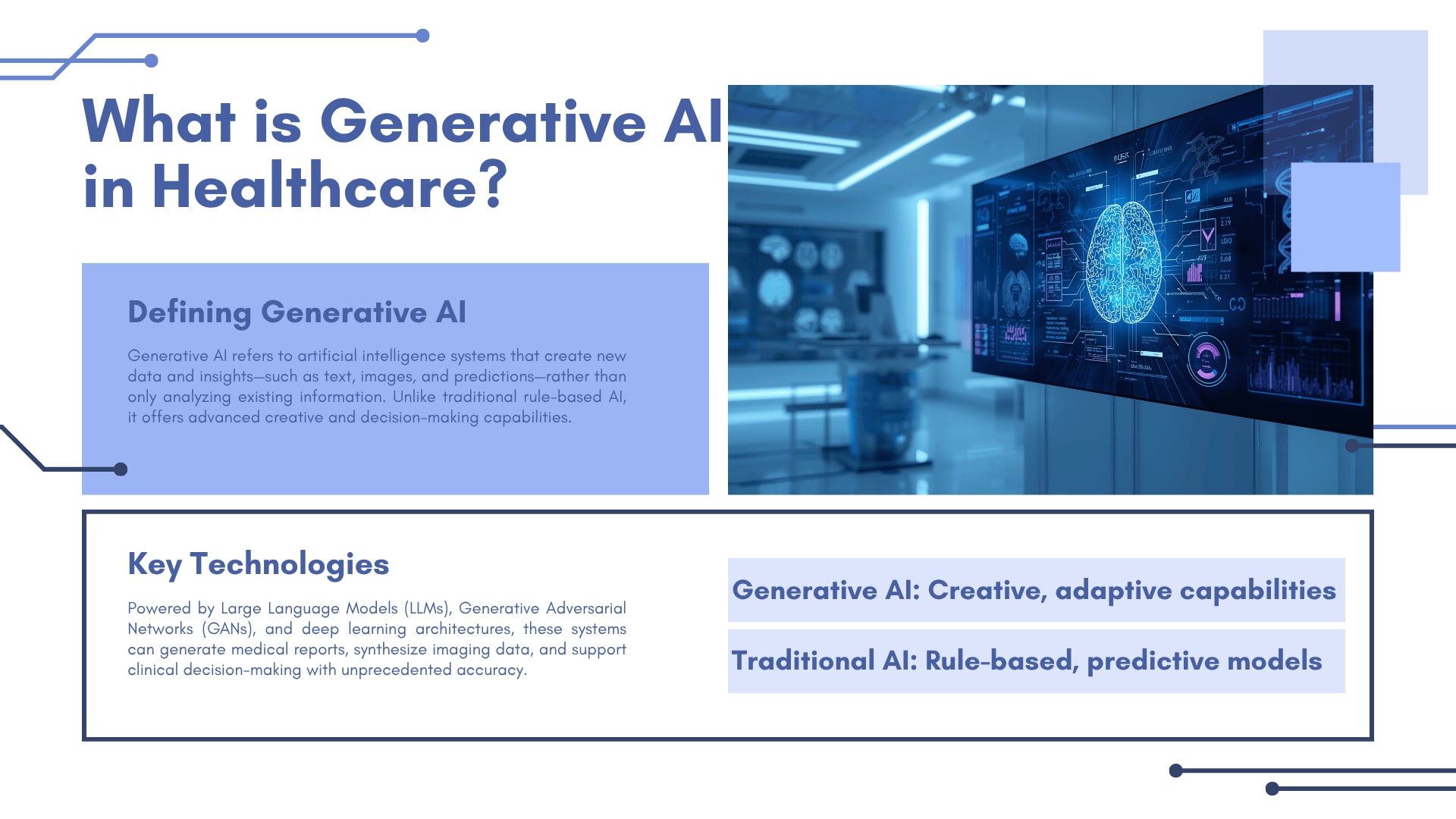
Generative AI in Modern Medicine refers to advanced artificial intelligence systems capable of generating insights, medical documentation, treatment suggestions, research models, and predictive healthcare outputs. In 2026, it is reshaping healthcare by improving speed, accuracy, personalization, and operational efficiency across hospitals, diagnostics, drug discovery, and patient care.
Healthcare systems are dealing with rising patient populations, physician shortages, growing administrative workloads, and increasing demand for personalized care. Traditional healthcare technology often struggles to manage these pressures efficiently. Generative AI offers a scalable solution capable of automating complex tasks while supporting medical professionals with intelligent recommendations.
Unlike earlier AI systems that primarily analyzed structured datasets, modern Generative AI models can interpret unstructured medical information such as physician notes, imaging reports, research papers, pathology findings, and patient conversations. This allows healthcare organizations to generate more contextual and actionable insights.
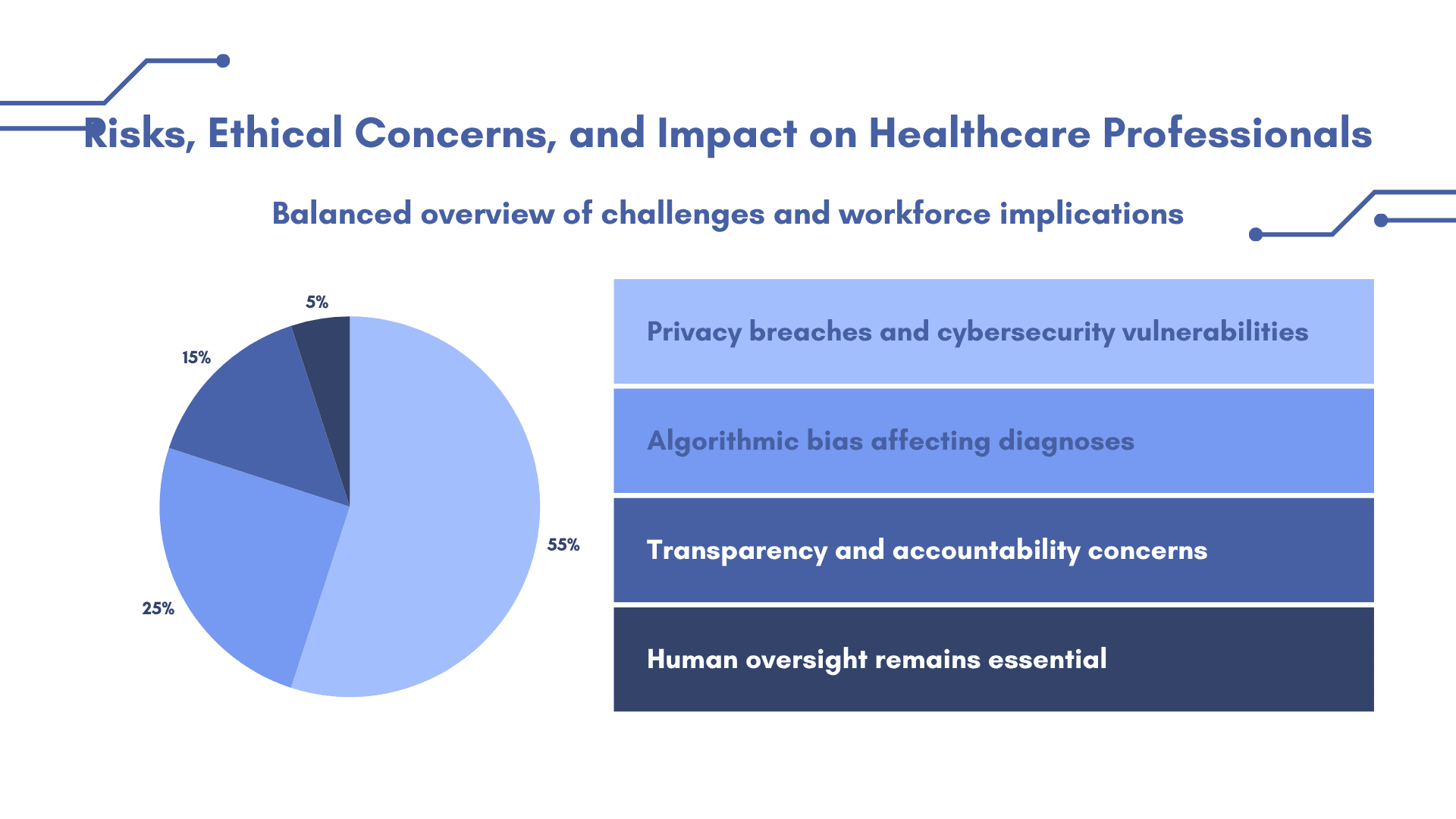
Some of the biggest areas where Generative AI in Modern Medicine is creating impact include:
AI medical diagnosis
AI medical imaging
Predictive healthcare analytics
AI-assisted surgery
AI-powered drug discovery
Healthcare AI automation
Personalized healthcare AI
AI in clinical research
Remote patient monitoring
AI-driven patient communication
Hospitals are also adopting AI systems to reduce clinician burnout. Physicians often spend hours documenting patient interactions and managing administrative tasks. Generative AI tools now automate much of this work, allowing healthcare professionals to focus more on patient care.
Platforms such as YourSiteChat are also helping healthcare organizations improve AI-powered communication experiences, patient engagement, and intelligent information delivery across digital healthcare platforms.
How does Generative AI in healthcare work in 2026?
Generative AI in healthcare works by training advanced machine learning models on massive medical datasets, enabling systems to generate diagnoses, treatment suggestions, medical summaries, research insights, and predictive analytics with increasing accuracy and contextual understanding.
Modern AI healthcare systems combine multiple technologies including:
Large language models (LLMs)
Deep learning algorithms
Natural language processing (NLP)
Computer vision
Predictive healthcare analytics
Cloud-based medical AI infrastructure
These systems process enormous amounts of medical data from:
Electronic health records (EHRs)
Radiology images
Clinical trials
Genomic databases
Medical journals
Real-time patient monitoring devices
Healthcare providers use these AI models to support faster decision-making while improving clinical accuracy.
What technologies power modern Generative AI healthcare applications?
Several foundational technologies drive modern Generative AI healthcare applications in 2026.
Large Language Models (LLMs)
LLMs help AI systems understand and generate human-like medical language. They summarize patient histories, answer clinical questions, and assist with documentation.
Computer Vision
Computer vision powers AI medical imaging systems capable of analyzing:
X-rays
CT scans
MRIs
Pathology slides
Ultrasound images
Predictive Analytics
Predictive healthcare analytics uses patient data to forecast:
Disease progression
Hospital readmissions
Treatment responses
Infection risks
Edge AI and Cloud Infrastructure
Cloud computing enables healthcare systems to process large medical datasets securely while supporting real-time AI decision-making.
How do large language models support AI medical research?
Large language models are transforming AI medical research by accelerating information discovery and synthesis.
Researchers now use AI systems to:
Analyze thousands of medical studies quickly
Identify hidden patterns in clinical data
Generate research summaries
Suggest experimental directions
Assist in clinical trial matching
For example, pharmaceutical researchers can ask AI systems to identify promising molecular interactions for cancer therapies. What previously required months of manual literature review can now happen in hours.
Why are healthcare providers investing heavily in AI systems?
Healthcare organizations are investing in AI because the technology directly addresses operational and clinical challenges.
Key reasons include:
Rising healthcare costs
Physician burnout
Growing patient volumes
Demand for personalized medicine
Shortage of skilled healthcare workers
Increased need for diagnostic accuracy
Hospitals implementing AI healthcare automation are seeing measurable improvements in workflow efficiency and patient satisfaction.
How is Generative AI different from traditional AI in healthcare?
Generative AI in Modern Medicine differs from traditional healthcare AI because it creates new outputs rather than only analyzing existing data. Traditional AI focuses mainly on prediction and classification, while Generative AI can generate clinical summaries, treatment recommendations, medical simulations, and research models.
Traditional AI systems typically identify patterns from structured datasets. Generative AI models, however, understand context and produce dynamic responses using complex reasoning.
Traditional Healthcare vs Generative AI-Powered Healthcare
Traditional Healthcare AIGenerative AI in Modern Medicine Focuses on predictionGenerates new medical insightsUses structured dataHandles structured and unstructured dataLimited conversational abilitySupports natural medical conversationsBasic automationAdvanced contextual automationNarrow diagnostic supportComprehensive clinical assistanceStatic reportingDynamic report generationLimited personalizationPersonalized healthcare AI recommendations
What makes Generative AI more advanced for medical decision-making?
Generative AI systems support more advanced medical decision-making because they combine multiple data sources and contextual understanding.
For example, a modern AI system can simultaneously evaluate:
Patient history
Lab reports
Medical imaging
Genetic markers
Physician notes
Current medical literature
This comprehensive analysis improves diagnostic support and treatment planning.
How does predictive AI compare with Generative AI in medicine?
Predictive AI forecasts outcomes based on historical patterns. Generative AI goes further by generating recommendations, summaries, and simulations.
Examples:
Predictive AI estimates readmission risk.
Generative AI creates personalized discharge plans.
Predictive AI identifies disease probability.
Generative AI explains possible treatment strategies.
Which healthcare tasks can Generative AI automate better?
Generative AI excels at automating repetitive knowledge-based healthcare tasks.
Examples include:
Clinical documentation
Medical coding
Patient communication
Insurance pre-authorizations
Medical transcription
Research summarization
Appointment coordination
This level of Healthcare AI automation significantly reduces administrative burden.
Why is AI in healthcare becoming essential for hospitals and clinics?
AI in healthcare is becoming essential because healthcare systems face rising patient demand, staffing shortages, operational inefficiencies, and increasing complexity in diagnosis and treatment. Generative AI in Modern Medicine helps hospitals improve speed, accuracy, personalization, and cost-efficiency.
Healthcare providers must balance quality care with operational sustainability. AI systems are helping organizations achieve this balance more effectively.
How is healthcare automation reducing operational costs?
Healthcare automation reduces costs by minimizing repetitive manual tasks.
AI systems automate:
Billing workflows
Claims processing
Appointment scheduling
Documentation
Insurance verification
Resource allocation
Hospitals using AI-driven automation often report:
Reduced administrative overhead
Faster patient throughput
Lower documentation errors
Improved scheduling efficiency
Can AI help solve healthcare staffing shortages?
Healthcare staffing shortages remain one of the industry's biggest challenges.
Generative AI supports clinicians by:
Automating documentation
Prioritizing patient cases
Assisting nurses with monitoring
Managing communication workflows
Supporting telemedicine systems
AI does not replace healthcare workers entirely. Instead, it enhances workforce productivity.
How are healthcare systems improving efficiency using AI?
Healthcare organizations improve efficiency using AI by optimizing workflows across departments.
Examples include:
AI-assisted triage systems
Automated patient routing
Predictive bed management
Smart scheduling systems
AI-powered clinical decision support
These improvements reduce wait times and enhance patient experiences.
What are the biggest Generative AI healthcare applications in 2026?
Generative AI healthcare applications now extend across nearly every healthcare domain.
Major applications include:
AI medical diagnosis
AI-assisted surgery
AI medical imaging
Personalized healthcare AI
AI-powered drug discovery
AI in clinical research
Virtual health assistants
Predictive healthcare analytics
How is AI transforming medical documentation and reporting?
Medical documentation remains one of the most time-consuming responsibilities for healthcare professionals.
Generative AI systems now:
Convert physician conversations into structured notes
Generate discharge summaries
Produce medical reports automatically
Assist with coding compliance
This reduces physician burnout significantly.
Can AI-powered virtual assistants improve healthcare communication?
AI-powered virtual assistants improve communication by offering:
Appointment reminders
Medication guidance
Symptom triage
Multilingual patient support
Post-treatment follow-ups
Healthcare organizations increasingly integrate conversational AI platforms like YourSiteChat to improve digital healthcare engagement and patient support experiences.
How are AI chatbots supporting patient engagement?
AI chatbots support patient engagement by offering 24/7 accessibility.
Patients can use chatbots to:
Schedule appointments
Access treatment instructions
Receive wellness guidance
Monitor symptoms
Ask health-related questions
This improves healthcare accessibility while reducing administrative workload.