
A potential customer lands on a website with a question. They are interested, ready to buy, and looking for reassurance. If they receive an answer within seconds, the conversation often moves toward a sale. If they wait several minutes—or worse, several hours—they may leave and purchase from a competitor instead.
That simple interaction explains why fast customer response has become one of the strongest competitive advantages for modern businesses. Speed is no longer viewed as a bonus. Customers expect immediate answers whether they are shopping online, requesting a quote, comparing products, or asking for technical support.
Businesses that consistently reply faster build stronger trust, create better buying experiences, and generate more sales opportunities. They also reduce abandoned inquiries, improve customer satisfaction, and strengthen long-term relationships.
Companies across industries—from SaaS and healthcare to real estate, eCommerce, education, and professional services—are investing in better website live chat, AI chatbot technology, and customer support software to ensure every visitor receives an instant response.
One practical solution many businesses are adopting is YourSiteChat (https://www.yoursitechat.com/). By combining AI-powered conversations with live website support, it helps businesses respond instantly, qualify leads, answer common questions, and improve conversion rates without making visitors wait.
This guide explains why response speed matters, how it influences customer behavior, and what businesses can do to turn quick conversations into loyal customers.
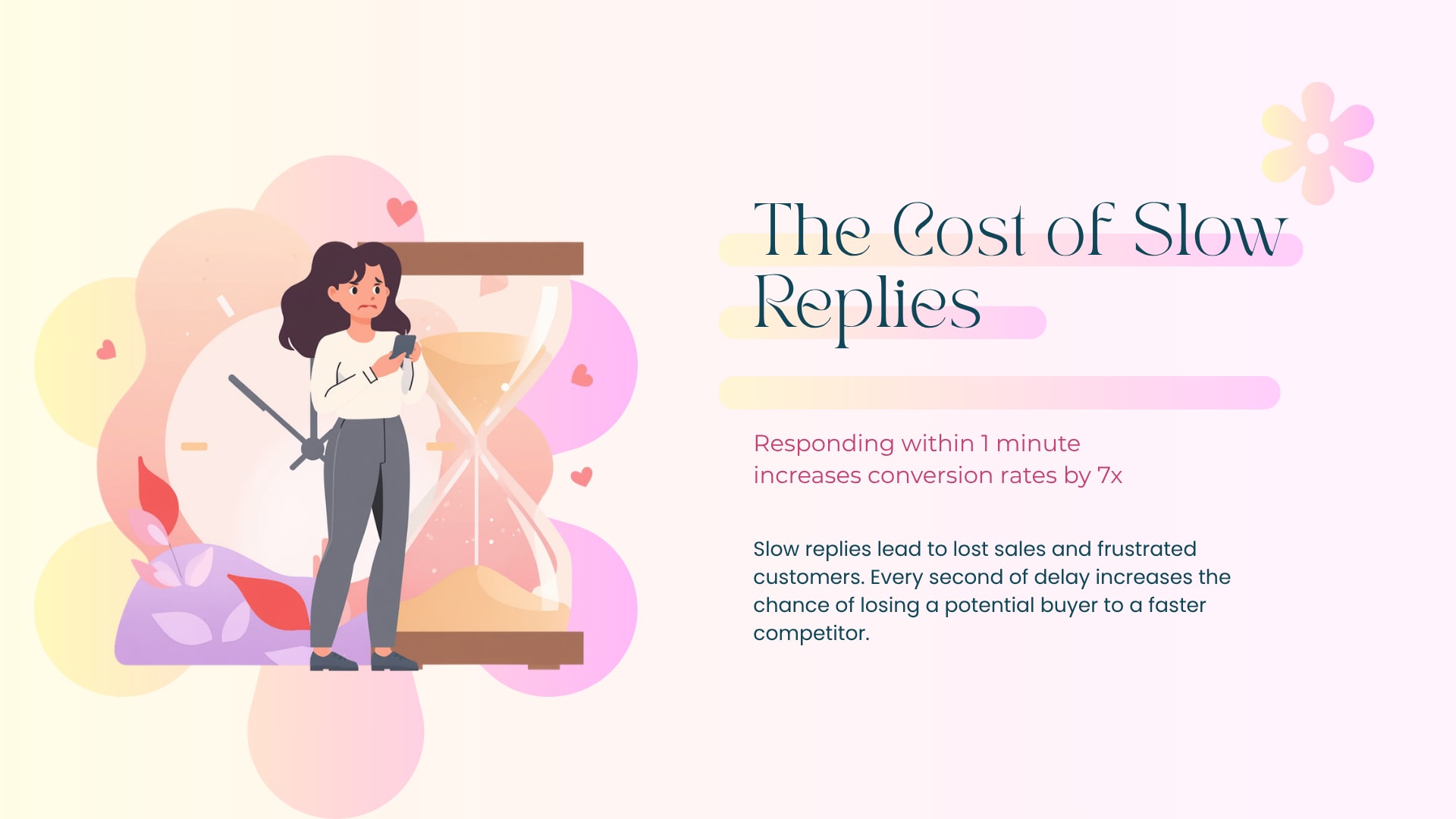
Why Fast Customer Response Matters More Than Ever
Fast customer response directly increases customer trust, improves buying confidence, and creates more sales opportunities. Businesses that answer questions quickly reduce customer hesitation, improve engagement, and significantly increase the likelihood of converting website visitors into paying customers.
Customer expectations have changed dramatically over the past decade.
People now order groceries within minutes, stream movies instantly, and receive same-day deliveries. Naturally, they expect businesses to communicate just as quickly.
Waiting several hours for a reply feels outdated.
A customer who asks about pricing, product availability, shipping, or service details is usually close to making a decision. Every minute of delay increases the chance that they will compare alternatives.
Research from customer experience platforms consistently shows that response speed plays a major role in customer satisfaction and purchasing decisions. Businesses that shorten response times often experience improvements in:
Lead generation
Customer engagement
Website conversions
Customer satisfaction
Brand reputation
Repeat purchases
The biggest advantage isn't simply replying faster.
It is replying before competitors do.
Imagine two companies selling identical products.
Company A responds in 30 seconds.
Company B responds three hours later.
Even if both products are similar, customers usually continue the conversation with Company A because momentum hasn't been lost.
That small difference often determines who wins the sale.
Customer Expectations Have Changed
Fast customer response has become a basic expectation rather than a premium service. Modern buyers expect immediate communication through website live chat, instant messaging, AI chatbot solutions, and online customer support whenever they visit a business website.
Consumers have grown comfortable with instant digital experiences.
They no longer separate communication from purchasing.
When customers visit a website, they expect answers while they are actively exploring products or services.
Questions often include:
Is this product available?
How much does installation cost?
Do you offer international shipping?
Which plan should be selected?
Is there customer support after purchase?
Can someone call today?
Every unanswered question creates uncertainty.
Every quick answer removes hesitation.
This explains why businesses increasingly use:
Website chatbot solutions
Live chat software
AI chatbot assistants
Customer support software
Instant messaging platforms
These tools don't replace human conversations.
Instead, they make sure customers never feel ignored.
The Cost of Slow Responses
Slow replies reduce customer confidence and often cause businesses to lose qualified leads before meaningful conversations begin. A poor fast customer response strategy leads to missed opportunities, lower conversions, weaker engagement, and unnecessary revenue loss.
Many businesses underestimate how expensive delayed communication really is.
They measure advertising costs carefully.
They optimize website design.
They invest in SEO.
Yet they overlook response speed.
Imagine spending thousands of dollars attracting visitors through Google Ads, SEO, or social media.
If those visitors ask a question and leave before receiving an answer, much of that marketing investment becomes wasted.
Common consequences include:
Visitors abandoning the website
Higher bounce rates
Lost inquiries
Lower conversion rates
Negative first impressions
Reduced customer trust
Poor online reviews
Lower customer retention
Slow communication doesn't only affect new customers.
Existing customers may also become frustrated when support requests remain unanswered.
That frustration often spreads through online reviews and social media, influencing future buyers.
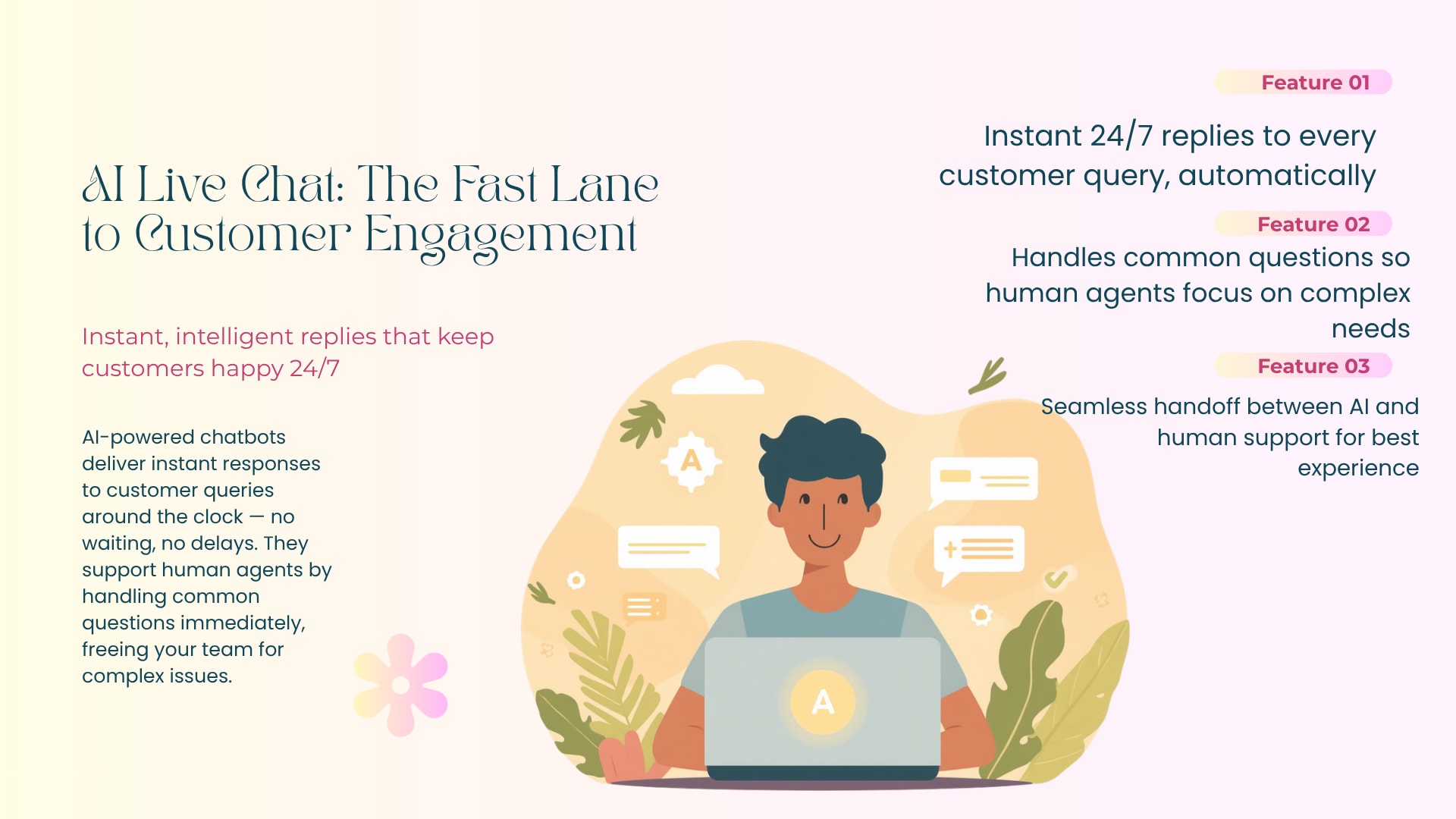
Slow Responses vs Fast Responses
Slow ResponsesFast ResponsesLower conversionsHigher conversionsLost leadsMore qualified leadsPoor customer experienceBetter engagementHigher bounce rateIncreased sales opportunitiesDelayed decision makingFaster purchasing decisionsReduced customer trustStronger customer confidenceMissed follow-upsImproved customer relationshipsLower customer satisfactionBetter overall customer experience
The Psychology Behind Quick Replies
Fast customer response creates reassurance during the customer's decision-making process. Quick replies reduce uncertainty, build trust, and encourage visitors to continue conversations instead of searching for competing businesses.
Buying decisions are emotional before they become logical.
Customers rarely purchase based only on features.
They purchase because they feel confident.
Fast replies help create that confidence.
Consider someone searching for accounting software.
They visit three different websites.
Each product looks similar.
One company immediately answers questions about pricing, setup, and integrations.
Another responds later that evening.
The third replies the following day.
Which company feels more trustworthy?
Most customers naturally prefer the business that communicates first.
Response speed signals professionalism.
Customers subconsciously associate quick communication with:
Reliability
Organization
Customer focus
Business efficiency
Product quality
Even when products are similar, faster communication creates a stronger emotional connection.
Why Immediate Answers Reduce Buying Anxiety
Fast customer response reduces uncertainty by answering customer questions before doubts become objections. Immediate conversations help customers feel supported, making them more comfortable moving toward a purchase decision.
Every purchase involves uncertainty.
Customers wonder whether they're making the right choice.
Questions left unanswered often become reasons not to buy.
Examples include:
"I'll think about it."
"I'll compare another company."
"I'll come back later."
Most of those customers never return.
Quick conversations interrupt that pattern.
Instead of allowing uncertainty to grow, businesses provide clarity immediately.
For example:
A visitor asks:
"Does this software work with Shopify?"
An instant reply removes uncertainty within seconds.
Now the customer continues exploring rather than leaving.
That single response can completely change the outcome of the sale.
First Impressions Are Formed Within Minutes
Fast customer response shapes a visitor's first impression almost immediately. Businesses that respond quickly appear more professional, responsive, and trustworthy, encouraging customers to continue engaging with their brand.
Websites create visual first impressions.
Conversations create emotional first impressions.
Even a beautifully designed website cannot compensate for silence.
Visitors often judge businesses based on questions like:
Did someone acknowledge the inquiry?
Was the answer useful?
Was the communication friendly?
Did the business seem interested?
These moments happen quickly.
A prompt greeting through website live chat or an AI chatbot reassures visitors that help is available whenever they need it.
That reassurance keeps them engaged.
How Fast Customer Response Builds Trust
Fast customer response strengthens trust because customers feel heard, respected, and valued. Quick communication demonstrates reliability and encourages visitors to continue interacting with a business instead of searching for alternatives.
Trust isn't built only after a purchase.
It starts during the first conversation.
Every quick response tells customers:
Someone is available.
Questions matter.
The business values their time.
Support will likely remain available after purchase.
These impressions influence every stage of the customer journey.
Businesses with consistent response speed often receive:
Better customer reviews
More referrals
Higher repeat purchase rates
Improved customer loyalty
Trust compounds over time.
Customers remember businesses that made communication easy.
They also remember businesses that ignored them.
That memory influences future buying decisions just as much as product quality.
Real Business Example: A Local Service Company
Fast customer response can dramatically improve inquiry-to-customer conversion rates, especially for service-based businesses where timing strongly influences purchasing decisions.
Consider a local plumbing company.
Two homeowners experience the same emergency.
Both search online.
Both submit inquiry forms.
The first company responds instantly through website live chat, confirms availability, shares pricing information, and books a technician.
The second company replies four hours later.
By then, the customer has already hired someone else.
The slower company didn't lose because of pricing.
It lost because it wasn't part of the customer's decision when it mattered most.
Similar situations occur daily across industries such as:
Healthcare
Legal services
Real estate
Education
Financial consulting
Home improvement
Digital agencies
SaaS companies
In each case, response speed often determines who earns the customer's trust first.
Industry Trends Show Response Speed Is Becoming a Competitive Advantage
Fast customer response is increasingly becoming a key differentiator as businesses adopt AI chatbot technology, website live chat, and intelligent customer support software to meet growing customer expectations.
Across nearly every industry, companies are shifting from reactive support to proactive communication.
Instead of waiting for support tickets or emails, businesses now provide instant conversations directly on their websites.
This trend is driven by several factors:
Customers expect real-time assistance.
Mobile users prefer immediate conversations.
Businesses want to reduce abandoned leads.
AI technology has become more accurate.
Live chat software is easier to implement than ever.
Many organizations now combine human support with intelligent automation.
For example, platforms like YourSiteChat allow businesses to greet visitors instantly, answer common questions around the clock, qualify leads, and route more complex conversations to human agents when needed. This balanced approach helps reduce response time while maintaining a personalized customer experience, making it easier to capture opportunities that might otherwise be lost.
How Fast Customer Response Increases Sales Conversions
Fast customer response has a direct impact on sales conversions because it keeps potential buyers engaged while their interest is highest. Businesses that answer questions immediately remove hesitation, build confidence, and make it easier for customers to complete a purchase instead of leaving the website.
Every sales journey has a critical moment. A visitor has already discovered the business, explored products or services, and is considering the next step. At that point, even a small question can determine whether they become a customer or disappear forever.
Many businesses assume price is the biggest factor in conversion. In reality, uncertainty often plays a larger role.
Questions like these stop customers from making decisions:
Which plan is right?
How long does delivery take?
Is technical support included?
Can the product be customized?
Is there a refund policy?
When answers arrive instantly, uncertainty disappears before customers have time to leave.
That is why companies with a strong fast customer response strategy consistently outperform competitors that rely only on contact forms or delayed email replies.
The Buying Window Is Smaller Than Most Businesses Think
Fast customer response works because customer intent fades quickly. Businesses that engage visitors during the decision-making moment are far more likely to convert interest into revenue than those that respond hours later.
Most website visitors are not browsing for entertainment. They have a purpose.
They may be:
Comparing software providers
Looking for a service quote
Shopping for a product
Booking an appointment
Evaluating agencies
Researching vendors
During this period, buying intent is at its highest.
If communication stops, attention shifts elsewhere.
A common scenario looks like this:
A visitor requests pricing from four different companies.
Company One replies within one minute.
Company Two replies after twenty minutes.
Company Three replies the next morning.
Company Four never replies.
By the time the slower companies respond, the conversation has already moved forward with Company One.
The opportunity wasn't lost because of product quality.
It was lost because momentum disappeared.
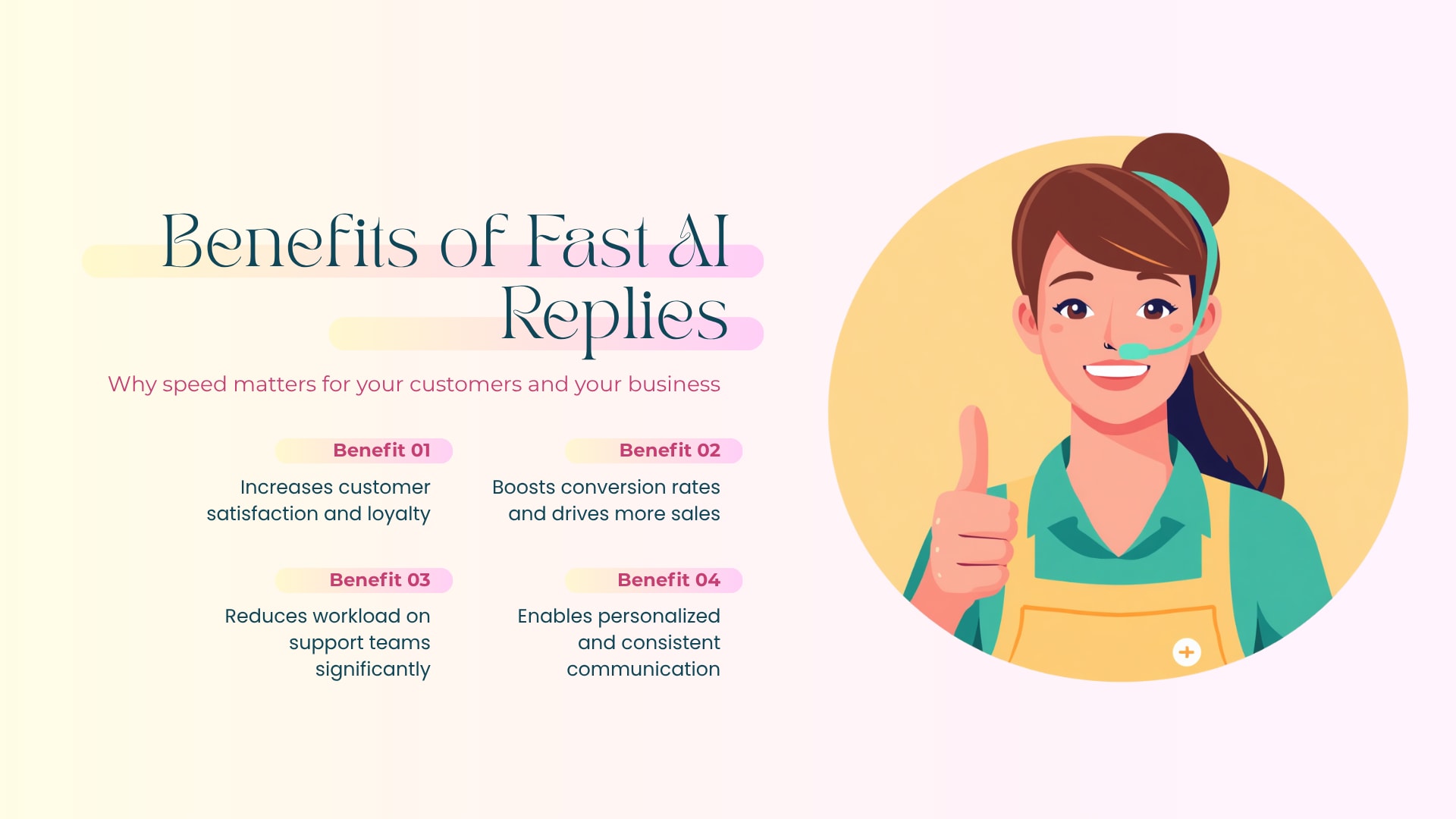
Why Customers Prefer Businesses That Reply First
Fast customer response creates a feeling of reliability before a sale even happens. Customers naturally trust businesses that communicate quickly because prompt replies signal professionalism, organization, and strong customer service.
Speed creates confidence.
When customers receive immediate replies, they often assume the company is equally efficient in other areas.
That perception influences expectations around:
Product quality
Delivery speed
Customer support
Reliability
After-sales service
A delayed reply creates the opposite impression.
Customers begin wondering:
Are they too busy?
Will support also be slow?
What happens if there is a problem later?
Those doubts can quietly end the buying journey.
Faster Conversations Shorten the Sales Cycle
Fast customer response helps customers make decisions sooner by removing unnecessary delays between questions and answers. Businesses often close deals faster because conversations continue without interruption.
Long response gaps slow everything.
Imagine a software company where every customer question receives an answer the next day.
A conversation that could have finished in thirty minutes now stretches across an entire week.
During that time:
Customers compare competitors.
Internal priorities change.
Budgets shift.
Interest declines.
Quick communication keeps the conversation moving naturally.
Instead of waiting overnight, customers receive information immediately and continue progressing toward a purchase.
This shorter sales cycle benefits both customers and businesses.
Fast Replies Improve Lead Generation Quality
Fast customer response improves lead generation by engaging visitors before they lose interest. Immediate conversations help businesses qualify prospects, understand customer needs, and focus sales efforts on the most promising opportunities.
Generating leads is only half the challenge.
The real goal is identifying qualified prospects.
Quick conversations allow businesses to ask useful questions while visitors remain engaged.
Examples include:
What service are they looking for?
What budget do they have?
When do they plan to buy?
Which industry do they belong to?
How many employees does their company have?
The answers help sales teams prioritize leads instead of chasing every inquiry equally.
This creates better efficiency and higher conversion rates.
AI Chatbots Can Capture Leads Around the Clock
Fast customer response becomes possible twenty-four hours a day when businesses combine human support with an AI chatbot. Automated conversations ensure visitors receive immediate assistance even outside business hours.
Many businesses lose leads overnight simply because nobody is available.
Potential customers often browse websites during evenings, weekends, or holidays.
Without immediate assistance, they leave.
An AI chatbot solves this problem by providing instant responses while collecting valuable information.
It can:
Welcome visitors
Answer common questions
Collect contact details
Recommend products
Schedule meetings
Route complex conversations to human agents
This means businesses continue generating leads even when the office is closed.
Solutions such as YourSiteChat make this process simple by combining AI-powered conversations with website live chat, allowing businesses to capture opportunities every hour of the day while maintaining a smooth customer experience.
Customer Satisfaction Starts With Response Speed
Fast customer response is one of the strongest drivers of customer satisfaction because people appreciate businesses that respect their time. Prompt communication reduces frustration and creates a smoother overall customer experience.
Customers remember how businesses make them feel.
Even when a problem cannot be solved immediately, a quick acknowledgment makes a significant difference.
Consider these two situations.
Scenario One
A customer reports an issue.
The company replies within one minute:
"Thank you for reaching out. Our team is reviewing your request and will update you shortly."
The customer feels reassured.
Scenario Two
The same customer waits twelve hours before receiving any acknowledgment.
Even if the final solution is identical, the experience feels much worse.
Silence creates anxiety.
Communication builds confidence.
Small Responses Can Have a Big Impact
Fast customer response does not always require an immediate solution. Often, simply acknowledging a customer's message quickly is enough to reduce frustration and maintain trust.
Businesses sometimes avoid replying because they don't have the complete answer.
This is a mistake.
Customers usually appreciate transparency.
A simple response like:
"We've received your request and are checking the details. We'll update you within the next thirty minutes."
is far better than complete silence.
Customers understand that some issues require investigation.
They simply want to know someone is listening.
Common Customer Service Mistakes That Slow Response Time
Fast customer response becomes difficult when businesses rely on outdated communication processes. Small operational mistakes often create unnecessary delays that frustrate customers and reduce conversion opportunities.
Many businesses believe they need more staff.
Often, they simply need better systems.
Some of the most common mistakes include:
1. Relying Only on Contact Forms
Many websites ask visitors to fill out lengthy forms without offering immediate assistance.
Customers submit their inquiry and receive nothing except an automated email.
Hours later, they have already moved on.
2. Ignoring Website Visitors
Businesses often invest heavily in SEO, paid advertising, and social media.
Then they ignore visitors once they arrive.
Traffic alone doesn't generate revenue.
Conversations do.
3. Using Too Many Communication Channels Without Coordination
Customers may contact a business through:
Email
Website live chat
Facebook
Instagram
WhatsApp
Contact forms
Without a centralized communication process, messages get missed.
Delayed replies become inevitable.
4. Depending Only on Human Availability
Support teams cannot work around the clock.
Visitors don't stop browsing after office hours.
Businesses that rely entirely on manual responses often lose valuable inquiries during evenings and weekends.
5. Giving Generic Responses
Customers don't want copy-and-paste answers that ignore their actual questions.
Quick replies should still feel helpful.
Personalized communication creates stronger engagement than generic scripts.
Response Speed Strengthens Customer Loyalty
Fast customer response doesn't only help acquire customers—it also encourages them to return. Businesses that consistently communicate quickly create positive experiences that strengthen long-term customer relationships.
Winning a new customer costs significantly more than keeping an existing one.
Returning customers already know the brand.
What keeps them coming back?
Reliable communication.
Customers appreciate businesses that:
Answer questions quickly
Resolve issues efficiently
Keep them informed
Respect their time
Make support easy to access
Positive experiences accumulate over time.
A customer who receives excellent support today is more likely to purchase again next month.
They are also more likely to recommend the business to friends, colleagues, and family members.
Word-of-mouth marketing often begins with outstanding customer service rather than exceptional advertising.
Fast Communication Creates a Competitive Advantage
Fast customer response gives businesses an advantage that competitors cannot easily copy overnight. While products and pricing can be matched, consistently delivering quick, helpful communication requires the right strategy, technology, and customer-focused culture.
Many industries have become highly competitive.
Features look similar.
Prices are comparable.
Marketing messages often sound alike.
Customer experience becomes the deciding factor.
Businesses that consistently respond first stand out because they remove friction from the buying journey.
A visitor who receives instant answers is less likely to continue searching elsewhere.
That is one reason many growing businesses are investing in live chat software, online customer support, and intelligent website chatbot solutions. Platforms such as YourSiteChat help organizations respond faster, manage conversations more efficiently, and support visitors the moment they arrive on a website. Instead of waiting for customers to send an email and hope for a reply, businesses can begin meaningful conversations immediately, increasing both customer satisfaction and sales conversions.
Best Practices to Build a Fast Customer Response Strategy
Fast customer response becomes consistent when businesses combine the right processes, technology, and team habits. A clear communication strategy helps reduce response time, improve customer engagement, and ensure every inquiry receives timely attention without sacrificing quality.
Responding quickly is not about asking employees to work faster. It is about removing the delays that slow communication.
Many businesses discover that their biggest problem is not a lack of staff—it is a lack of systems.
Creating a reliable response strategy starts with understanding the customer journey. Every touchpoint should make it easy for visitors to ask questions and receive answers without unnecessary waiting.
1. Make Live Chat Available on Every Important Page
Fast customer response starts by making communication easy. Placing website live chat on key pages allows visitors to ask questions the moment they need help instead of searching for contact information.
Customers often have questions while viewing:
Pricing pages
Product pages
Service pages
Checkout pages
Booking pages
FAQ sections
If they cannot quickly find help, many will simply leave.
A visible website live chat widget removes that friction.
Instead of opening a new email, filling out a form, or searching for a phone number, visitors can start a conversation immediately.
This small change often improves:
Customer engagement
Time spent on the website
Lead generation
Sales conversions
2. Respond Within the First Few Minutes
Fast customer response has the greatest impact during the first few minutes after an inquiry. Prompt replies keep conversations active while customer interest is still high.
Businesses should establish realistic response targets.
For example:
Acknowledge every new inquiry immediately.
Answer simple questions within a few minutes.
Escalate complex requests to the appropriate team.
Keep customers informed if additional time is needed.
Customers appreciate transparency.
Even when an issue cannot be resolved immediately, regular updates prevent frustration.
3. Use AI for Routine Questions
Fast customer response becomes easier when repetitive questions are handled by an AI chatbot. Automation frees human agents to focus on conversations that require expertise and personal attention.
Many customer questions are repetitive.
Examples include:
Business hours
Shipping information
Pricing
Product availability
Appointment scheduling
Service areas
Refund policies
These questions do not always require a human representative.
An AI chatbot can provide accurate answers instantly while allowing support teams to concentrate on higher-value conversations.
This approach improves efficiency without reducing service quality.
4. Keep Human Support Available
Fast customer response should combine automation with human expertise. Customers appreciate immediate answers, but they also value speaking with a real person when situations become more complex.
Automation should never become a barrier.
Instead, it should act as the first step.
For example:
A chatbot answers basic questions.
If the visitor requests a custom quote or technical assistance, the conversation transfers smoothly to a support representative.
This combination creates a balanced customer experience.
AI Chatbot vs Human Support: Which Is Better?
Fast customer response is strongest when AI chatbots and human agents work together. Automation provides instant replies, while human representatives deliver empathy, judgment, and personalized solutions for complex situations.
Many business owners believe they must choose between automation and human support.
In reality, the most successful companies use both.
An AI chatbot excels at:
Instant greetings
Frequently asked questions
Lead qualification
Appointment booking
Collecting customer information
Providing support outside business hours
Human representatives excel at:
Negotiations
Complex troubleshooting
Sensitive customer issues
Personalized recommendations
Relationship building
The best customer experience combines these strengths.
Visitors receive immediate assistance while knowing a real person is available whenever needed.
When AI Provides the Best Experience
Fast customer response through AI works best for predictable and repetitive interactions where customers simply need accurate information without waiting.
Good examples include:
Tracking an order
Resetting a password
Viewing pricing
Booking consultations
Finding documentation
Scheduling demos
These tasks can often be completed in seconds.
Customers appreciate speed more than lengthy conversations.
When Human Conversations Matter Most
Fast customer response should always include human assistance for conversations involving emotions, complex decisions, or customized business requirements.
Examples include:
Enterprise software discussions
Healthcare consultations
Legal services
Financial planning
Complaint resolution
High-value purchases
Customers expect empathy and thoughtful communication during these interactions.
Technology should support—not replace—that experience.
How Website Live Chat Improves Customer Engagement
Fast customer response becomes easier when businesses actively invite conversations instead of waiting for visitors to send emails. Website live chat encourages engagement by providing immediate assistance exactly when customers need it.
Many visitors hesitate to contact businesses.
They worry about waiting for replies.
Live chat changes that experience.
A simple message such as:
"Hi! Need help choosing the right plan?"
can start a valuable conversation.
Instead of leaving the website with unanswered questions, visitors receive immediate guidance.
This increases:
Customer engagement
Time on site
Product understanding
Buying confidence
Businesses also gain valuable insights into customer concerns, allowing them to improve products, services, and website content.
How to Reduce Response Time Without Hiring a Large Team
Fast customer response does not always require additional employees. Businesses can significantly reduce response time by improving workflows, automating repetitive tasks, and organizing customer communication more effectively.
Growing businesses often assume hiring more support agents is the only solution.
Often, smarter systems deliver better results.
Practical ways to reduce response time:
Create answers for common questions.
Install live chat software on the website.
Use an AI chatbot for routine inquiries.
Route conversations to the correct department automatically.
Track response time metrics weekly.
Set internal response targets.
Review missed conversations regularly.
Train staff to communicate clearly and efficiently.
These improvements usually produce noticeable results without dramatically increasing operating costs.
Choosing the Right Customer Support Software
Fast customer response depends on using customer support software that keeps conversations organized, accessible, and easy to manage across multiple communication channels.
The ideal platform should simplify communication rather than complicate it.
Business owners should look for features such as:
Website live chat
AI chatbot capabilities
Multi-agent support
Lead capture forms
Visitor tracking
Conversation history
Mobile access
CRM integration
Analytics dashboards
Automated routing
As customer expectations continue to rise, businesses need tools that help them respond instantly without creating extra work for support teams.
One solution that fits these requirements is YourSiteChat. It combines website chatbot technology, AI-powered conversations, and online customer support into a single platform. Businesses can answer customer questions in real time, capture leads automatically, provide assistance outside business hours, and ensure visitors receive immediate attention instead of waiting for email replies.
Because the platform supports both automation and live conversations, it helps businesses improve response speed while maintaining a personalized customer experience.
Measuring Customer Response Performance
Fast customer response should be measured consistently to identify opportunities for improvement. Businesses that track response metrics can optimize customer service and improve overall business communication over time.
Improvement begins with measurement.
Without data, businesses often rely on assumptions.
Important metrics include:
First response time
Average resolution time
Customer satisfaction score
Live chat response rate
Missed conversations
Lead conversion rate
Returning customer rate
Tracking these numbers helps managers identify bottlenecks before they affect customer experience.
For example, if response times increase every Monday morning, staffing schedules may need adjustment.
If customers frequently ask the same question, website content may require improvement.
Small observations often lead to meaningful improvements.
Industry Examples of Fast Customer Response in Action
Fast customer response delivers measurable benefits across nearly every industry because customers value timely communication regardless of the product or service being offered.
SaaS Companies
Software providers often use AI chat and live chat to answer product questions, schedule demonstrations, and help visitors compare pricing plans before they leave the website.
Real Estate Agencies
Property buyers expect immediate information about availability, pricing, and viewing appointments. Faster replies often lead to more qualified inquiries.
Healthcare Providers
Patients appreciate quick appointment scheduling and answers to general service questions, reducing uncertainty before visiting a clinic.
Educational Institutions
Universities and training centers receive hundreds of admission inquiries. Instant responses improve student engagement and increase application completion rates.
E-commerce Businesses
Online shoppers frequently ask about delivery, returns, product availability, and payment methods. Immediate assistance helps reduce abandoned carts and encourages completed purchases.
Across every industry, one pattern remains consistent:
Businesses that communicate faster create smoother customer experiences, build stronger relationships, and capture more opportunities before competitors have a chance to respond.