Managing social media can quickly become a full-time responsibility. Businesses need to find content ideas, write captions, create posts, schedule them, publish across platforms, monitor comments, understand analytics, and respond to potential customers. AI automation in social media marketing helps connect many of these repetitive activities into a more organized workflow.
Instead of treating content creation, social media scheduling, engagement, and reporting as separate jobs, businesses can use AI-powered systems to support several stages of the marketing process. AI can help identify content opportunities, generate drafts, organize calendars, repurpose existing material, monitor interactions, and summarize performance data.
However, automation does not mean removing people from social media marketing. Brand strategy, creativity, fact-checking, customer empathy, and final approval still require human judgment. The real value comes from combining human direction with efficient automation.
This guide explains how AI automation in social media marketing works, what tasks can be automated, where it can help businesses, what risks to consider, and how platforms such as TheViralMarketing and YourSiteChat can fit into a broader marketing workflow.
How Does AI Automation in Social Media Marketing Work?
AI automation in social media marketing uses artificial intelligence and automated workflows to assist with content planning, creation, scheduling, publishing, engagement, analytics, and customer communication. Instead of manually moving between separate tools for every task, businesses can connect repetitive activities into a structured social media workflow.
Traditional social media automation usually follows predefined rules. A post is created manually, placed into a scheduler, and published at a selected time. AI-powered social media automation adds an intelligent layer that can assist with decisions and content-related tasks.
For example, a business could provide its industry, audience, services, preferred platforms, and brand voice. An AI system can then help generate content ideas and draft captions around those requirements. A marketer can review the suggestions before they enter the content calendar.
What Can AI Automate in Social Media Marketing?
Direct Answer: AI can assist with content ideation, caption writing, post creation, content calendars, social media scheduling, automated publishing, content repurposing, audience analysis, engagement monitoring, reporting, and parts of customer communication. The exact capabilities depend on the automation platform and how the workflow is configured.
A practical social media workflow automation process can look like this:
Identify a campaign goal.
Generate relevant content ideas.
Create draft captions and post concepts.
Adapt content for different platforms.
Add approved content to a calendar.
Schedule or publish posts.
Monitor engagement and conversations.
Review performance data.
Improve future content based on the findings.
This creates a connected workflow instead of a collection of unrelated manual tasks.
How Does AI Help With Content Creation?
AI content creation can begin with a simple topic, product description, blog article, customer question, or campaign objective. The system can turn that information into possible captions, post formats, headlines, or content themes.
AI-generated social media content can also help repurpose existing material. For example, one long-form blog can become several social posts, a short educational series, or different platform-specific captions.
Human review remains important because AI-generated content can contain incorrect information, sound repetitive, or fail to match a brand's personality.
How Does Automated Scheduling and Publishing Work?
Social media scheduling allows approved content to be placed into a calendar before publication. Instead of logging into each platform every day, a business can prepare content in batches and use automated social media posting according to its selected schedule.
AI can support this process by helping organize content themes, identify gaps in the calendar, and prepare drafts. Automation can then handle repetitive publishing steps where supported.
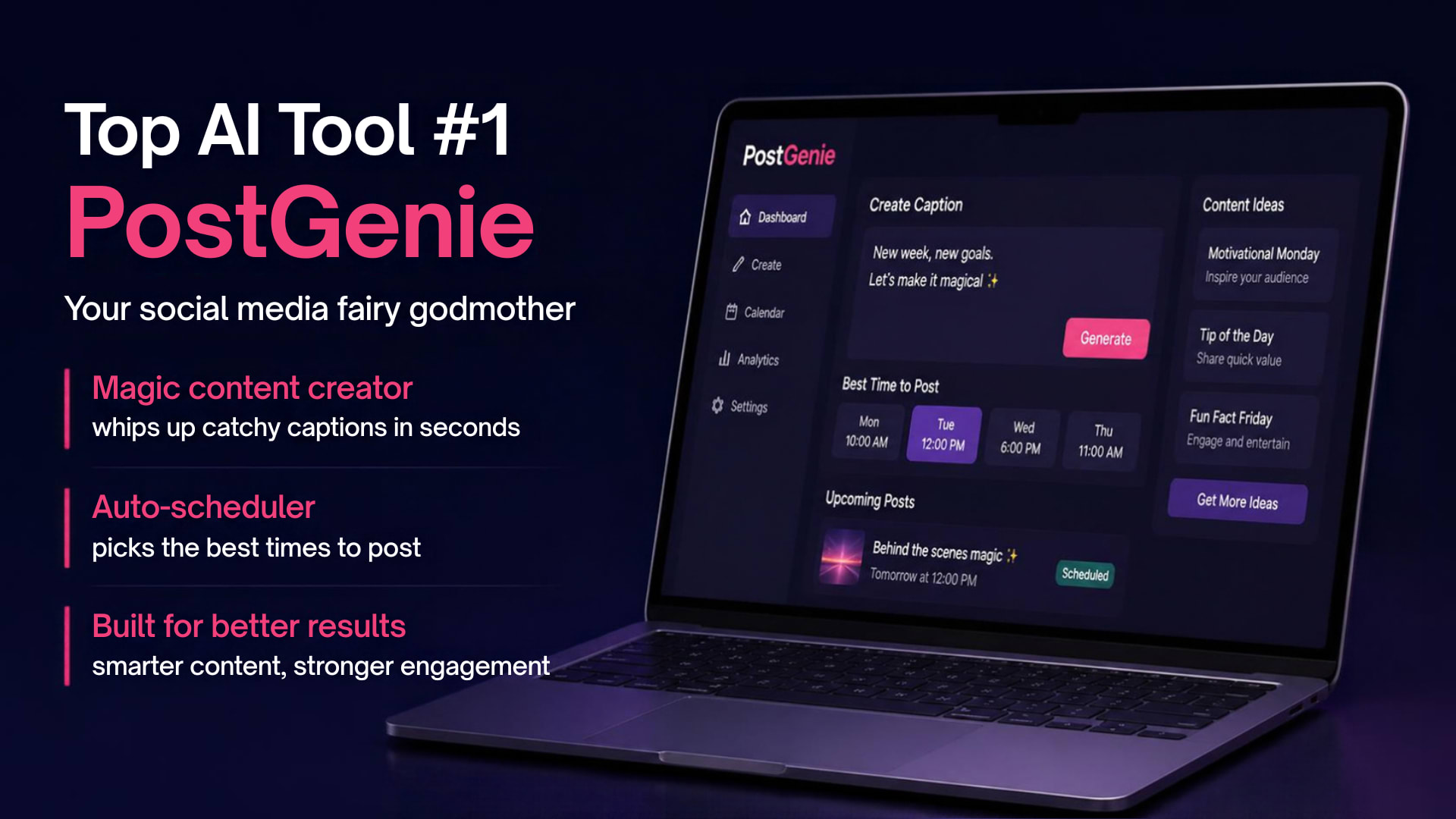
TheViralMarketing is relevant to this type of workflow because its published positioning focuses on AI-assisted social media management and connected content workflows. Businesses exploring the platform can review its current capabilities directly at TheViralMarketing rather than assuming that every automation feature is available on every plan.
Traditional vs AI-Powered Social Media Automation
AreaTraditional Social Media AutomationAI-Powered Social Media AutomationContent creationMostly manualAI can assist with drafts and ideasDecision-makingRule-basedCan use context and patternsPersonalizationLimitedCan adapt content and responsesSchedulingPredefined timesCan support smarter content workflowsEngagementBasic triggersCan assist with conversation analysisAnalyticsReports numbersCan help interpret patternsAdaptabilityRequires manual changesCan adjust workflows based on inputsHuman involvementNeeded for most contentStill essential for strategy and approval
The important distinction is that AI automation in social media marketing can support both execution and analysis, while traditional automation is generally focused on repeating predefined actions.
What Are the Benefits of AI Automation in Social Media Marketing?
The main benefits of AI automation in social media marketing are reduced repetitive work, faster content production, more consistent publishing, easier multi-platform management, quicker analysis, and better-connected marketing workflows. AI can help teams spend less time on routine execution while keeping people responsible for strategy, creativity, quality, and important customer decisions.
Social media teams often lose time switching between content documents, design tools, scheduling platforms, analytics dashboards, and communication channels. Social media management automation can bring several repetitive steps into a more organized process.
Does AI Improve Social Media Productivity?
Direct Answer: Yes. AI can improve productivity by assisting with repetitive tasks such as generating content ideas, drafting captions, organizing calendars, repurposing content, summarizing analytics, and preparing routine responses. This gives marketers more time to focus on campaign strategy, creative decisions, relationship building, and content review.
Consider a small business owner who manages social media personally. Without automation, the owner may need to:
Think of new topics every week
Write every caption manually
Schedule individual posts
Check several platforms
Review comments
Analyze performance
Prepare reports
With AI marketing automation, these activities can become connected steps in one workflow. The marketer still controls the direction, but less time is spent on repetitive execution.
How Can AI Improve Social Media Engagement?
AI-powered social media marketing can help businesses monitor conversations and identify common questions or potential buying signals. Engagement automation may assist with categorizing comments, identifying frequently asked questions, and routing conversations that require human attention.
This becomes especially useful when social media is connected to customer communication.
For example, someone may discover a business through Instagram and then visit its website to ask about pricing, availability, or appointments. A customer communication platform such as YourSiteChat can complement this journey by providing AI-assisted conversations across supported channels.
YourSiteChat currently describes AI chatbot capabilities including website, WhatsApp, Instagram, and Facebook communication, lead capture, appointment workflows, FAQ automation, analytics, and human escalation.
This illustrates an important point: social media automation does not have to stop when a post is published. Marketing automation can continue into customer conversations and lead-management workflows.
How Does AI Help With Analytics and Campaign Management?
Social media analytics can produce large amounts of information, including engagement, reach, clicks, audience behavior, and content performance. Reviewing every metric manually can make it difficult to identify what actually matters.
AI can help organize and summarize this information. A marketer can use those insights to compare content themes, identify weaker posts, understand audience interests, and decide what should be tested next.
AI does not automatically know which business goal matters most. A campaign focused on brand awareness may use different success indicators from a lead-generation campaign. Human strategy is therefore still necessary.
What Other Benefits Does Social Media Automation Provide?
Useful benefits can include:
Faster content preparation
More consistent publishing
Better content organization
Easier multi-platform management
Reduced repetitive manual work
Faster customer responses
More structured campaign workflows
Easier performance reporting
Better use of existing content
More time for strategic marketing work
These benefits are strongest when automation is designed around a clear process rather than added simply because AI is available.
How Can Businesses Use AI to Automate Social Media Marketing?
Businesses can start by identifying repetitive social media tasks, defining measurable goals, selecting suitable AI marketing tools, creating brand guidelines, building a content workflow, setting publishing rules, adding human approval, monitoring engagement, reviewing analytics, and improving the system over time. Start with a few repeatable processes before expanding automation.
Effective AI automation in social media marketing is less about automating everything and more about automating the right things.
1. Identify Repetitive Marketing Tasks
Start by listing tasks that happen repeatedly. Content scheduling, caption drafting, reporting, content repurposing, and routine engagement monitoring are often good candidates.
Tasks requiring sensitive judgment or complex customer conversations should usually remain under stronger human control.
2. Define Social Media Goals
Decide what the automation is supposed to support. Possible goals include:
Brand awareness
Website traffic
Lead generation
Customer engagement
Content consistency
Product education
Community building
A clear goal helps determine which workflows and analytics matter.
3. Select Suitable Automation Tools
Look for platforms that match the actual workflow. Important considerations include supported social networks, content creation capabilities, scheduling, publishing, analytics, integrations, approval controls, security, and ease of use.
Do not choose an AI tool simply because it has the largest feature list. A smaller system that fits the team's workflow can be more useful.
4. Create Brand Guidelines
AI needs clear direction. Define the brand voice, preferred vocabulary, target audience, visual standards, topics to avoid, approved claims, and content review requirements.
This helps reduce inconsistent or generic AI-generated social media content.
5. Build a Content Workflow
A basic content marketing automation workflow could move from:
Idea → Draft → Review → Approval → Schedule → Publish → Analyze
This structure makes responsibilities clear and creates opportunities for human quality control.
6. Set Scheduling and Publishing Rules
Define posting frequency, platform requirements, campaign dates, approval deadlines, and publishing permissions. Automated content publishing should follow these rules rather than operate without oversight.
7. Add Human Approval
Human approval is one of the most important safeguards. Before important posts are published, someone should check accuracy, tone, brand alignment, links, visuals, and potentially sensitive claims.
8. Monitor Engagement
Track comments, messages, reactions, and other interactions. Automated social media management can help organize information, but complex complaints, sensitive issues, and unusual questions should be handled by people.
9. Review Analytics
Use social media analytics to understand which topics and formats perform well. Compare the results with the original marketing goals instead of focusing only on vanity metrics.
10. Improve the Workflow Over Time
Automation should evolve. Review what works, remove unnecessary steps, improve prompts and brand rules, and adjust content processes based on actual performance.

Can AI Automate Customer Communication After Social Media?
Yes, but the customer journey needs to be designed carefully. Social media can attract attention, while conversational AI can help manage the next stage.
For example:
Social post → Website visit → AI conversation → Lead capture → Qualification → Human follow-up
YourSiteChat's published information describes workflows for AI conversations, lead capture, qualification, appointment booking, CRM connections, and human handoff.
This can connect social media engagement automation with broader digital marketing automation. The objective is not to make every interaction automated. Instead, automation can handle predictable steps while people manage conversations requiring judgment or personal attention.
What Are the Risks of AI Social Media Automation?
AI automation also has limitations. Incorrect AI-generated content can damage credibility, while repetitive posts may make a brand feel impersonal. Poorly configured engagement automation can produce inappropriate responses, and excessive automation can cause businesses to overlook important customer context.
Privacy, platform policies, access permissions, and content approval also need attention.
For these reasons, businesses should avoid completely hands-off social media automation. A better model is AI-assisted execution with human oversight.
How Should Businesses Evaluate an AI Automation Platform?
Before choosing a platform, ask:
Which social networks does it support?
Can content be reviewed before publishing?
Does it support scheduling and automated publishing?
Can existing content be repurposed?
What analytics are available?
Can workflows be customized?
How does it handle customer conversations?
What integrations are available?
How are user permissions managed?
Can humans easily take over automated interactions?
The best platform is not necessarily the one with the most AI features. It is the one that fits the business's content process, team structure, customer journey, and marketing goals.
Frequently Asked Questions
What is AI automation in social media marketing?
AI automation in social media marketing uses artificial intelligence to assist with activities such as content planning, caption creation, scheduling, publishing, engagement monitoring, analytics, and workflow management. It can reduce repetitive manual work while allowing marketers to remain responsible for strategy, creativity, fact-checking, and final approval.
How does AI automate social media marketing?
AI can support social media marketing by generating ideas, drafting captions, organizing content calendars, repurposing content, assisting with scheduling, analyzing performance, and identifying patterns in audience interactions. Businesses can connect these activities into a workflow so that content moves from planning to review, publishing, engagement, and analysis more efficiently.
Can AI create social media posts automatically?
Yes. AI can create draft social media posts from topics, product information, blogs, campaign goals, or other approved inputs. However, automatically generated content should be reviewed for accuracy, brand voice, originality, and relevance before publishing. Human approval is especially important for promotional claims and sensitive subjects.
What social media tasks can AI automate?
Common tasks include content ideation, caption drafting, content repurposing, calendar preparation, social media scheduling, automated publishing, engagement monitoring, analytics summaries, and parts of customer communication. The available level of automation depends on the specific AI marketing tools and social platforms being used.
Is AI social media automation useful for small businesses?
Yes. Small businesses can use AI social media automation to reduce repetitive work when one person manages several marketing responsibilities. Content planning, scheduling, caption creation, and reporting can be organized into repeatable workflows. However, automation should support the owner's marketing strategy rather than replace customer relationships or brand judgment.
Does AI automation replace social media managers?
No. AI automation can reduce repetitive execution, but social media managers still provide strategy, creativity, brand judgment, campaign direction, relationship management, and quality control. The role may shift toward managing systems, reviewing AI output, interpreting performance data, and making stronger strategic decisions.
What are the risks of social media automation?
Risks include inaccurate content, inconsistent brand voice, repetitive posts, inappropriate automated responses, privacy concerns, over-automation, and failure to recognize customer context. Platform rules also need to be considered. Human review can reduce these risks and help ensure that automation remains aligned with business standards.
How can businesses start using AI social media automation?
Start with a small number of repetitive tasks, such as content ideation, caption drafting, scheduling, or reporting. Define goals, create brand guidelines, select suitable tools, establish approval rules, monitor results, and improve the workflow gradually. Starting small makes it easier to identify problems before expanding automation.
How does AI improve social media engagement?
AI can help organize comments, identify common questions, detect possible buying signals, and support faster responses to routine interactions. When connected with customer communication systems, social media engagement can become part of a larger lead-generation or support workflow. Complex or sensitive conversations should still be handled by humans.
What should businesses consider when choosing an AI automation platform?
Businesses should consider supported platforms, scheduling, publishing, content capabilities, analytics, integrations, approval controls, permissions, security, customization, and customer communication features. The platform should fit the existing marketing workflow rather than forcing the team into unnecessary complexity.