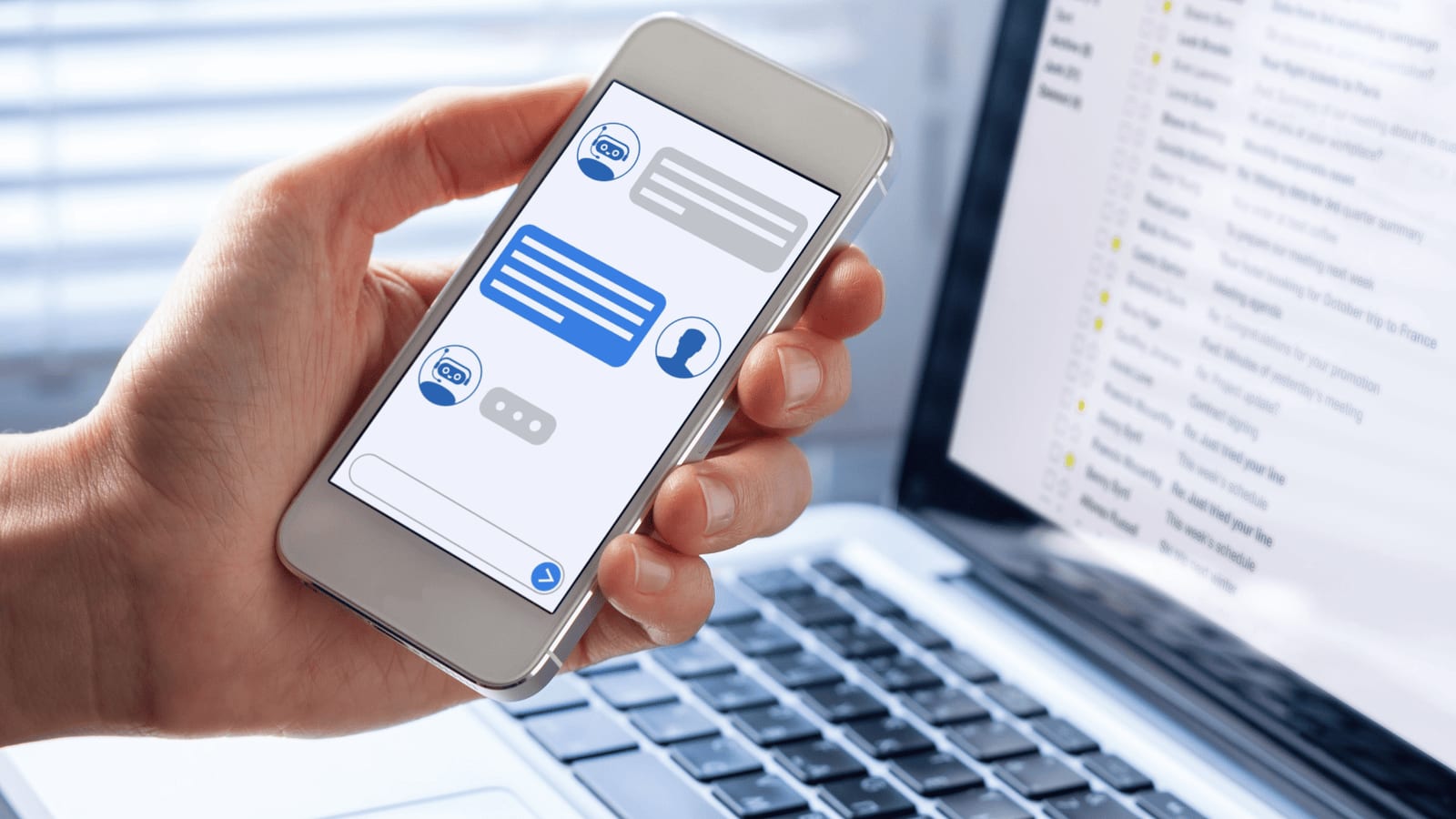
Deciding between a chatbot and live chat for your business isn’t as simple as picking the newest technology. I’ve seen companies invest heavily in automation only to find that customers were frustrated or sales stalled. At the same time, teams relying solely on live chat sometimes burn out handling repetitive questions. The truth is, there’s no universal “best solution.” It’s about matching the tool to your business goals, customer expectations, and operational reality. In our experience, understanding the chatbot vs live chat dynamics is the first step toward making decisions that actually improve your customer experience, save costs, and generate measurable ROI. By the end of this post, you’ll have clarity on when to invest in automation, when to rely on humans, and how to combine both for the best results.
What Is the Real Difference Between Chatbot vs Live Chat?
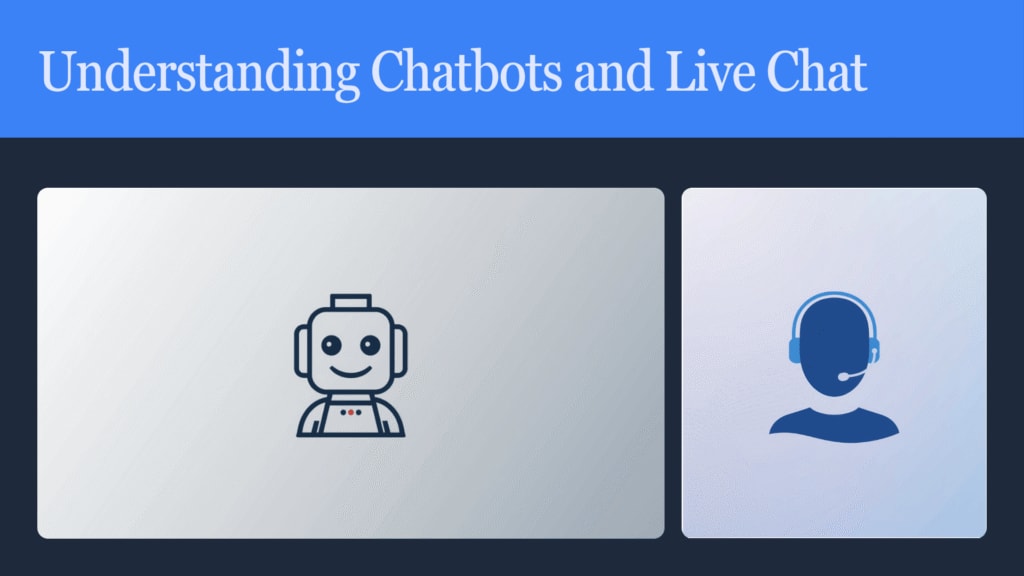
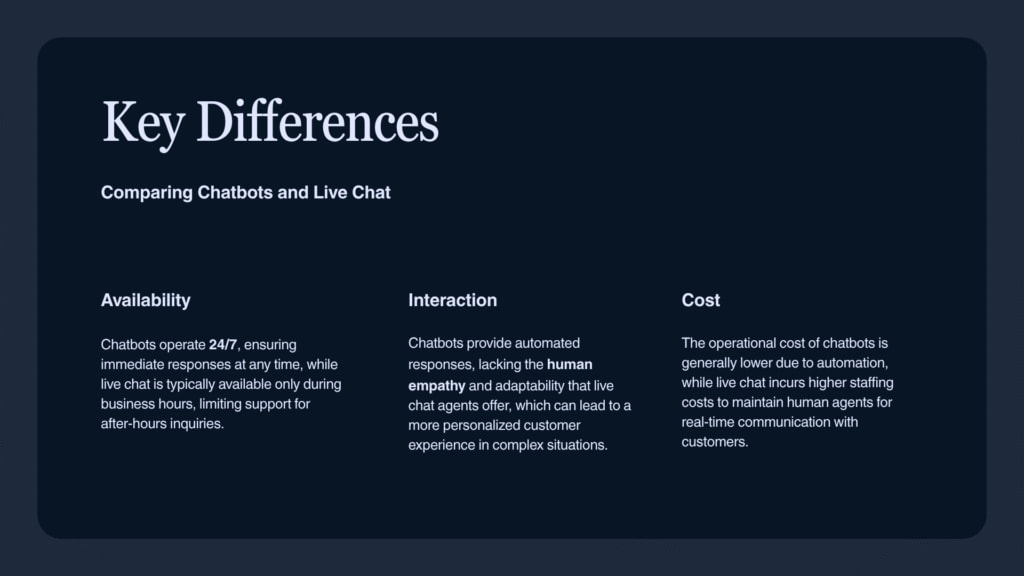
When we talk about chatbots and live chat, the difference isn’t just about “AI” or “humans.” It’s about speed, context, and expectations. Chatbots can instantly handle thousands of repetitive queries, working 24/7 without breaks. Live chat offers nuanced human judgment that a bot can’t replicate, especially when conversations get complex or emotional. Understanding these differences is essential before you invest in either system.
How Chatbots Work in Modern Customer Support
Chatbots rely on AI algorithms and predefined rules to guide users through conversations. They excel in handling repetitive questions, processing simple requests, or helping customers navigate your site. With proper AI chatbot analytics, you can track engagement, identify drop-offs, and optimize the bot’s responses over time. The key is designing a chatbot that feels natural without overpromising. A common mistake we’ve seen is launching a bot that tries to do everything and ends up frustrating customers — that’s why measuring chatbot performance metrics is so critical.
How Live Chat Works in Real-Time Sales and Support
Live chat is human-led and allows for context-aware interactions. Agents can detect frustration, answer nuanced questions, and offer personalized solutions. chatbot vs live chat Unlike chatbots, live chat can handle complex sales or service issues that require empathy or judgment. It’s particularly valuable for high-ticket products or services where trust is a key factor. But it comes with staffing costs and scaling challenges — which is why many businesses combine it with automation.
Where Businesses Commonly Get It Wrong
I’ve seen companies assume chatbots will fully replace live agents or that live chat alone will scale without burnout. Either extreme often leads to wasted investment. Businesses sometimes launch bots without proper AI chatbot analytics or fail to track chatbot return on investment, leaving teams blind to what works and what doesn’t. The right approach balances efficiency with human judgment.
Chatbot vs Live Chat: Comparing ROI, Cost, and Performance
The choice between chatbot and live chat isn’t just a technical decision; it’s financial. In our experience, the most effective decision comes from analyzing metrics like chatbot cost savings, live chat conversion rates, and support efficiency.
Chatbot Return on Investment Explained
When done right, chatbots reduce manual labor, handle high query volume, and provide 24/7 coverage. The ROI isn’t just in dollars saved; it’s also in increased availability and consistent answers. Using chatbot performance metrics, we track how many inquiries were resolved without human intervention, and how much time agents saved. Many clients are surprised to see that even a simple bot can cut support costs by 20–40% while improving response times.
Live Chat Conversion Rate and Human Trust Factor
Live chat shines when conversations are complex or require persuasion. chatbot vs live chat ,We’ve measured that adding live agents on high-value pages can improve conversion rates by 15–25% compared to automated responses alone. Humans can detect hesitation, answer nuanced questions, and create a trust factor that a chatbot can’t replicate. If your product or service is high-ticket or requires detailed explanation, live chat is often indispensable.
Cost Comparison: Automation vs Staffing
Chatbots involve upfront setup costs — conversation design, AI training, and analytics integration. Live chat involves salaries, training, and coverage hours. We advise clients to analyze cost per interaction. A well-implemented chatbot can handle hundreds of inquiries for the price of one live agent, while live chat is ideal for complex scenarios. The right mix maximizes chatbot cost savings without compromising customer experience.
When to Choose Chatbot, Live Chat, or Both
In reality, most businesses benefit from a hybrid approach. Understanding when each system is appropriate ensures efficiency, satisfaction, and measurable ROI.
When a Chatbot Is the Right Fit
Chatbots excel in high-volume scenarios: FAQs, tracking orders, password resets, or booking appointments. They’re perfect when your goal is to reduce repetitive agent work and provide 24/7 coverage. For companies struggling with scaling support, we often recommend implementing a bot first for the repetitive queries, and then routing complex cases to live agents.
When Live Chat Is Non-Negotiable
Live chat is essential when human judgment, empathy, or persuasion is required. For high-ticket sales, service escalations, or troubleshooting, nothing beats a real human who can read tone, ask clarifying questions, and build trust. Clients who tried bots alone for these situations often saw frustrated leads drop off — a clear lesson in the limits of automation.
Hybrid Model: The Smartest Approach for Most Businesses
We frequently design hybrid systems that combine chatbots and live chat. Bots handle simple tasks, collect context, and then escalate to human agents for complex queries. This approach gives clients the efficiency of automation and the trustworthiness of live support. Using AI chatbot analytics, we can see which queries need escalation and continuously refine the handoff.
How We Help Businesses Choose the Right Fit
Auditing Your Current Setup
We start by analyzing your current support channels. Are chatbots underperforming? Is live chat overwhelmed? Using real metrics, we identify gaps and wasted costs.
Fixing Underperforming Chatbots
We refine chatbot scripts, integrate analytics, and adjust workflows. The goal is measurable improvement — higher resolution rates and better chatbot return on investment.
Improving Live Chat Efficiency
We train agents, optimize response templates, and integrate live chat with chatbot support to ensure seamless escalation. This reduces workload while maintaining personal touch.
Building a Balanced Customer Support Automation Strategy
Finally, we design a strategy combining automation and human support that maximizes ROI, reduces costs, and improves customer satisfaction. By tracking chatbot performance metrics, AI chatbot analytics, and live chat KPIs, businesses finally get clarity and predictability.
FAQ
Q: Is chatbot better than live chat?
A: It depends on your business needs. Chatbots excel at repetitive queries and 24/7 coverage, while live chat is better for nuanced, high-stakes interactions. Most businesses benefit from a hybrid approach.
Q: Can chatbot replace live agents?
A: Not entirely. Bots can handle routine tasks, but complex queries require human judgment for trust and accuracy.
Q: Which is more cost-effective?
A: Chatbots save on repetitive task handling and agent costs, but live chat adds value where human judgment affects conversions. A hybrid often offers the best cost-benefit ratio.
Q: Does live chat increase conversion rates?
A: Yes, especially on high-ticket products or when buyers need clarification. Humans can detect hesitation and guide users effectively.
Q: What’s the best setup for small businesses?
A: Start with a chatbot for repetitive queries, then add live chat for escalations. Monitor metrics and adjust to maximize ROI.