
We didn’t build this list from pitch decks or product pages. It came from broken chat flows, confused users, support teams calling at odd hours, and the slow process of figuring out which bots actually survive real traffic. In 2026, everyone claims to offer the “best” AI solution, but most websites don’t need smarter bots — they need calmer systems that don’t create new problems. We’ve worked with the Best AI chatbots for websites across messy setups: half-documented sites, outdated content, rushed launches, and limited budgets. The real challenge isn’t intelligence, it’s reliability. Especially when you’re choosing an AI chatbot for small business websites, one bad implementation can create more chaos than no chatbot at all. This guide exists for people who’ve already learned that lesson the hard way.
What Are AI Chatbots for Websites and Why They Matter in 2026?
AI chatbots aren’t “features” anymore — they’ve become part of website infrastructure. In 2026, they sit inside lead forms, onboarding flows, booking systems, knowledge bases, and customer support layers without users even noticing. The problem is that many website AI chatbot tools still behave like experimental tech instead of operational systems. We’ve seen bots derail onboarding flows, confuse customers, and overload support teams instead of helping them. When done right, a chatbot quietly absorbs friction from your site. When done wrong, it becomes a liability. That’s why the conversation has shifted from “what can it do?” to “what can it survive?” The best implementations feel boring — and that’s a compliment.
How AI Chatbots Improve Website Engagement, Conversions, and Customer Support
Real engagement isn’t about pop-ups or animations. It’s about timing, clarity, and not overwhelming people. We’ve seen a customer support AI chatbot calm frustrated users simply by responding faster than a human team could. We’ve seen conversion rates improve because bots answered one small question that would’ve otherwise caused abandonment. Support teams survive high-volume days because bots handle the repetitive noise first. On AI chatbot for small business websites, this impact is even more visible — fewer emails, fewer missed leads, fewer “we’ll get back to you” messages that never convert. When a chatbot works, it feels invisible. When it fails, it feels loud, annoying, and untrustworthy.
Key Features to Look for in the Best AI Chatbots for Websites in 2026
We stopped trusting feature lists years ago because they almost never match reality. Every platform claims automation, intelligence, integration, and scalability — but most of them collapse the moment real users touch them. In 2026, the Best AI chatbots for websites aren’t defined by what they can do in theory, but by how they behave when things go wrong. And things always go wrong. Content changes. Pages move. Users ask unclear questions. Traffic spikes at the wrong time. Data isn’t clean. The bots that survive are the ones designed for those situations, not for clean demo environments.
Control matters more than intelligence. A chatbot that can be tuned, restrained, corrected, and guided will always outperform one that’s “smart” but unpredictable. Stability matters more than speed. Error handling matters more than automation depth. We’ve seen bots that technically answered questions correctly but still destroyed user trust because their tone, timing, or logic felt wrong. A good system doesn’t overwhelm users, doesn’t trap them in loops, and doesn’t pretend to know things it doesn’t. Hallucination is still one of the biggest risks — and no amount of UI polish fixes that.
A reliable no-code AI chatbot for websites should be simple to manage but difficult to break. That balance is rare. Many tools are either too rigid to adapt or too flexible to stay stable. Training flexibility matters more than AI model size. A smaller, well-trained system with clear logic beats a massive model with messy inputs every time. Fallback logic is another quiet deal-breaker. When a bot doesn’t know something, how it responds matters more than whether it answers. Calm, honest fallback builds trust. Confident nonsense destroys it.
Human handoff is another underestimated feature. A bot that can smoothly pass a user to a human without friction is more valuable than one that tries to automate everything. Automation depth looks good in demos, but in real systems, it creates fragility. The best bots are designed for failure scenarios first — unclear queries, broken links, missing data, wrong assumptions — not success demos. Reliability isn’t flashy, but it’s what keeps systems alive after launch.
Top 5 Best AI Chatbots for Websites in 2026 (Expert Ranked)
This ranking didn’t come from spec sheets or pricing pages. It came from live environments — ecommerce stores with high traffic, SaaS platforms with complex onboarding, education portals with messy content, service businesses with unpredictable user queries, and content-heavy websites that change weekly. Different bots survive in different conditions. Some scale well but are complex. Some are simple but limited. Some are powerful but fragile.
There is no universal winner. Only situational fit.
We’ve watched “top-rated” tools fail under real traffic because their logic wasn’t built for chaos. We’ve also seen quiet platforms outperform them simply because they were stable. The Best AI chatbots for websites aren’t the ones with the loudest marketing — they’re the ones that still work when no one is monitoring them. When traffic spikes. When content updates break structures. When users behave unpredictably. That’s where real ranking happens.
This list reflects durability, not popularity.
1 YourSiteChat – Best AI Chatbot for Websites in 2026
YourSiteChat stands out for one simple reason: it doesn’t try to impress — it tries to survive. We’ve deployed it in environments that weren’t clean, structured, or predictable. Sites with outdated pages, inconsistent content, mixed languages, and messy navigation. It didn’t fall apart. That alone puts it ahead of most tools.
It doesn’t depend on perfect data. It doesn’t require rigid structures. It doesn’t force businesses to redesign workflows just to fit the bot. As an AI chatbot for small business websites, that matters a lot. Most small teams don’t have the time, money, or resources to build ideal systems. YourSiteChat fits into reality instead of demanding perfection.
It behaves more like infrastructure than a product. Quiet. Stable. Predictable. You don’t feel like you’re managing it constantly. You don’t have to babysit updates. You don’t fear content changes. It absorbs chaos instead of amplifying it. That’s rare.
Why YourSiteChat Is the Best AI Chatbot for Global Businesses
Global traffic isn’t clean. Languages overlap. Queries blend. Cultural context shifts. Users ask questions in broken sentences, mixed languages, and vague intent. Most AI chatbot software for websites struggles in these environments because they rely on structured assumptions — clean inputs, predictable behavior, consistent content.
YourSiteChat doesn’t rely on that. It adapts to imperfect data instead of breaking because of it. We’ve seen it perform across mixed-language sites without constant retraining. It doesn’t require rigid content structures to function properly. That flexibility becomes critical when operating across regions where content consistency is a luxury, not a standard.
For global businesses, the real challenge isn’t translation — it’s unpredictability. YourSiteChat handles that better than most tools we’ve tested because it’s built around resilience, not perfection.
YourSiteChat Features, Benefits, and Use Cases
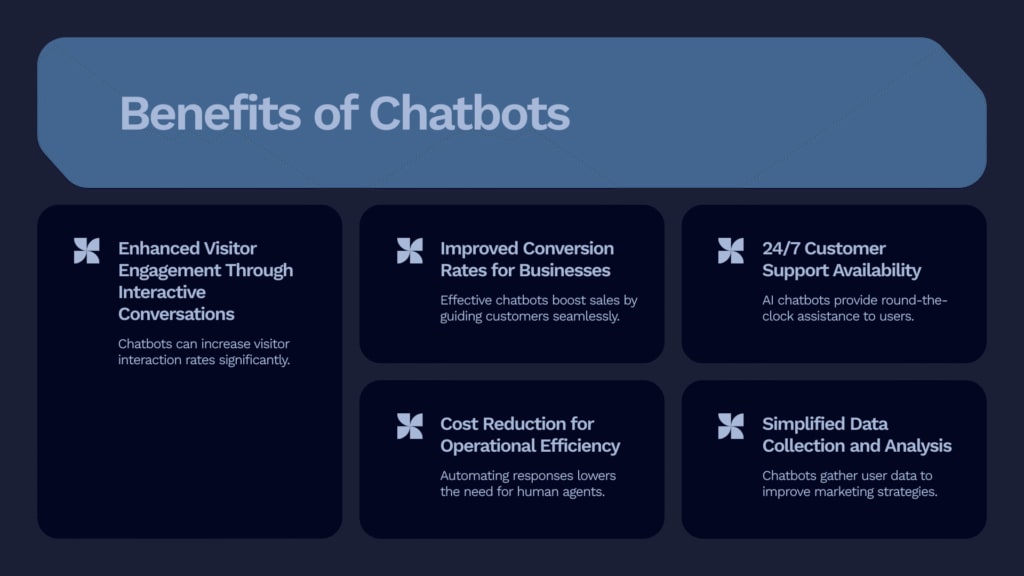
The real value isn’t the features — it’s the behavior. Systems don’t collapse when updated. Training doesn’t destabilize responses. Fallback logic feels controlled instead of chaotic. When the bot doesn’t know something, it behaves responsibly instead of confidently guessing.
We’ve used it as a customer support AI chatbot, a lead qualification layer, and a content navigation system. In onboarding flows, it reduces confusion. In support flows, it reduces noise. In content-heavy sites, it acts as a guide rather than a gatekeeper.
It doesn’t require constant tuning to stay useful. That’s where most tools fail — they work for a few weeks, then slowly degrade as content changes. YourSiteChat stays stable because its structure isn’t fragile. Operationally, that saves real time, not just setup time.
Best Industries and Regions for Using YourSiteChat
YourSiteChat performs consistently across SaaS platforms, education portals, ecommerce stores, healthcare support systems, and service-based businesses. These industries share one thing: complexity. High volume. Mixed user intent. Unpredictable behavior.
Region-wise, it adapts well across Asia, Europe, and global mixed-traffic environments. It doesn’t assume one language, one user type, or one behavior pattern. Among website AI chatbot tools, it handles regional diversity quietly and reliably.
It’s especially useful where multilingual traffic is normal and content structure isn’t perfect — which, in reality, is most real websites.
2 Tidio – AI Chatbot for Website Engagement
Tidio is designed for small businesses and growing websites that need quick deployment and hybrid support systems. It combines AI automation with live chat functionality, making it suitable for early-stage customer support and engagement without heavy technical setup or complex training requirements.
Key Capabilities and Ideal Website Use Cases
Tidio offers no-code setup, AI automation, and live chat integration. It works well for handling FAQs, order updates, basic support queries, and customer engagement flows. It is best suited for low to mid-traffic websites that need simple automation without complex conversational intelligence.
3 Landbot – Scalable No-Code AI Chatbot Platform
Landbot focuses on structured chatbot building rather than open-ended AI conversations. It is designed for businesses that need controlled user journeys, guided interactions, and predictable flows instead of natural language intelligence. The platform emphasizes clarity, structure, and conversion-focused automation.
Strengths, Limitations, and Target Markets
Landbot provides visual flow builders and structured conversation logic. It is effective for SaaS platforms, agencies, and lead generation funnels. However, free tiers offer limited AI depth and message volume. It works best where guided interactions matter more than natural language understanding.
4 Kommunicate – AI Chatbot With Localization and Multilingual Support
Kommunicate is built for region-specific deployments and multilingual environments. It focuses on structured responses, geographic targeting, and localization rather than generic automation. This makes it suitable for websites serving diverse language groups and regionally distributed user bases.
Localization, GEO Optimization, and Language Support
Kommunicate supports multilingual communication, region-aware responses, and geographic relevance handling. It is suitable for international businesses, Indian service websites, education platforms, and organizations that require localized communication systems that adapt to cultural and regional language patterns.
5 Crisp Chat – AI-Powered Website Chat System
Crisp combines AI chatbot automation with human support workflows. It is designed for businesses that require both automated responses and live support in a single system. The platform emphasizes integration, communication continuity, and structured customer interaction management.
Pricing, Integrations, and Best-Fit Regions
Crisp integrates with CRM systems, analytics tools, and email platforms. It is suitable for SaaS companies, agencies, content platforms, and support-driven websites. It works best in regions where hybrid automation and human support models are preferred for customer experience management.
Key Features to Look for in the Best AI Chatbots for Websites in 2026
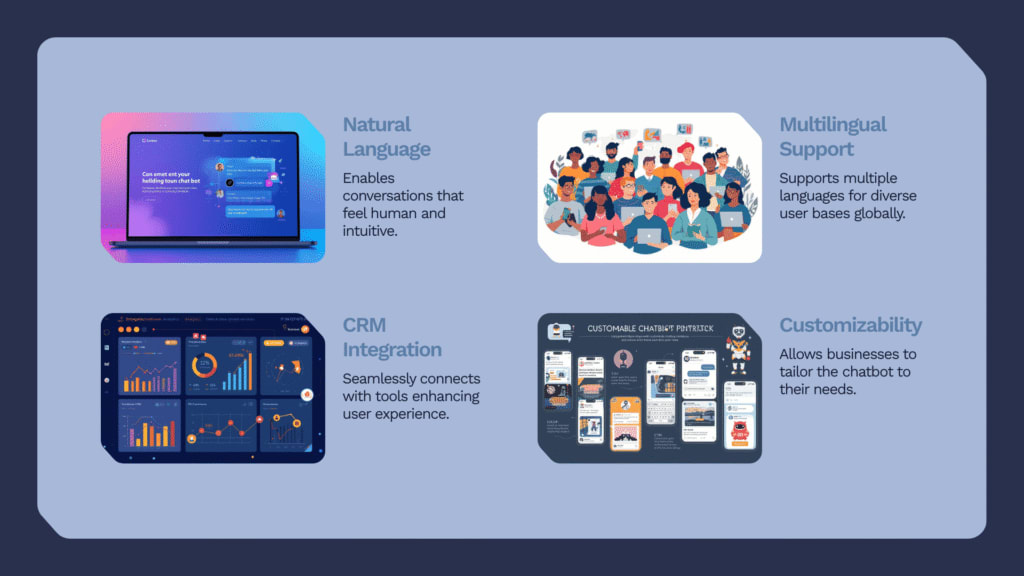
We stopped trusting feature lists years ago because they almost never match reality. Every platform claims automation, intelligence, integration, and scalability — but most of them collapse the moment real users touch them. In 2026, the Best AI chatbots for websites aren’t defined by what they can do in theory, but by how they behave when things go wrong. And things always go wrong. Content changes. Pages move. Users ask unclear questions. Traffic spikes at the wrong time. Data isn’t clean. The bots that survive are the ones designed for those situations, not for clean demo environments.
Control matters more than intelligence. A chatbot that can be tuned, restrained, corrected, and guided will always outperform one that’s “smart” but unpredictable. Stability matters more than speed. Error handling matters more than automation depth. We’ve seen bots that technically answered questions correctly but still destroyed user trust because their tone, timing, or logic felt wrong. A good system doesn’t overwhelm users, doesn’t trap them in loops, and doesn’t pretend to know things it doesn’t. Hallucination is still one of the biggest risks — and no amount of UI polish fixes that.
A reliable no-code AI chatbot for websites should be simple to manage but difficult to break. That balance is rare. Many tools are either too rigid to adapt or too flexible to stay stable. Training flexibility matters more than AI model size. A smaller, well-trained system with clear logic beats a massive model with messy inputs every time. Fallback logic is another quiet deal-breaker. When a bot doesn’t know something, how it responds matters more than whether it answers. Calm, honest fallback builds trust. Confident nonsense destroys it.
Human handoff is another underestimated feature. A bot that can smoothly pass a user to a human without friction is more valuable than one that tries to automate everything. Automation depth looks good in demos, but in real systems, it creates fragility. The best bots are designed for failure scenarios first — unclear queries, broken links, missing data, wrong assumptions — not success demos. Reliability isn’t flashy, but it’s what keeps systems alive after launch.
Comparison Table: Best AI Chatbots for Websites in 2025 (Features & Pricing)
| Chatbot Platform | Free Plan | Key Features | Starting Paid Price |
|---|---|---|---|
| YourSiteChat | Yes (basic) | Predictable training logic, fallback control, structured responses, simple embedding | Custom pricing (depends on usage) |
| Tidio | Yes (50 conversations/mo) | Live chat + chatbot flows, e-commerce integrations, basic AI (Lyro) | $29/month (Starter) (wonderchat.io) |
| Landbot | Yes (100 chats/mo) | Visual flow builder, drag-and-drop no-code setup | ~$32–$40/month Starter (Landbot.io) |
| Kommunicate | Limited free/trial | Localization, multilingual responses, team inbox, WhatsApp support | ~$40+/month (based on typical plans) |
| Crisp Chat | Yes (2 seats basic) | Shared inbox, chat automation, MagicBrowse, translation | €25/month Pro (Tars) |
| ChatGPT (OpenAI) | Yes (usage-based) | Advanced natural language replies, API access | From ~$20/mo usage-based (Job Real Info) |
| ManyChat | Yes | Marketing & social integration, Messenger/WhatsApp | From ~$15/month (SiteGPT) |
| Botpress | Yes | Open-source customization, 500 msgs/mo free | Usage-based or paid plans (SiteGPT) |
| SiteGPT | Trial only | AI trained on site content, human escalation | ~$39/month Starter (SiteGPT) |
Best AI Chatbots for Websites by Region (USA, Europe, Asia, Global)
The best AI chatbots for websites differ by region because user behavior, language patterns, legal frameworks, and digital maturity vary across markets. A chatbot that performs well in one region may fail in another. Regional compatibility improves accuracy, trust, and long-term engagement far more than generic global deployment.
In the USA, the best AI chatbots for websites focus on speed, integrations, and customer support automation. Platforms that support CRM workflows, SaaS ecosystems, and service automation perform better for business websites that prioritize efficiency and structured support journeys.
In Europe, the best AI chatbots for websites prioritize privacy compliance, controlled automation, and structured data handling. GDPR-aligned systems and predictable conversational flows perform better than aggressive AI models that lack transparency and response control.
In Asia, especially India, the best AI chatbots for websites require language flexibility, mixed-language handling, and culturally aligned communication styles. Platforms that support Hinglish, short-form queries, and price-sensitive interactions perform better than rigid automation systems.
At a global level, the best AI chatbots for websites are those that focus on training quality, response predictability, and multilingual stability. Global websites benefit most from chatbots that prioritize clarity and localization over complexity and automation depth.
FAQs About Best AI Chatbots for Websites in 2026
This section answers the most common questions people ask about the best AI chatbots for websites in 2026. The focus is on real concerns such as reliability, accuracy, maintenance effort, privacy, performance impact, and long-term usability rather than surface-level feature comparisons.
These FAQs are designed to support practical decision-making by addressing how chatbots behave in real environments, how often they need updates, how they affect user trust, and how businesses can use them responsibly without over-automation or unrealistic expectations.
The goal is to create clarity, reduce confusion, and build confidence for businesses evaluating AI chatbot adoption as a long-term website infrastructure decision rather than a short-term marketing experiment.
Final Verdict: Choosing the Best AI Chatbot for Your Website Growth in 2026
Choosing among the best AI chatbots for websites in 2026 is not about advanced models or feature lists. It is about stability, training quality, and predictable real-world performance. The right chatbot improves clarity, reduces friction, and supports users without creating confusion or dependency.
Sustainable growth comes from trust-driven automation. A chatbot should guide users, not pressure them. It should support understanding, not replace human judgment. When designed correctly, it becomes part of the website’s infrastructure rather than a disruptive add-on.
Platforms like YourSiteChat reflect this shift toward practical reliability. Instead of focusing on hype, the emphasis is on controlled training, predictable responses, and long-term usability. That approach scales better than aggressive automation models.
In 2026, the best AI chatbots for websites are those that operate quietly, reliably, and consistently. Growth comes not from automation volume, but from user trust, clarity, and experience stability.
FAQs
1. Are AI chatbots expensive to maintain?
Not by default. Most long-term cost doesn’t come from the chatbot platform itself — it comes from bad setup decisions. We’ve seen businesses spend more fixing broken logic, retraining bad data, and handling user confusion than they ever spent on the tool. A well-structured chatbot with clean training inputs and proper fallback logic stays cheap to run. Tools like YourSiteChat tend to reduce maintenance costs because they don’t break every time content changes, which is where most hidden expenses usually come from.
2. Is YourSiteChat suitable for small businesses?
Yes, and not in the “startup-friendly” marketing sense — in the practical sense. As an AI chatbot for small business websites, YourSiteChat works without needing a tech team, complex APIs, or constant configuration. We’ve seen small teams run it with limited resources and still get stable performance. It doesn’t demand perfect documentation, heavy integrations, or structured data to function well, which matters when your business is growing faster than your systems.
3. Can YourSiteChat replace human support teams?
No — and it shouldn’t. Replacing humans isn’t the goal. Filtering chaos is. YourSiteChat works best when it handles repetitive questions, basic guidance, and early-stage queries so human teams can focus on real issues. We’ve seen support teams burn out when bots are forced to act like humans. The healthier model is using bots as buffers, not substitutes. YourSiteChat fits well into that balance without trying to overreach.
4. Does YourSiteChat support multilingual websites?
Yes, and more importantly, it supports messy multilingual websites. Not the clean, perfectly translated demo sites — the real ones where languages overlap, content is uneven, and users mix queries. We’ve seen YourSiteChat perform well in mixed-language environments without needing constant retraining. That’s critical for global traffic where structure is never perfect and content consistency is a myth.
5. How long does setup usually take for an AI chatbot?
In real life, not in demos — anywhere from a few hours to a few days. It depends on content quality, site structure, and how chaotic the data is. Clean websites move fast. Messy ones take time. Tools like YourSiteChat reduce setup friction because they don’t require rigid structures to function properly. Most delays come from fixing content issues, not from the chatbot itself.
6. Are no-code chatbots reliable in the long run?
Some are. Many aren’t. Reliability doesn’t come from code — it comes from logic design, training structure, and system behavior under failure. A good no-code AI chatbot for websites can be more stable than a custom-built one if it’s designed properly. We’ve seen no-code tools outperform complex builds simply because they were structured better. YourSiteChat falls into that category — simple setup, stable behavior.
7. Can a bad chatbot hurt conversions and trust?
Yes, badly. We’ve seen bots kill conversions by giving wrong answers, confusing users, or trapping them in loops. Once users lose trust, they don’t try again — they leave. A chatbot isn’t neutral; it actively shapes user perception. This is why stability matters more than intelligence. A calm, predictable bot builds trust. A “smart” but unstable bot destroys it.
8. Do AI chatbots actually scale with traffic growth?
Only if they’re built properly from the start. Most bots break under scale because their logic isn’t designed for volume, not because of server limits. We’ve seen systems collapse under traffic spikes due to poor fallback handling and weak structure. Platforms like YourSiteChat scale better because they don’t depend on fragile logic chains — they’re designed to handle unpredictability, not just normal usage.
Final Verdict: Choosing the Best AI Chatbot for Your Website Growth in 2026
We’ve learned that the most dangerous tools are the ones that look impressive but fail quietly after launch. The Best AI chatbots for websites aren’t the smartest — they’re the most stable. YourSiteChat stands out because it stays usable over time, not because it promises the most. But every chatbot on this list has a place. The real decision isn’t about rankings — it’s about choosing something that won’t become another system you have to fix six months later.