
Healthcare organizations are under constant pressure to deliver faster, more personalized care while managing rising patient expectations and increasing administrative workloads. This is why the benefits of AI medical chatbots for hospitals and clinics have become impossible to ignore. Modern AI-powered chatbots help healthcare providers offer instant patient support, automate repetitive tasks, improve communication, and allow medical staff to focus more on patient care instead of routine administrative work.
An AI healthcare chatbot is no longer just a digital assistant that answers basic questions. Today's medical chatbots can schedule appointments, send medication reminders, collect patient information, assist with symptom assessments, and provide multilingual support around the clock. From small clinics to multi-specialty hospitals, conversational AI is becoming an important part of digital healthcare transformation.
This guide explores how AI medical chatbots improve patient engagement, streamline hospital operations, support healthcare professionals, and create better experiences for both patients and providers.
What are the biggest benefits of AI medical chatbots for hospitals and clinics today?
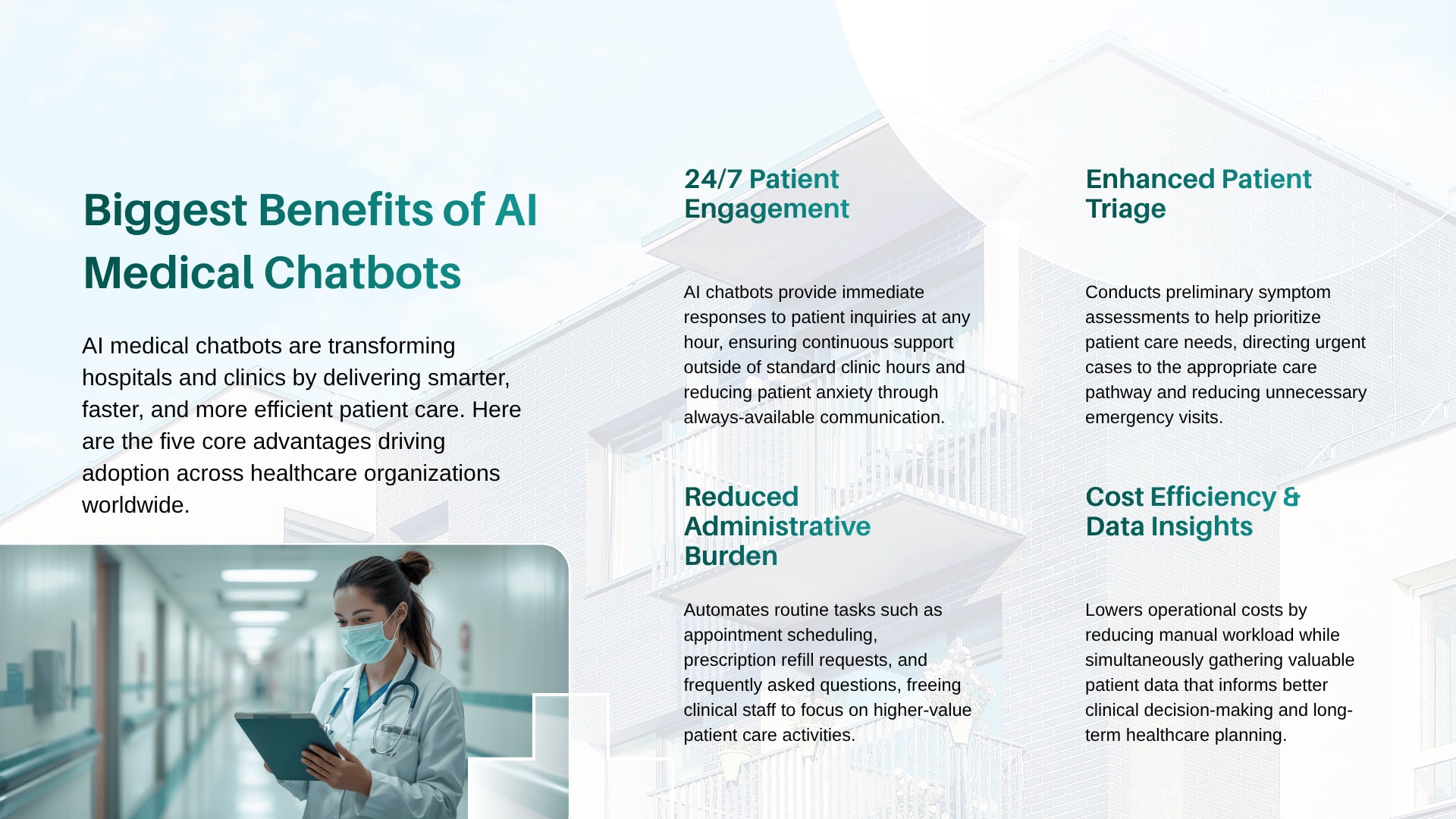
The benefits of AI medical chatbots for hospitals and clinicsextend far beyond answering patient questions. They improve patient communication, reduce administrative burdens, automate routine processes, support clinical workflows, and provide 24/7 assistance. As healthcare organizations continue to modernize, AI chatbots are becoming an essential tool for improving efficiency while maintaining high-quality patient care.
Healthcare providers deal with thousands of repetitive interactions every day. Patients ask about appointment availability, clinic timings, prescription refills, insurance coverage, laboratory reports, and follow-up consultations. Handling these requests manually consumes valuable staff time.
An AI healthcare chatbot can manage many of these conversations automatically while ensuring patients receive quick and consistent responses.
Some of the biggest advantages include:
Faster patient communication
Reduced waiting times
Better appointment management
Improved patient engagement
Lower administrative costs
Increased staff productivity
Continuous patient support
Better healthcare accessibility
Improved patient satisfaction
More efficient hospital workflows
Rather than replacing healthcare professionals, AI chatbots complement existing teams by handling repetitive tasks so doctors, nurses, and administrative staff can focus on more complex responsibilities.
Why are hospitals and clinics increasingly adopting AI medical chatbots?
Hospitals and clinics are adopting AI medical chatbots because they help solve everyday operational challenges while improving the patient experience. These solutions provide immediate responses, automate routine tasks, and support healthcare teams without increasing staffing requirements.
Healthcare systems have changed significantly over the past decade. Patients now expect the same convenience from healthcare providers that they receive from banking, travel, and online shopping services.
Instead of waiting on hold to book an appointment, many patients prefer using a chatbot that responds instantly.
Healthcare organizations are also facing:
Growing patient volumes
Staff shortages
Rising operational costs
Increased demand for digital services
Greater expectations for personalized communication
AI healthcare solutions help organizations respond to these challenges without sacrificing service quality.
Large hospitals often receive thousands of patient inquiries every day. Even if only half of those conversations involve routine questions, automating them can save hundreds of staff hours each month.
This explains why hospitals, specialty clinics, diagnostic centers, telemedicine providers, dental clinics, and wellness organizations continue expanding their use of conversational AI.
How has healthcare communication changed with conversational AI?
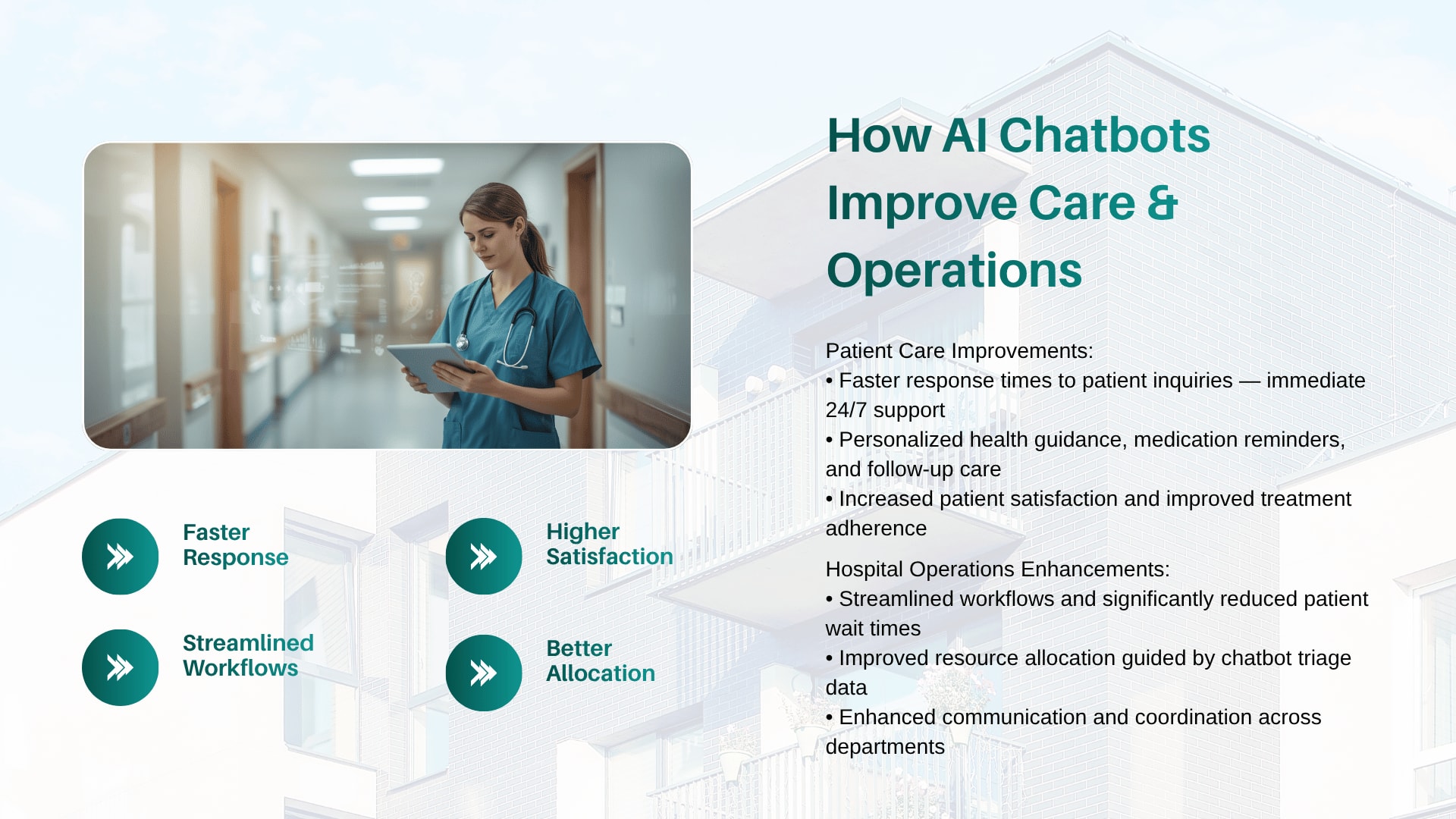
Traditional healthcare communication often depended on phone calls, emails, or in-person visits.
Patients frequently experienced:
Long hold times
Delayed responses
Limited office hours
Missed follow-ups
Conversational AI changes this experience by allowing patients to communicate naturally through websites, mobile apps, messaging platforms, or patient portals.
Instead of navigating complex phone menus, patients can simply type:
"Book my appointment."
"When is my next consultation?"
"What should I bring for my MRI?"
"Can I refill my prescription?"
The chatbot instantly understands the request and provides relevant guidance or connects the patient to the appropriate department when needed.
This creates smoother communication while reducing frustration for patients.
Which healthcare organizations benefit the most from AI chatbots?
Almost every healthcare organization can benefit from AI-powered patient communication.
Examples include:
General hospitals
Multi-specialty hospitals
Private clinics
Family medicine practices
Dental clinics
Dermatology clinics
Pediatric centers
Mental health practices
Telemedicine providers
Diagnostic laboratories
Imaging centers
Rehabilitation facilities
Smaller clinics often benefit just as much as large hospitals because limited administrative staff can become overwhelmed by repetitive patient inquiries.
How do AI medical chatbots improve patient engagement?
The benefits of AI medical chatbots for hospitals and clinics become especially clear when examining patient engagement. AI chatbots provide timely communication, personalized interactions, multilingual support, and continuous availability that encourage patients to stay actively involved in their healthcare journey.
Patient engagement is more than answering questions.
It includes helping patients:
Understand their treatment
Remember appointments
Follow medication schedules
Complete follow-up visits
Access healthcare information quickly
AI-powered communication makes these interactions simple and convenient.
Instead of patients forgetting important healthcare instructions, chatbots can send reminders and educational information throughout the treatment process.
This ongoing communication helps build stronger relationships between healthcare providers and patients.
How do chatbots provide 24/7 patient support?
Healthcare needs don't stop after office hours.
Patients often have questions late at night or during weekends.
Examples include:
Clinic opening hours
Emergency contact information
Prescription guidance
Appointment availability
Laboratory preparation instructions
Rather than waiting until the next business day, patients receive immediate assistance from the chatbot.
If the issue requires medical attention, the chatbot can guide patients toward emergency services or connect them with on-call healthcare professionals according to the organization's workflow.
Continuous availability improves convenience while reducing unnecessary phone calls.
How do AI chatbots personalize patient interactions?
Modern AI healthcare chatbots can personalize conversations using patient preferences, previous interactions, appointment history, and healthcare records when appropriately integrated with existing systems.
For example:
A returning patient visits the hospital website.
Instead of asking generic questions, the chatbot recognizes the patient's upcoming cardiology appointment and offers:
Appointment confirmation
Parking information
Pre-visit instructions
Required documents
Follow-up resources
This creates a smoother experience than asking patients to repeatedly enter the same information.
Personalization also increases patient confidence because conversations feel relevant rather than automated.
How do multilingual chatbots improve healthcare accessibility?
Language barriers remain a major challenge in healthcare.
Patients who struggle to communicate may misunderstand treatment instructions or delay seeking care.
Multilingual AI chatbots help bridge this gap by supporting conversations in multiple languages.
Benefits include:
Better communication
Greater healthcare accessibility
Reduced misunderstandings
Improved patient confidence
More inclusive healthcare services
Hospitals serving culturally diverse communities can use multilingual chatbots to make healthcare more accessible without requiring translators for every routine interaction.
How do AI medical chatbots enhance the patient experience?
The benefits of AI medical chatbots for hospitals and clinics are reflected in improved patient experiences through faster responses, simplified appointment management, reduced waiting times, and consistent communication before and after medical visits.
Patient experience begins long before someone meets a physician.
It starts when they search for healthcare information, contact a clinic, or attempt to book an appointment.
Every unnecessary delay creates frustration.
AI chatbots simplify these interactions by providing immediate support whenever patients need assistance.
The result is a smoother healthcare journey from the first inquiry through post-treatment follow-up.
How do chatbots reduce patient wait times?
Waiting on hold for routine information remains one of the biggest frustrations in healthcare.
Instead of waiting several minutes to speak with reception staff, patients receive immediate answers through AI chatbots.
Common requests include:
Appointment availability
Insurance information
Department directions
Visiting hours
Clinic locations
Doctor availability
By resolving these inquiries automatically, chatbots reduce queues for both patients and administrative staff.
How do they simplify appointment scheduling and reminders?
Appointment scheduling is one of the most valuable chatbot applications.
Instead of calling reception, patients can:
Select a specialty.
Choose a physician.
View available time slots.
Confirm the appointment.
Receive instant confirmation.
Automatic reminders can then notify patients several days or hours before their visit.
This helps reduce missed appointments while keeping schedules organized.
Healthcare chatbot platforms such as YourSiteChat demonstrate how conversational AI can simplify appointment booking, automate patient support, and improve communication without creating additional administrative work.
How do chatbots improve patient satisfaction scores?
Patient satisfaction depends on several factors beyond clinical care.
Patients appreciate:
Fast responses
Clear communication
Easy scheduling
Helpful reminders
Personalized interactions
Convenient access to information
AI chatbots improve each of these touchpoints.
When patients consistently receive quick and reliable assistance, they are more likely to view the overall healthcare experience positively.
This not only strengthens patient relationships but can also contribute to higher satisfaction ratings and better long-term engagement with the healthcare provider.
What are the clinical benefits of AI-powered healthcare chatbots?
The benefits of AI medical chatbots for hospitals and clinics extend into clinical workflows by improving pre-consultation assessments, supporting medication adherence, and assisting with long-term disease management. While chatbots do not diagnose medical conditions, they help patients and healthcare professionals exchange information more efficiently, leading to better-prepared consultations and improved continuity of care.
Healthcare professionals often spend valuable consultation time collecting basic patient information. AI medical chatbots can gather symptoms, medical history updates, allergies, and lifestyle information before the appointment, allowing clinicians to focus on diagnosis and treatment rather than paperwork.
For patients, this means shorter consultations are often more productive because doctors already have structured information available before the visit.
How do chatbots support symptom assessment before consultations?
Many hospitals use medical chatbots as an initial patient screening tool.
Before an appointment, a chatbot may ask questions such as:
What symptoms are being experienced?
When did the symptoms begin?
Has the patient experienced this condition before?
Are there any existing medical conditions?
Is the patient taking any medications?
The chatbot organizes this information into a structured format for clinicians to review.
This process helps:
Prepare physicians before appointments
Reduce repetitive questioning
Prioritize urgent cases
Improve patient triage
Save consultation time
Patients also appreciate being able to explain their symptoms at their own pace rather than rushing through information during a phone call.
How do they improve medication adherence?
One of the biggest challenges in healthcare is ensuring patients take medications correctly.
Patients may forget:
Medication timings
Dosage instructions
Refill dates
Follow-up appointments
AI healthcare chatbots can send automated reminders and educational messages that encourage better medication adherence.
For example, a patient recovering from surgery may receive:
Daily medication reminders
Recovery tips
Hydration advice
Follow-up appointment notifications
Instructions on when to contact the hospital
These simple reminders can significantly improve treatment compliance.
How do chatbots help with chronic disease management?
Patients with chronic conditions require continuous communication rather than occasional appointments.
Medical chatbots can assist patients managing:
Diabetes
Hypertension
Asthma
Heart disease
Arthritis
Obesity
A chatbot may encourage patients to:
Record daily blood pressure readings
Track blood glucose levels
Monitor symptoms
Complete wellness questionnaires
Receive lifestyle recommendations approved by healthcare providers
If responses indicate potential concerns, the chatbot can notify the care team for further evaluation.
This continuous monitoring helps patients stay engaged with their treatment plans between clinic visits.
How do AI medical chatbots improve hospital operations, compliance, and return on investment?
The benefits of AI medical chatbots for hospitals and clinics include streamlined workflows, lower administrative costs, improved patient data collection, stronger regulatory compliance, and measurable operational savings. When implemented effectively, AI chatbots reduce repetitive work, improve resource utilization, and deliver a strong return on investment while maintaining high standards of patient service.
Hospitals manage thousands of operational tasks every day. Many involve repetitive administrative work that does not require direct clinical expertise.
Examples include:
Appointment booking
Patient registration
Insurance queries
Billing FAQs
Prescription refill requests
Department routing
Automating these processes allows healthcare organizations to use staff time more efficiently.
How do AI chatbots streamline hospital workflows?
The benefits of AI medical chatbots for hospitals and clinics become especially clear in daily hospital operations. AI chatbots automate patient registration, appointment management, and routine communication, helping healthcare organizations reduce delays and improve operational efficiency.
Efficient workflows improve both patient satisfaction and employee productivity.
Instead of manually handling every inquiry, administrative teams can focus on complex patient needs while the chatbot manages routine conversations.
How do they automate patient registration?
Patient registration often involves collecting:
Personal details
Contact information
Insurance information
Medical history
Consent forms
AI chatbots can collect much of this information before patients arrive.
Benefits include:
Reduced paperwork
Faster check-in
Fewer manual errors
Better data accuracy
Shorter waiting times
Reception staff spend less time entering information and more time assisting patients who require personal support.
How do they assist with appointment management?
Appointment management involves much more than scheduling.
Healthcare chatbots can:
Book appointments
Reschedule visits
Cancel appointments
Confirm attendance
Send reminders
Notify patients about delays
Automating these tasks helps clinics maintain organized schedules while improving communication.
How do they reduce missed appointments and cancellations?
Missed appointments affect revenue, scheduling efficiency, and patient care.
AI chatbots help reduce no-shows by:
Sending automated reminders
Confirming attendance
Offering quick rescheduling options
Notifying patients of preparation requirements
Patients are more likely to attend appointments when reminders are timely and convenient.
How do AI medical chatbots support healthcare professionals?
Healthcare chatbots support doctors, nurses, and administrative staff by reducing repetitive communication, organizing patient information, and automating routine administrative work. This allows healthcare professionals to dedicate more time to diagnosis, treatment, and patient care.
Technology works best when it supports clinical teams rather than replacing them.
AI healthcare assistants help professionals work more efficiently without changing clinical decision-making responsibilities.
How do nurses benefit from AI-powered patient communication?
Nurses often answer repetitive questions regarding:
Medication instructions
Appointment details
Recovery guidance
Clinic procedures
AI chatbots handle many routine inquiries automatically.
This gives nurses additional time for:
Patient education
Clinical assessments
Emergency care
Care coordination
Instead of spending hours answering identical questions, nursing staff can focus on patients requiring direct medical attention.
How do physicians save time using medical chatbots?
Doctors benefit from receiving organized patient information before consultations.
Instead of collecting routine details during appointments, physicians can immediately discuss diagnosis and treatment.
Medical chatbots also help by:
Summarizing patient concerns
Recording pre-visit questionnaires
Providing educational materials
Sending follow-up instructions
These efficiencies improve consultation quality without increasing appointment duration.
How do administrative teams improve operational efficiency?
Administrative departments manage thousands of interactions every week.
AI chatbots reduce workload by automating:
Frequently asked questions
Billing inquiries
Insurance information
Department directions
Appointment confirmations
Basic patient support
This creates a more efficient workplace while reducing employee burnout.
Can AI medical chatbots reduce healthcare costs?
The benefits of AI medical chatbots for hospitals and clinics include meaningful cost savings through automation, reduced administrative overhead, improved scheduling efficiency, and lower call center workloads. Although implementation requires investment, many healthcare organizations achieve long-term financial benefits by improving operational efficiency.
AI automation should be viewed as a long-term operational improvement rather than simply a technology purchase.
Savings accumulate through:
Fewer manual tasks
Reduced overtime
Improved scheduling
Better patient communication
Lower call volumes
How do chatbots lower operational expenses?
Routine administrative tasks consume thousands of working hours each year.
Automating these activities reduces expenses associated with:
Manual scheduling
Telephone support
Registration
Basic information requests
Appointment reminders
Organizations can redirect staff toward higher-value responsibilities without compromising service quality.
How do they reduce call center workload?
Hospital call centers frequently receive repetitive questions.
Examples include:
"What are your opening hours?"
"Where is the radiology department?"
"Can I reschedule my appointment?"
"When will my reports be ready?"
AI chatbots answer these questions instantly.
This reduces call volumes while allowing customer service teams to concentrate on more complex patient issues.
What measurable ROI can hospitals expect from AI chatbots?
Although results vary by organization, hospitals commonly measure chatbot success using indicators such as:
Lower average response time
Reduced no-show rates
Faster appointment scheduling
Increased patient satisfaction
Lower administrative costs
Higher staff productivity
Traditional Patient SupportAI Medical Chatbot SupportLimited office hoursAvailable 24/7Manual appointment bookingInstant self-service schedulingLong phone queuesImmediate responsesHigh administrative workloadAutomated routine tasksInconsistent communicationStandardized responsesHigher operational costsImproved efficiency and cost savings
Healthcare organizations that track these metrics consistently can better understand the long-term value of conversational AI investments.
How do AI chatbots improve healthcare data collection and analytics?
The benefits of AI medical chatbots for hospitals and clinics include more accurate patient data collection, better reporting, and actionable insights that help healthcare organizations make informed decisions. By capturing information through structured conversations, chatbots reduce manual entry errors and create cleaner datasets for clinical and operational analysis.
Many hospitals still rely on paper forms, phone calls, or manual data entry for routine information gathering. These methods can lead to incomplete records, inconsistent formatting, and delays in updating patient systems.
Conversational AI creates a standardized process that improves data quality from the beginning.
When patients interact with a chatbot, information is collected in a structured format, making it easier to analyze trends across departments, locations, and patient populations.
How do they collect patient information accurately?
AI chatbots guide patients through step-by-step questions, which helps reduce missing information and inconsistent responses.
For example, a clinic chatbot can collect:
Contact details
Insurance information
Symptoms
Medical history updates
Allergy information
Preferred appointment times
Language preferences
Because the conversation follows a predefined workflow, the chatbot ensures that required fields are completed before submission.
This approach often produces cleaner data than handwritten forms or rushed phone conversations.
How does conversational AI improve healthcare decision-making?
Better data leads to better decisions.
Healthcare leaders can use chatbot-generated insights to identify:
Peak appointment demand
Common patient questions
Frequently reported symptoms
Department bottlenecks
No-show patterns
Patient satisfaction trends
These insights help hospitals allocate staff more effectively and improve patient services.
For example, if a hospital notices that many patients ask about imaging preparation instructions, it can proactively send those instructions before appointments.
How can predictive insights improve patient outcomes?
Advanced AI healthcare solutions can analyze conversational patterns to identify patients who may need additional attention.
Examples include:
Patients repeatedly reporting worsening symptoms
Patients missing medication reminders
Patients frequently rescheduling follow-up visits
Patients expressing concerns about treatment adherence
These signals allow care teams to intervene earlier.
Early intervention is often one of the most valuable outcomes of healthcare analytics.
Are AI medical chatbots secure and HIPAA/GDPR compliant?
The benefits of AI medical chatbots for hospitals and clinics can only be realized when patient data remains secure. Modern healthcare chatbots are designed with encryption, access controls, audit logging, and compliance features that help organizations meet HIPAA, GDPR, and other healthcare privacy requirements.
Security is often the first question hospital leaders ask before implementing any AI solution.
Patient trust depends on protecting sensitive health information.
Reputable healthcare chatbot platforms use multiple layers of security to safeguard conversations and stored data.
How do chatbots protect patient data?
Common security measures include:
End-to-end encryption
Secure cloud infrastructure
Role-based access controls
Multi-factor authentication
Audit trails
Automatic session timeouts
Data retention policies
These controls help ensure that only authorized personnel can access patient information.
What security features should healthcare organizations look for?
When evaluating an AI healthcare chatbot, hospitals should prioritize:
HIPAA compliance (for U.S. organizations)
GDPR compliance (for European operations)
SOC 2 certification
Encryption at rest and in transit
Audit logging
Secure API integrations
Data residency options
These features are especially important when the chatbot handles protected health information.
Platforms such as YourSiteChat are often evaluated by healthcare organizations for their ability to support secure patient communication while integrating with existing workflows.
How do AI chatbots support healthcare regulatory compliance?
Compliance requires consistent processes.
AI chatbots help by:
Standardizing patient communications
Recording interaction histories
Maintaining audit trails
Enforcing required consent workflows
Reducing manual documentation errors
Healthcare organizations should still involve legal, compliance, and IT security teams during implementation.
For current guidance on healthcare data privacy and security, organizations can review resources from the U.S. Department of Health & Human Services HIPAA program .
What challenges should hospitals consider before implementing AI chatbots?
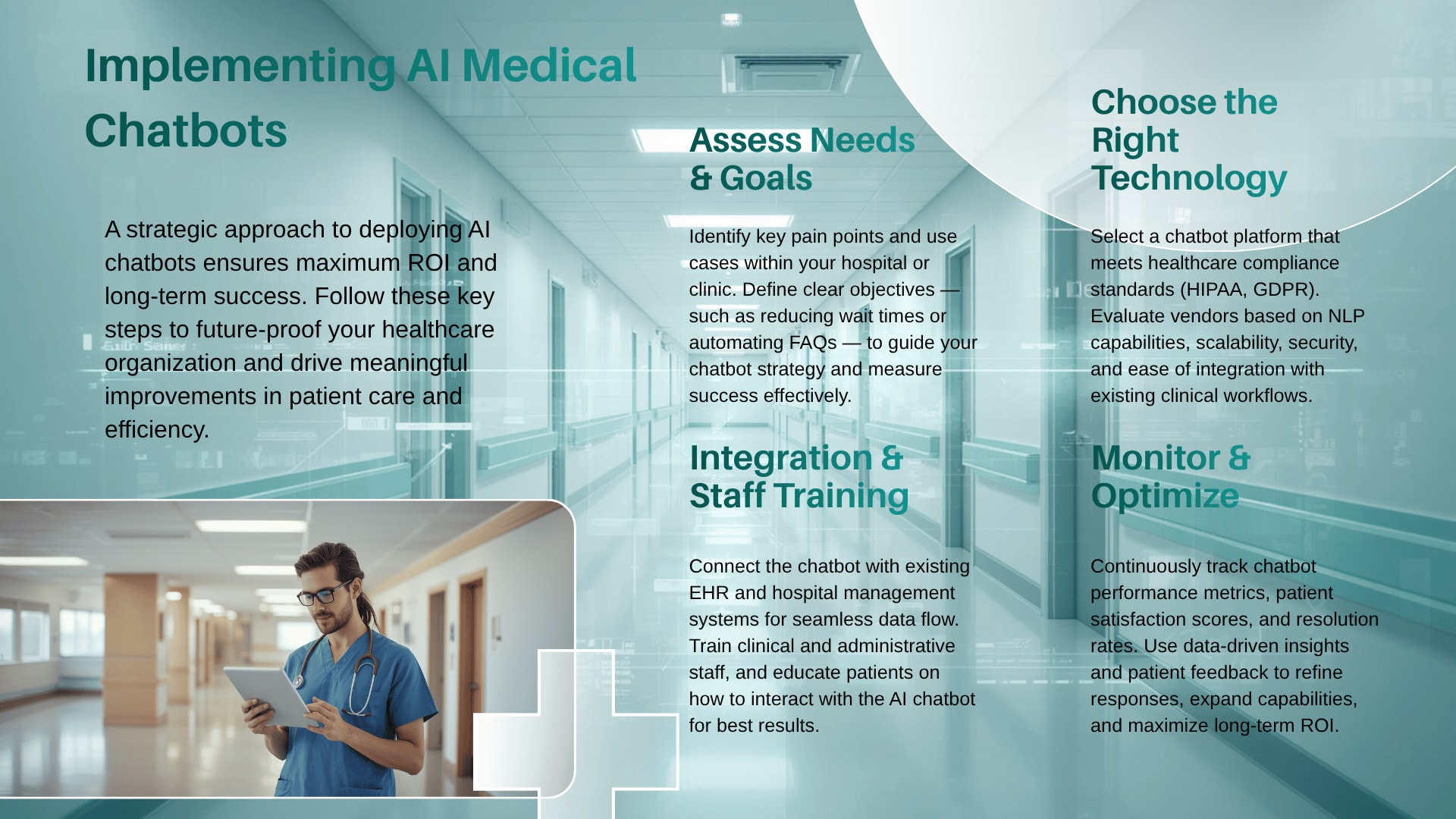
While the benefits of AI medical chatbots for hospitals and clinics are substantial, successful implementation requires realistic expectations. Organizations must address AI limitations, integration requirements, staff training, and governance to ensure the chatbot supports clinical and operational goals effectively.
AI chatbots are powerful tools, but they are not a complete replacement for human healthcare expertise.
Hospitals that succeed with conversational AI usually treat it as part of a broader digital transformation strategy rather than a standalone technology project.
What are the limitations of AI in healthcare?
Important limitations include:
Chatbots cannot provide definitive medical diagnoses.
Complex clinical cases still require human judgment.
AI may misunderstand ambiguous patient messages.
Escalation workflows must be carefully designed.
Continuous monitoring and updates are necessary.
Healthcare organizations should define clear boundaries for what the chatbot can and cannot do.
How can organizations overcome implementation challenges?
Successful hospitals often follow a phased approach:
Start with appointment scheduling and FAQs.
Add patient registration automation.
Introduce medication reminders.
Expand to symptom intake workflows.
Integrate with EHR or EMR systems.
Continuously measure performance.
Beginning with high-volume, low-risk use cases allows teams to build confidence before expanding functionality.
What common mistakes should hospitals avoid?
Common implementation mistakes include:
Trying to automate every workflow immediately
Launching without staff training
Ignoring escalation procedures
Using overly complex conversation flows
Failing to measure patient satisfaction
Choosing a chatbot without healthcare-specific security features
Organizations that avoid these mistakes typically achieve faster adoption and better long-term results.
Industry groups such as HIMSS regularly publish guidance on digital health implementation and healthcare AI governance.