
Website conversations have changed dramatically over the last few years. Visitors no longer want to wait for email replies, search through endless FAQ pages, or stay on hold for customer support. They expect quick, personalized, and helpful responses the moment they arrive on a website. This shift is one of the biggest reasons AI Is Changing Website Conversations across every industry.
Businesses of every size are now using artificial intelligence to answer customer questions, recommend products, qualify leads, schedule appointments, and provide support around the clock. Unlike traditional live chat, AI-powered conversations continue even outside business hours, helping companies deliver better customer experiences while reducing manual workload.
Whether someone visits an online store, a healthcare website, a SaaS platform, a real estate agency, or a local business website, AI assistants are becoming the first point of contact. They can understand questions written in natural language, remember context during a conversation, and guide visitors toward the right solution.
This article explores how AI Is Changing Website Conversations, why businesses are adopting AI chat technology, the benefits and challenges involved, and how organizations can successfully implement AI-powered conversations to improve customer engagement and business growth.
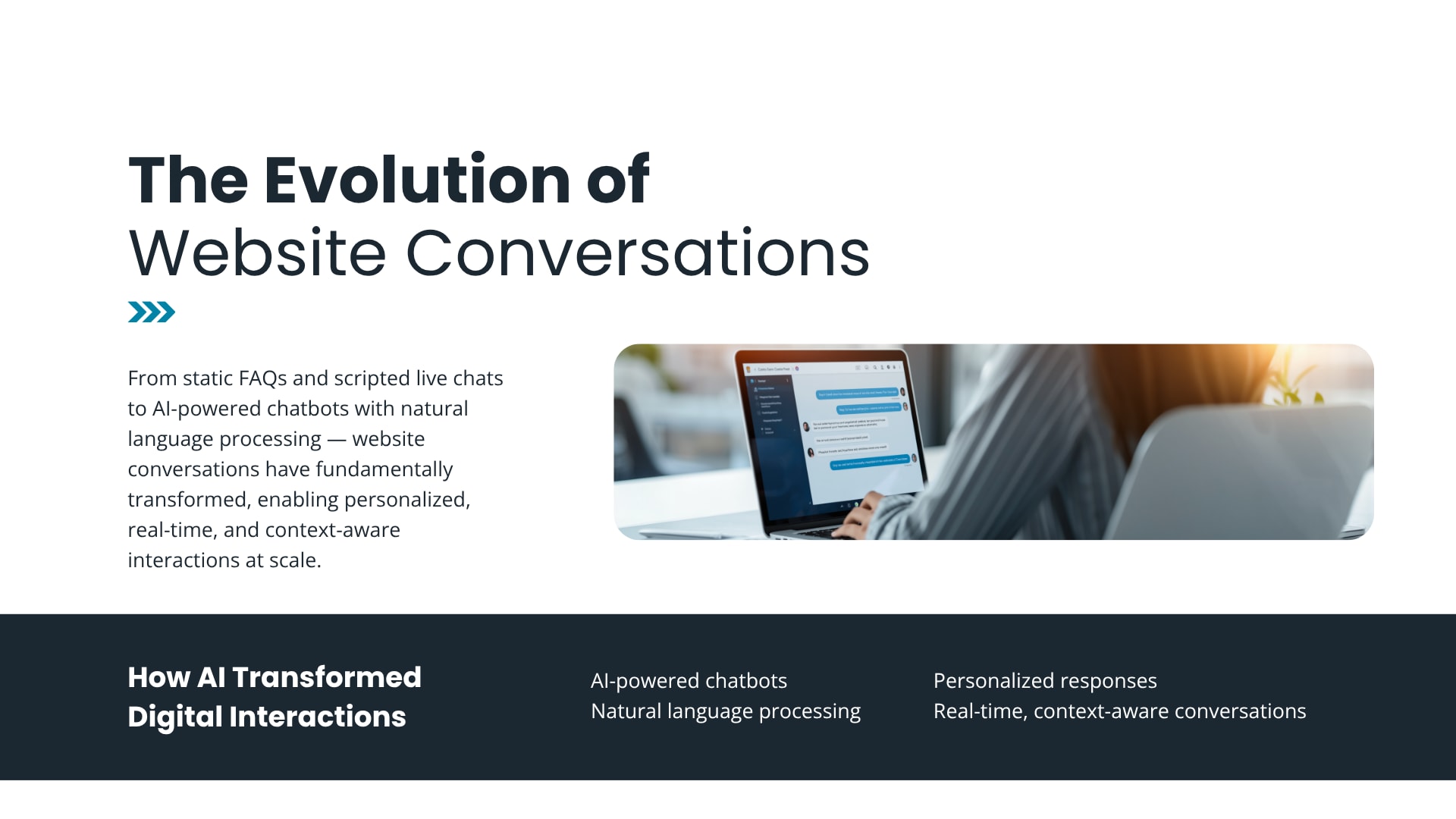
What Does "AI Is Changing Website Conversations" Mean?
AI Is Changing Website Conversations by replacing static, one-way communication with intelligent, real-time interactions that understand customer intent, answer questions instantly, and guide visitors toward meaningful actions. Instead of forcing users to search for information, AI helps businesses create natural conversations that improve customer experience and increase conversions.
Traditional websites were built around navigation menus, contact forms, and long pages of information. Visitors had to search manually for answers, which often created frustration.
Artificial intelligence changes that experience completely.
Rather than making customers look for information, AI brings the information directly into the conversation.
For example:
A visitor looking for pricing receives instant answers.
Someone comparing products gets personalized recommendations.
A customer needing technical support receives step-by-step guidance.
A potential client can book a meeting without waiting for human assistance.
Instead of acting as digital brochures, modern websites become interactive assistants that help visitors accomplish their goals quickly.
This shift benefits both businesses and customers because conversations become faster, smarter, and more personalized.
Why AI Is Changing Website Conversations Faster Than Ever
AI Is Changing Website Conversations faster than ever because customer expectations have evolved. People now expect instant responses, personalized recommendations, and support at any time of day. Businesses adopting AI can meet these expectations while reducing costs and improving customer satisfaction.
Several technology trends have accelerated AI adoption.
1. Customers Expect Immediate Responses
Research consistently shows that customers prefer businesses that respond quickly.
Waiting several hours—or even several minutes—for answers can lead visitors to leave a website and choose a competitor.
AI reduces this waiting time to just a few seconds.
For example:
A customer wants to know shipping costs.
AI provides the answer immediately.
The customer continues shopping instead of abandoning the purchase.
That small improvement often leads to higher conversion rates.
2. Websites Receive Visitors Around the Clock
Businesses no longer serve customers only during office hours.
Visitors may arrive:
Early in the morning
Late at night
During weekends
Across different time zones
Hiring customer support agents for 24/7 coverage is expensive.
AI solves this challenge by remaining available every hour of every day.
Whether the visitor arrives at midnight or during a holiday, the conversation continues.
3. AI Technology Has Become More Accurate
AI Is Changing Website Conversationsbecause modern language models understand context far better than earlier chatbots. They recognize natural language, interpret user intent, and provide responses that feel conversational rather than scripted.
Older chatbots often frustrated users.
Typical conversations looked like this:
Visitor:
"I need help with my order."
Bot:
"I don't understand."
Today's AI systems work differently.
They understand variations like:
Where is my package?
Can someone track my order?
My delivery hasn't arrived.
Order status please.
Although each question is different, AI recognizes the same intent and provides relevant assistance.
This creates smoother conversations and happier customers.
4. Businesses Need to Handle More Conversations
As companies grow, customer inquiries grow too.
Common questions include:
Pricing
Product availability
Return policies
Shipping information
Technical support
Appointment booking
Business hours
Instead of assigning employees to answer identical questions repeatedly, AI handles routine conversations while human teams focus on more complex issues.
This improves productivity without sacrificing customer experience.
How AI Website Conversations Work
AI Is Changing Website Conversations through intelligent systems that understand visitor questions, analyze intent, search relevant information, and generate useful responses in seconds. These conversations feel natural because modern AI adapts to different wording, remembers context, and guides users through each interaction.
Behind every AI conversation is a combination of technologies working together.
Step 1: The Visitor Asks a Question
The interaction begins when someone types a message.
Examples include:
Do you ship internationally?
Can I schedule a demo?
Which plan is best for my business?
How much does this product cost?
The wording can vary significantly.
AI focuses on understanding intent rather than matching exact keywords.
Step 2: AI Understands the Request
Natural Language Processing (NLP) helps the AI identify:
User intent
Important keywords
Conversation context
Previous questions
Desired outcome
Instead of processing words individually, AI analyzes the entire sentence.
For example:
"I'm looking for software for my small business."
The AI recognizes that the visitor wants recommendations rather than technical support.
Step 3: AI Finds Relevant Information
The assistant searches:
Website content
Knowledge bases
Product catalogs
FAQs
Support documents
Business information
Rather than providing generic answers, it delivers responses based on available business data.
Step 4: AI Responds Naturally
Instead of displaying robotic replies, AI creates conversational responses.
Example:
Visitor:
"I need software for customer support."
AI:
"Several solutions are available depending on business size. If the goal is handling customer inquiries automatically, an AI chat assistant can answer common questions, capture leads, and transfer complex requests to a human agent when needed."
The conversation continues naturally until the visitor reaches a solution.
Traditional Website Chat vs AI Website Conversations
AI Is Changing Website Conversations by offering personalized, context-aware interactions instead of rigid scripted replies. Unlike traditional chat systems, AI understands intent, learns from conversations, and assists visitors throughout their journey.
FeatureTraditional Live ChatAI Website ConversationsAvailabilityBusiness hours24/7 supportResponse TimeDepends on agentsInstantScalabilityLimited by staffThousands of conversations simultaneouslyPersonalizationLimitedContext-aware recommendationsCostHigher staffing costsLower operational costs over timeLearning AbilityNoContinuously improves with better dataLead QualificationManualAutomaticMultilingual SupportLimitedSupports multiple languages
For many businesses, the ideal solution combines AI with human support. AI manages repetitive tasks, while human agents handle sensitive, complex, or highly personalized situations.
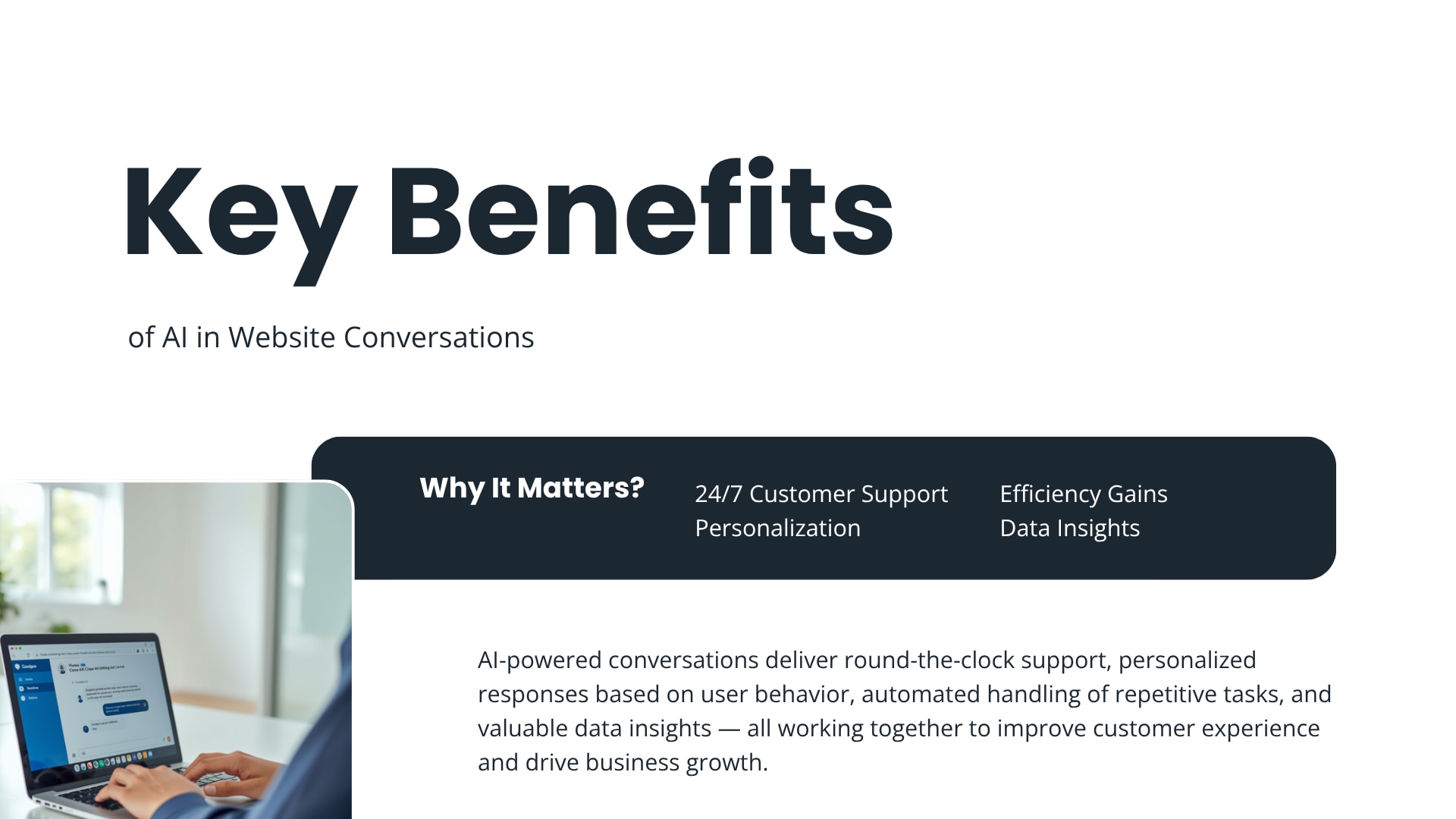
Industries Where AI Is Changing Website Conversations
AI Is Changing Website Conversations across nearly every industry by providing faster support, improving customer engagement, and simplifying routine interactions. From healthcare to eCommerce, AI helps organizations deliver better experiences while allowing teams to focus on higher-value work.
eCommerce
Online stores receive thousands of repetitive questions.
Customers frequently ask:
Is this item in stock?
When will my order arrive?
Which size should I choose?
Can this product be returned?
AI answers these questions instantly.
It can also recommend products based on customer preferences, previous purchases, or browsing behavior.
For example, if a shopper is looking for running shoes, AI can suggest matching socks, fitness accessories, or related products, increasing the average order value while improving the shopping experience.
SaaS Companies
Software businesses often need to educate potential customers before they make a purchase.
Visitors commonly ask:
Which pricing plan is right?
Does this integrate with my existing tools?
Can I book a product demo?
How long does setup take?
An AI assistant can explain features, compare plans, answer technical questions, and even schedule meetings with the sales team.
This reduces friction in the buying journey and allows sales representatives to focus on qualified prospects instead of answering repetitive questions.
Healthcare
AI Is Changing Website Conversations in healthcare by helping patients access information more quickly while reducing administrative workload. AI can answer common questions, assist with appointment scheduling, and guide visitors to the right resources without replacing professional medical advice.
Healthcare providers often receive routine inquiries about clinic hours, insurance acceptance, specialist availability, and appointment booking.
AI can manage these conversations efficiently, allowing reception staff to dedicate more time to patient care.
For example, a patient looking for a dermatologist can receive clinic timings, available appointment slots, and directions to the clinic within seconds.
Real Estate
AI Is Changing Website Conversations in the real estate industry by helping buyers, sellers, and renters receive instant property information, schedule viewings, and connect with agents without waiting for business hours. This creates a smoother experience while allowing real estate professionals to focus on closing deals rather than answering repetitive questions.
Buying or renting property is a major decision, and visitors usually have many questions before contacting an agent.
Common inquiries include:
Is this property still available?
What is the monthly payment estimate?
Can a viewing be scheduled this weekend?
Which properties fit a specific budget?
Are there nearby schools or hospitals?
Instead of requiring visitors to fill out a contact form and wait for a callback, an AI assistant can answer these questions immediately.
For example, someone searching for a three-bedroom apartment under a specific budget can receive relevant listings, neighborhood information, and available viewing times within seconds.
This faster response often keeps potential buyers engaged and increases the chances of converting website visitors into qualified leads.
Education
AI Is Changing Website Conversations by making educational websites more accessible and informative. Students and parents receive immediate answers about admissions, courses, fees, scholarships, and application deadlines, reducing confusion during the enrollment process.
Educational institutions receive thousands of similar questions every admission season.
Typical questions include:
What courses are available?
When does admission close?
What are the eligibility requirements?
How much are the tuition fees?
Which documents are required?
Instead of expecting staff members to answer the same questions repeatedly, AI can provide accurate information around the clock.
A student visiting the website late at night can still receive guidance about available programs and application requirements without waiting until the next business day.
Financial Services
Banks, insurance companies, and financial advisors often deal with customers seeking quick information before making important decisions.
AI can assist by answering questions related to:
Loan eligibility
Credit card options
Insurance coverage
Investment services
Account opening procedures
For sensitive financial matters, AI can collect preliminary information before transferring the conversation to a qualified advisor.
This combination of automation and human expertise creates a better customer experience while maintaining trust.
The Biggest Benefits of AI Website Conversations
AI Is Changing Website Conversations because it delivers measurable business benefits beyond faster replies. Companies improve customer satisfaction, increase lead generation, reduce support costs, and create more personalized digital experiences without significantly increasing operational expenses.
Businesses adopting AI often notice improvements across multiple areas.
1. Faster Customer Support
Visitors rarely enjoy waiting for answers.
When support is immediate:
Customers stay engaged.
Bounce rates decrease.
Satisfaction improves.
More visitors complete purchases.
Even simple questions answered quickly can prevent customers from leaving a website.
2. Better Lead Generation
AI does more than answer questions.
It can also collect valuable lead information, including:
Name
Email address
Phone number
Company name
Business size
Service requirements
Instead of displaying a static contact form, AI naturally gathers information during the conversation.
For example:
Visitor:
"I'm looking for website development."
AI:
"Great. Could you share your company name and preferred timeline so the right specialist can contact you?"
The conversation feels natural rather than sales-focused.
3. Higher Conversion Rates
AI Is Changing Website Conversations by reducing hesitation during the buying process. Visitors receive immediate answers to important questions, helping them make confident purchasing decisions without leaving the website.
Many online purchases fail because customers cannot find the information they need.
Examples include:
Shipping costs
Return policy
Product compatibility
Installation requirements
Pricing clarification
Providing these answers instantly helps customers continue toward checkout.
4. Personalized Recommendations
Modern AI understands customer interests based on conversation context.
Instead of suggesting random products, it recommends relevant solutions.
Examples include:
Suggesting premium plans for growing businesses.
Recommending accessories that complement previous selections.
Guiding users toward services matching their needs.
Presenting helpful resources based on visitor intent.
This creates a shopping experience similar to speaking with an experienced sales representative.
5. Reduced Support Costs
Customer support teams spend considerable time answering repetitive questions.
Examples include:
Business hours
Pricing
Delivery timelines
Refund policies
Contact information
AI handles these repetitive conversations automatically.
Human support teams can then focus on situations requiring empathy, technical expertise, or complex problem-solving.
This improves efficiency without reducing service quality.
6. Consistent Customer Experience
Unlike humans, AI does not become tired or inconsistent.
Every visitor receives:
Accurate information
Consistent responses
Professional communication
Equal attention
Consistency strengthens customer trust and reinforces a positive brand experience.
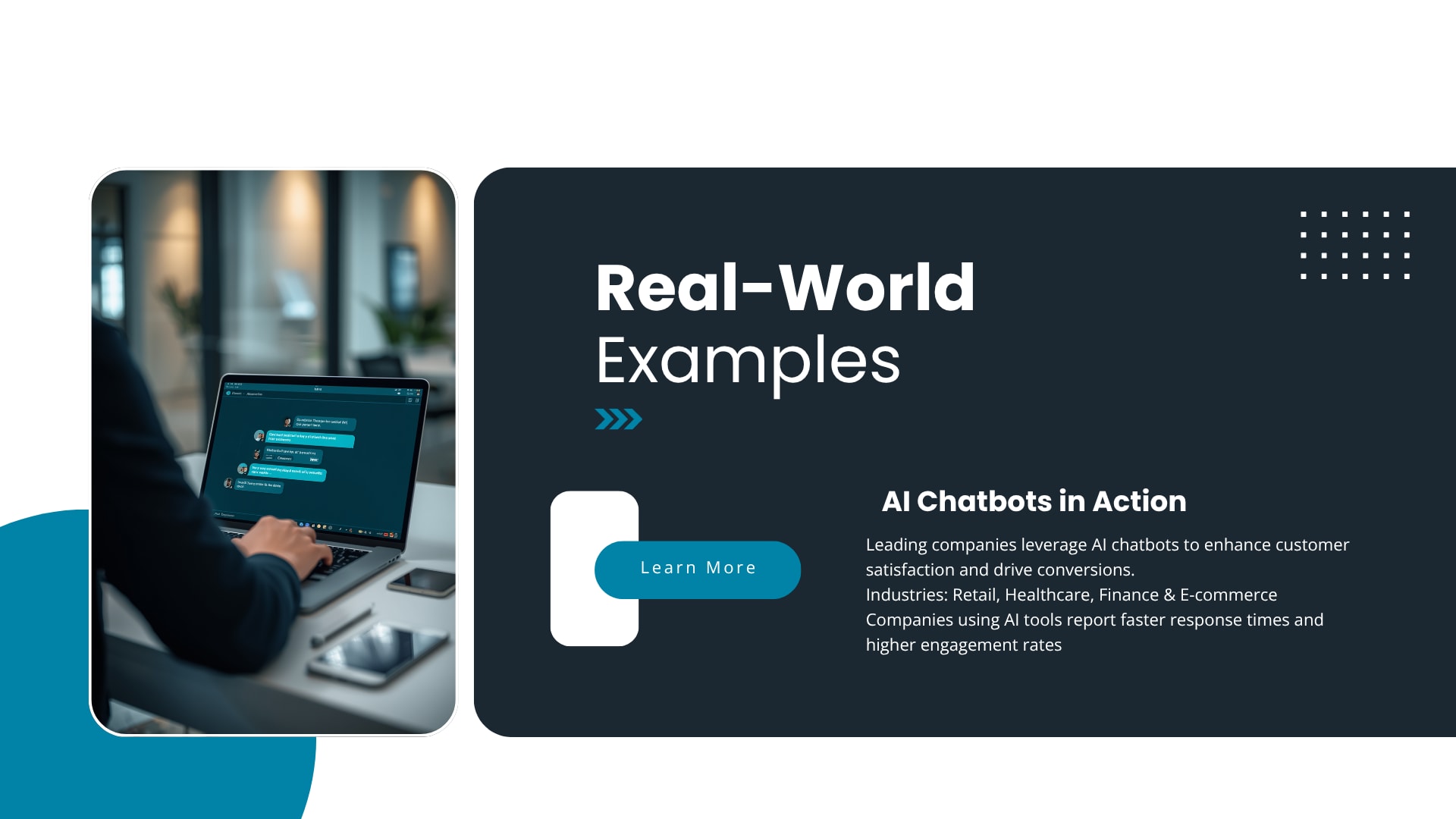
Common Challenges Businesses Face
AI Is Changing Website Conversations successfully only when businesses prepare properly. Poor implementation, outdated information, or unrealistic expectations can reduce customer satisfaction instead of improving it.
Artificial intelligence is a powerful tool, but it is not completely automatic.
Several common mistakes should be avoided.
Using Outdated Information
An AI assistant is only as reliable as the information it receives.
If pricing, policies, or product details are outdated, customers may receive incorrect answers.
Businesses should regularly review and update their knowledge base.
Expecting AI to Replace Every Human Conversation
Some conversations require empathy and professional judgment.
Examples include:
Customer complaints
Refund disputes
Medical advice
Legal consultations
Technical troubleshooting
The best approach combines AI with human support.
AI handles routine interactions, while specialists manage more complex situations.
Poor Conversation Design
Simply installing an AI chatbot is not enough.
Businesses should carefully plan:
Frequently asked questions.
Customer journeys.
Lead collection process.
Escalation to human agents.
Follow-up workflows.
A well-designed conversation feels helpful rather than robotic.
Best Practices for Implementing AI Website Conversations
AI Is Changing Website Conversations most effectively when businesses focus on customer needs instead of technology alone. Successful AI assistants provide accurate answers, guide visitors naturally, and make it easy to reach a human whenever necessary.
The following practices consistently produce better results.
1. Start With Common Questions
Begin by identifying questions customers ask most often.
Examples include:
Pricing
Shipping
Business hours
Appointment booking
Product information
Service availability
These conversations typically provide the fastest return on investment.
2. Keep Responses Simple
Visitors appreciate clear answers.
Instead of technical language, AI should explain concepts using everyday words.
For example:
Instead of:
"Our enterprise-grade omnichannel conversational interface optimizes customer engagement."
A simpler response would be:
"Our AI assistant helps visitors get answers, find products, and contact the right team faster."
Clear language improves both customer experience and search engine understanding.
3. Make Human Support Easy to Reach
Not every customer wants to interact with AI.
Visitors should always have the option to:
Speak with an agent.
Request a callback.
Send an email.
Schedule a meeting.
Giving customers control builds confidence in the support process.
4. Monitor Conversations Regularly
Businesses should review AI conversations to identify:
Frequently asked questions
Missing information
Customer frustrations
Successful interactions
Opportunities for improvement
Continuous improvement leads to better customer experiences over time.
Choosing the Right AI Website Assistant
AI Is Changing Website Conversations, but the quality of those conversations depends on the AI platform a business chooses. The right solution should be easy to implement, understand natural language, integrate with existing workflows, and support both customers and internal teams effectively.
When evaluating an AI website assistant, businesses should consider several factors instead of focusing only on price.
Important features include:
Natural language understanding
Fast response times
Easy website integration
Lead capture capabilities
CRM compatibility
Analytics and reporting
Human handoff options
Multilingual support
Custom knowledge base
A practical example is YourSiteChat, which helps businesses automate website conversations while still allowing seamless transitions to human support when necessary. Rather than replacing customer service teams, solutions like YourSiteChat can answer common questions, engage visitors 24/7, capture qualified leads, and simplify website interactions. Businesses interested in exploring AI-powered website assistance can learn more at https://www.yoursitechat.com/.
The most effective implementations treat AI as an extension of the customer support team rather than a replacement for human expertise.
Real-World Business Scenarios
AI Is Changing Website Conversations because it adapts to different business situations instead of following the same script for every visitor. Real-world examples show how AI improves customer experiences while supporting business growth across industries.
Scenario 1: Online Retail Store
A customer visits an online clothing store late at night.
They ask:
"Do these shoes run true to size?"
Instead of waiting until the next morning, AI immediately provides sizing guidance, return information, and recommends matching accessories.
The customer completes the purchase before leaving the website.
Scenario 2: Software Company
A startup founder visits a SaaS website.
They want to compare subscription plans.
AI explains each plan, highlights key differences, answers integration questions, and offers a product demo.
By the time the sales team joins the conversation, the visitor is already a qualified lead.
Scenario 3: Local Service Business
A plumbing company receives many emergency inquiries after office hours.
Instead of sending visitors to voicemail, AI collects the customer's contact information, location, and problem description.
Urgent requests are forwarded immediately, while non-urgent appointments are scheduled automatically.
The customer receives immediate acknowledgment, and the business never misses potential work.
AI Website Conversations and the Future of Customer Engagement
AI Is Changing Website Conversations by creating experiences that are faster, more personalized, and available at any time. As AI technology continues to improve, websites will become intelligent assistants that understand customer intent, remember previous interactions, and help visitors complete tasks with minimal effort.
The role of websites has changed significantly over the past decade.
Earlier websites mainly served as digital brochures where visitors searched through menus, clicked multiple pages, and filled out contact forms. Today, customers expect websites to behave more like knowledgeable assistants that understand questions immediately and provide relevant answers.
This change is influencing every stage of the customer journey.
Instead of simply displaying information, websites are beginning to:
Guide visitors through complex decisions.
Recommend products based on user needs.
Help customers solve problems instantly.
Capture qualified leads automatically.
Schedule appointments without manual intervention.
Continue conversations across multiple sessions.
Businesses that adopt conversational AI today are preparing for a future where customer expectations continue to rise.
Emerging AI Trends That Will Shape Website Conversations
AI Is Changing Website Conversations through rapid advances in machine learning, natural language understanding, and automation. These improvements will make online interactions feel even more natural while helping businesses deliver faster and more personalized customer experiences.
Several trends are already shaping the next generation of AI-powered websites.
1. More Human-Like Conversations
Modern AI already understands context better than earlier chatbot technology.
Future improvements will make conversations even more natural.
Visitors will be able to:
Ask follow-up questions without repeating themselves.
Change topics smoothly.
Receive explanations based on previous messages.
Continue conversations started during earlier visits.
This creates a more personal and efficient customer experience.
2. Better Personalization
Future AI assistants will understand customer preferences more accurately.
For example, if a returning visitor previously explored enterprise software solutions, the AI can continue the conversation by suggesting updated pricing, new features, or relevant case studies instead of starting from the beginning.
This saves time and makes interactions more relevant.
3. Smarter Product Recommendations
Recommendation systems will continue improving.
Instead of suggesting products based only on previous purchases, AI will also consider:
Current browsing behavior.
Customer goals.
Budget preferences.
Seasonal demand.
Product compatibility.
These recommendations can increase customer satisfaction because they solve real problems rather than promoting random products.
4. Voice-Based Website Conversations
Voice search continues to grow across mobile devices and smart assistants.
As voice recognition improves, many websites will support spoken conversations alongside text chat.
Visitors may soon ask questions like:
"Which pricing plan fits a small business?"
"Book an appointment for Friday afternoon."
"Show products under $100."
The AI will respond naturally without requiring typed messages.
5. Stronger Multilingual Support
Businesses increasingly serve global audiences.
AI assistants now translate conversations in real time, allowing companies to support customers in multiple languages without maintaining large multilingual support teams.
This helps businesses expand into international markets while maintaining consistent customer service.
AI Website Conversations and SEO
AI Is Changing Website Conversations while also supporting modern SEO strategies. Well-designed AI assistants help visitors discover relevant information faster, improve user engagement, and contribute to positive website experience signals that search engines increasingly value.
AI conversations do not directly improve search rankings, but they influence several factors that contribute to better website performance.
These include:
Longer visitor sessions.
Lower bounce rates.
Higher engagement.
Better user satisfaction.
Improved conversions.
Faster access to important content.
When visitors quickly find the information they need, they are more likely to stay on the website and continue exploring.
Search engines increasingly reward websites that provide valuable user experiences.
Businesses should also ensure that important information shared by AI assistants exists on crawlable website pages. This helps search engines understand the content while allowing AI to reference accurate information during conversations.
For guidance on creating helpful, people-first content, Google's Search Central documentation is an excellent resource: https://developers.google.com/search/docs.
AI Website Conversations and GEO Optimization
AI Is Changing Website Conversations by helping businesses prepare for Generative Engine Optimization (GEO), where AI-powered search experiences summarize trusted content and recommend reliable businesses directly within conversational answers.
Search is evolving.
Instead of showing only a list of links, AI-powered search experiences increasingly provide direct answers generated from trusted sources.
To improve visibility in these environments, businesses should focus on:
Publishing accurate information.
Creating expert-written content.
Keeping business details updated.
Answering real customer questions.
Demonstrating experience and credibility.
AI assistants on websites support this strategy by revealing the questions customers ask most frequently.
Those insights can become valuable topics for:
Blog articles.
FAQ pages.
Help centers.
Product documentation.
Knowledge bases.
Businesses that understand customer intent will be better prepared for future search experiences.
Measuring the Success of AI Website Conversations
AI Is Changing Website Conversations, but successful implementation requires continuous measurement. Tracking meaningful performance metrics helps businesses improve conversations, identify customer needs, and maximize the value of AI over time.
Rather than measuring only the number of chatbot interactions, businesses should evaluate the quality and outcomes of conversations.
Key performance indicators include:
Average response time.
Conversation completion rate.
Customer satisfaction score (CSAT).
Lead conversion rate.
Appointment bookings.
Sales generated from AI conversations.
Human handoff rate.
Frequently asked questions.
Returning visitor engagement.
Resolution rate.
Regular analysis helps identify opportunities to improve AI responses and customer journeys.
For website analytics and performance measurement, Google Analytics provides valuable insights into visitor behavior and engagement: https://analytics.google.com/.
Common Myths About AI Website Conversations
AI Is Changing Website Conversations, yet several misconceptions still prevent businesses from adopting AI effectively. Understanding the reality behind these myths helps organizations make informed decisions about conversational AI.
Myth 1: AI Will Replace Customer Support Teams
Reality:
AI is designed to automate repetitive tasks, not replace human expertise.
Customer support professionals remain essential for:
Complex problem-solving.
Emotional situations.
High-value sales.
Strategic consulting.
Sensitive customer issues.
The strongest customer experiences combine AI efficiency with human judgment.
Myth 2: AI Is Only for Large Companies
Reality:
Modern AI platforms are available for businesses of every size.
Small businesses can benefit from:
24/7 customer support.
Automatic lead capture.
Appointment scheduling.
Frequently asked question automation.
Even companies with limited resources can improve customer service using AI.
Myth 3: AI Conversations Feel Robotic
Reality:
Earlier chatbots often relied on scripted responses.
Today's conversational AI understands natural language, remembers context, and responds in a much more human-like manner.
The quality of conversations depends largely on how well the AI is trained and maintained.
Myth 4: AI Is Difficult to Implement
Reality:
Many modern AI website assistants can be integrated with minimal technical effort.
Businesses typically begin by:
Adding the AI assistant to their website.
Uploading business information.
Training the assistant using FAQs and support content.
Testing conversations.
Monitoring performance and making improvements.
Implementation is often much simpler than many organizations expect.
Frequently Asked Questions
Is AI replacing traditional website chat?
AI Is Changing Website Conversations by enhancing traditional chat rather than eliminating it. Most successful businesses combine AI automation with human support to deliver faster responses while maintaining personalized service whenever needed.
Human agents remain essential for conversations requiring empathy, negotiation, or specialized expertise.
Can small businesses benefit from AI website conversations?
Yes. AI Is Changing Website Conversations for businesses of every size by making professional customer support, lead generation, and appointment scheduling more affordable and accessible.
Small businesses often benefit the most because AI allows them to provide support beyond normal working hours without expanding their support team.
Does AI improve customer satisfaction?
Yes. AI Is Changing Website Conversations by reducing waiting times, answering questions instantly, and helping visitors find information more efficiently. Faster responses generally lead to better customer experiences and higher satisfaction.
The best results occur when AI provides accurate information and offers easy access to human assistance whenever needed.
Is AI suitable for every industry?
AI Is Changing Website Conversations across retail, healthcare, education, finance, real estate, hospitality, SaaS, professional services, and many other industries. The implementation may vary, but the benefits of faster communication and improved customer engagement apply broadly.
Each business should customize conversations according to customer needs and industry requirements.
Final Thoughts
AI Is Changing Website Conversations
by transforming websites from passive information sources into intelligent, interactive experiences that help customers find answers, make decisions, and complete actions with greater confidence. Businesses that embrace conversational AI today are better positioned to meet rising customer expectations while improving operational efficiency and long-term growth.
The future of customer engagement is no longer centered on static web pages or lengthy contact forms. Visitors expect immediate assistance, personalized recommendations, and seamless support regardless of the time of day.
Organizations that thoughtfully implement AI can reduce repetitive workloads, qualify leads more effectively, improve customer satisfaction, and create stronger digital relationships. The key is not replacing people but allowing AI to handle routine conversations while human teams focus on situations where expertise, empathy, and critical thinking matter most.
For businesses exploring conversational AI, selecting a solution that is easy to manage, integrates with existing workflows, and supports both customers and support teams is essential. Platforms such as YourSiteChat offer a practical way to automate common website conversations, provide round-the-clock assistance, and capture valuable leads while still enabling smooth handoffs to human representatives when needed.
As AI technology continues to evolve, the businesses that prioritize helpful, trustworthy, and customer-focused conversations will be better prepared for the next generation of search, digital engagement, and online customer service.