Every business wants more website visitors, but traffic alone doesn't generate revenue. Visitors become valuable only when they take action—whether that's requesting a demo, booking a meeting, making a purchase, or submitting a contact form. This is where AI Chatbots That Actually Convert Visitors make a measurable difference.
Unlike traditional chat widgets that simply wait for someone to type a question, modern AI chatbots proactively engage visitors, answer questions instantly, qualify leads, recommend products, and guide users toward the next step in their buying journey.
Businesses of every size—from startups to enterprises—are using conversational AI to improve customer experience while increasing conversion rates. Visitors no longer have to search through multiple pages looking for information. Instead, they receive immediate, personalized assistance at any time of the day.
This guide explains how AI chatbots work, why some convert visitors while others fail, and how businesses can implement chatbot strategies that generate real business results.
How do AI Chatbots That Actually Convert Visitors increase website conversions?
AI Chatbots That Actually Convert Visitors increase conversions by engaging users instantly, answering questions in real time, qualifying leads, reducing friction in the buying journey, and guiding visitors toward meaningful actions such as booking appointments, requesting quotes, or completing purchases.
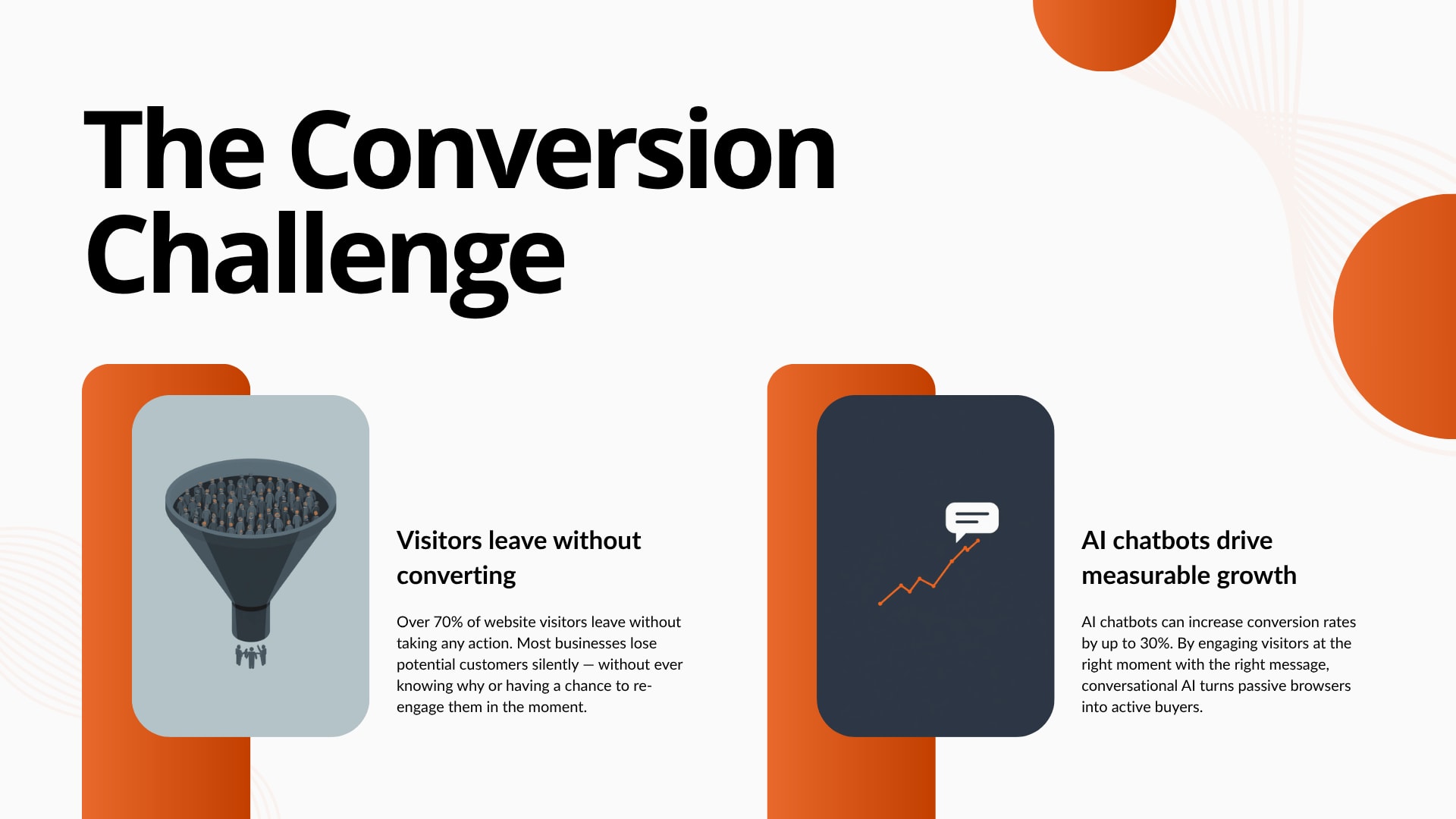
Many websites lose potential customers within the first few seconds.
The problem isn't always the product or service.
Often, visitors simply cannot find answers quickly enough.
Imagine a visitor landing on a software company's pricing page late at night. They have questions about integrations, support, and implementation. Without immediate assistance, they may leave and visit a competitor instead.
An AI chatbot changes this experience completely.
Instead of waiting for a human representative, the chatbot immediately starts the conversation.
"Hi! Looking for the right plan? I can help you compare options."
That single interaction keeps the visitor engaged.
As the conversation continues, the chatbot collects information such as:
Company size
Industry
Business goals
Budget
Timeline
Required features
Rather than overwhelming visitors with dozens of pages, the chatbot provides personalized recommendations.
This creates a smoother buying journey.
Businesses often notice improvements in:
Lead generation
Demo bookings
Contact form submissions
Average session duration
Customer satisfaction
Sales-qualified leads
The biggest advantage is availability.
Visitors can receive assistance 24 hours a day without waiting for office hours.
Why do most websites lose potential customers?
AI Chatbots That Actually Convert Visitors solve many of the reasons websites lose customers. Slow response times, confusing navigation, unanswered questions, and complicated forms often cause visitors to leave before converting.
Many businesses spend thousands of dollars on SEO and paid advertising.
Generating traffic isn't usually the biggest challenge.
Keeping visitors engaged is.
Some of the most common reasons visitors leave include:
They cannot find pricing.
Nobody responds quickly.
Navigation feels confusing.
Contact forms are too long.
Information is outdated.
They aren't sure which product fits their needs.
Support is unavailable after business hours.
Consider a visitor looking for marketing automation software.
Within two minutes they may ask:
Does it integrate with CRM?
Can it connect with WhatsApp?
Is onboarding included?
What's the monthly cost?
Is there a free trial?
If those questions remain unanswered, the visitor leaves.
An intelligent AI chatbot removes these barriers immediately.
What makes visitors trust AI conversations?
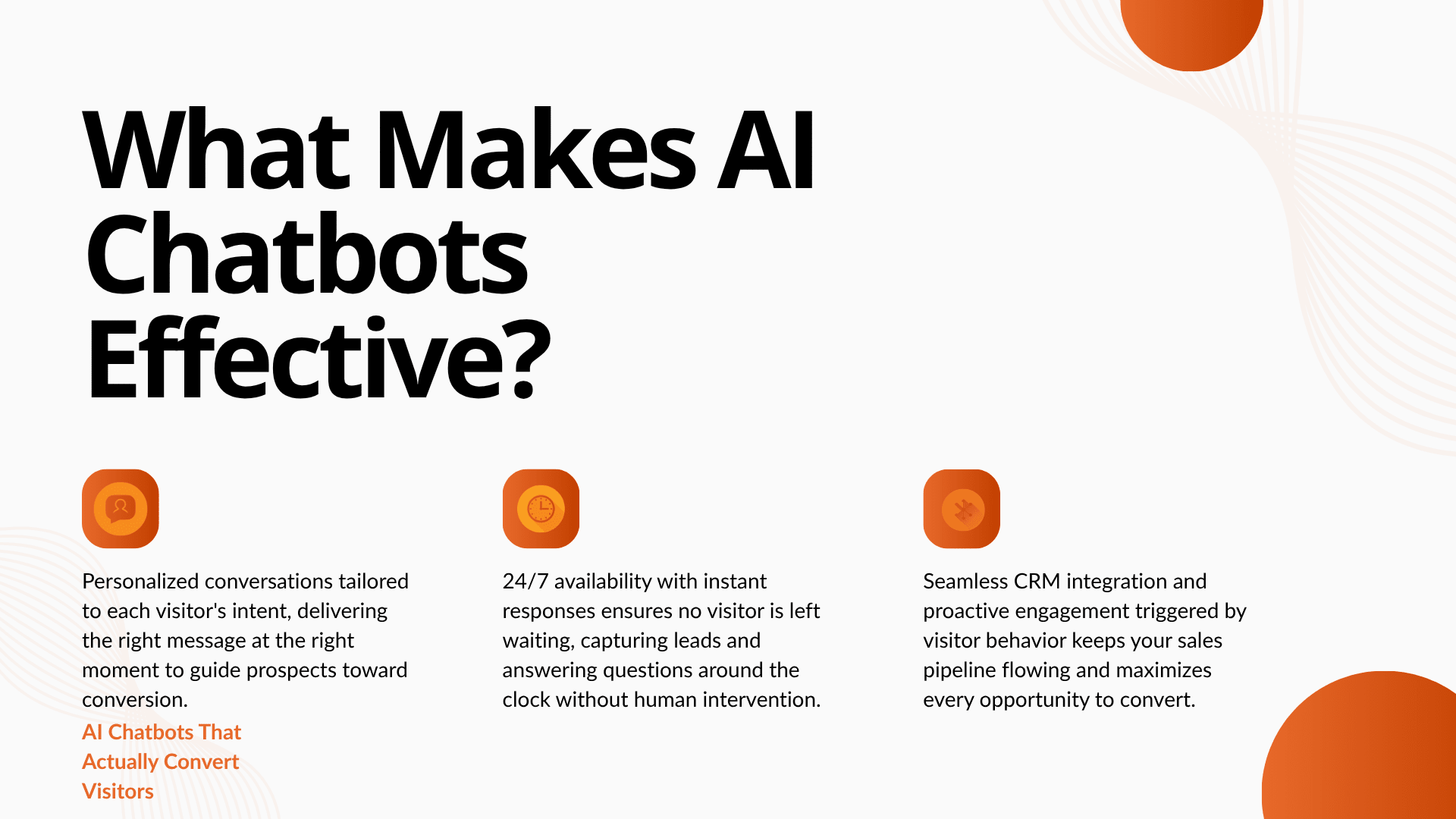
Trust develops when chatbot interactions feel helpful rather than robotic.
Visitors appreciate chatbots that:
Respond naturally.
Understand context.
Remember previous questions.
Recommend relevant resources.
Avoid repetitive answers.
Clearly identify when human assistance is needed.
Businesses sometimes make the mistake of forcing every conversation through automation.
The best AI chatbots know when to transfer complex requests to a live representative.
That combination of automation and human support creates a better customer experience.
Which visitor questions should every chatbot answer?
Before deploying any chatbot, businesses should identify the questions customers ask most frequently.
Examples include:
Pricing information
Product comparisons
Delivery timelines
Refund policy
Integrations
Appointment booking
Business hours
Technical support
Service availability
Contact details
Answering these questions instantly reduces friction and keeps visitors engaged.
Why is response time critical for conversions?
Research consistently shows that people expect immediate answers online.
Every extra minute spent waiting increases the chance that visitors will leave.
Fast responses improve:
Customer confidence
User experience
Time spent on site
Lead quality
Conversion rates
Unlike traditional email support, AI chatbots can respond within seconds regardless of the number of simultaneous conversations.
How does an AI website chatbot qualify leads automatically?
AI Chatbots That Actually Convert Visitors automatically qualify leads by collecting relevant information, identifying customer intent, and directing high-quality prospects to the right sales or support team without requiring manual intervention.
Lead qualification traditionally requires multiple emails or phone calls.
AI simplifies this process.
Instead of asking every visitor to complete lengthy forms, the chatbot creates a conversational experience.
Example conversation:
Visitor:
"I need a chatbot for my ecommerce store."
Chatbot:
"Great! Approximately how many monthly website visitors do you receive?"
After receiving the answer, the chatbot continues gathering useful information.
Questions may include:
Industry
Team size
Current software
Budget range
Primary business goals
Required integrations
By the end of the conversation, the business already understands whether the visitor is ready for a sales call.
This improves sales efficiency because representatives spend more time with qualified prospects instead of manually filtering every inquiry.
Signs of a high-quality lead
AI chatbots can identify buying intent by recognizing behaviors such as:
Visiting pricing pages
Requesting demonstrations
Comparing plans
Asking implementation questions
Downloading resources
Returning multiple times
Spending significant time on product pages
These signals help prioritize follow-up efforts.
AI chatbot vs traditional live chat
AI ChatbotsTraditional Live ChatAvailable 24/7Limited by office hoursInstant responsesMay involve waitingHandles multiple visitors simultaneouslyLimited by agent capacityAutomatically qualifies leadsUsually manual qualificationConsistent responsesDepends on individual agentsLower long-term operating costsHigher staffing costsIntegrates with CRM and automationOften requires manual updates
For businesses aiming to improve visitor engagement without increasing support costs, AI-powered chatbots provide a scalable solution while still allowing seamless handoff to human agents when necessary.
How can businesses implement AI Chatbots That Actually Convert Visitors successfully?
AI Chatbots That Actually Convert Visitors perform best when they are implemented with clear business goals, quality training data, personalized conversations, and continuous optimization. Businesses that treat chatbots as part of their customer journey—not just another website widget—typically see higher engagement, better lead quality, and increased conversions.
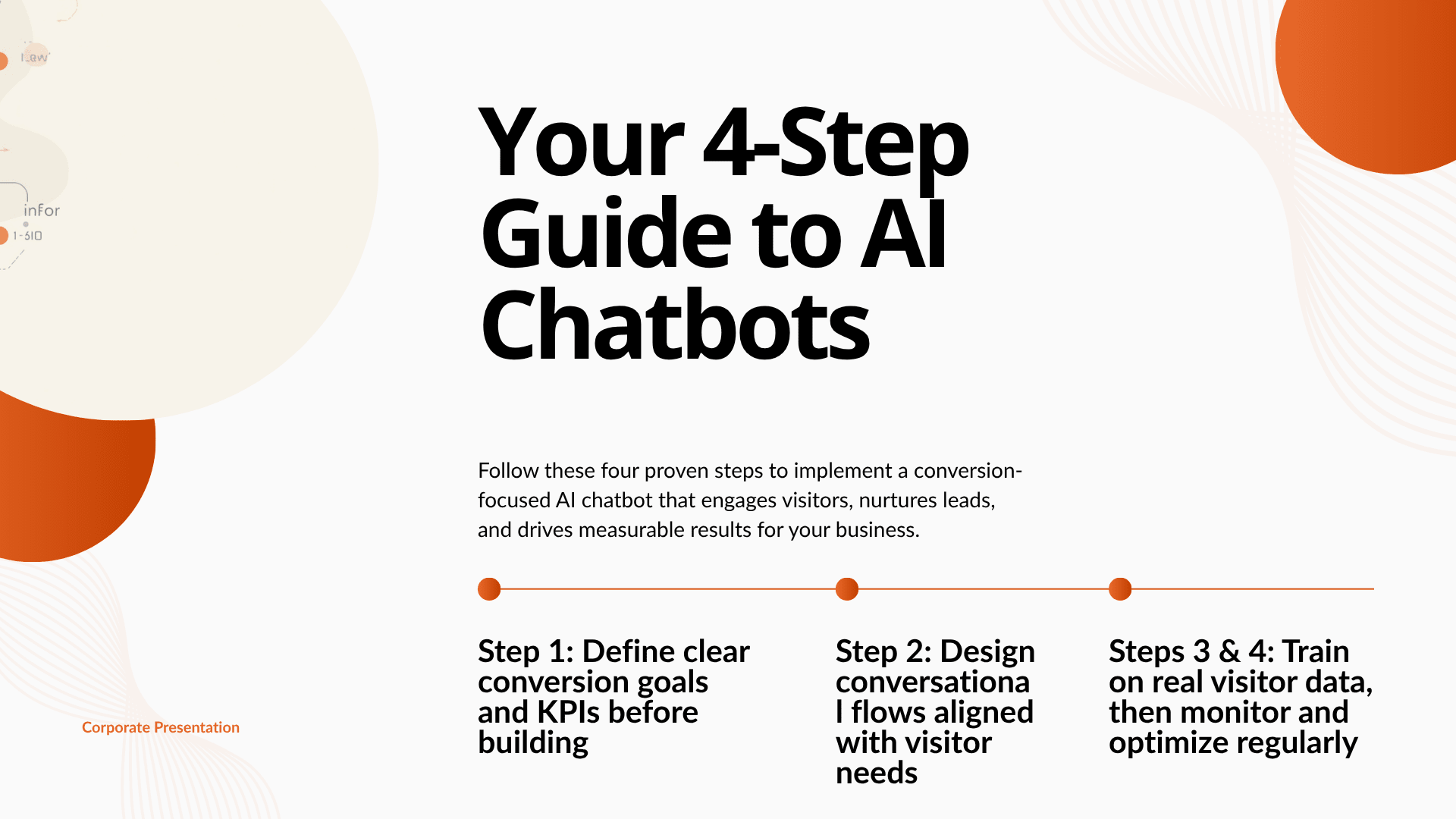
Installing a chatbot takes only a few minutes.
Building one that consistently converts visitors into customers requires planning.
Many companies expect immediate results after adding a chatbot to their website. When conversions don't improve, they assume chatbots don't work.
The real issue is usually poor implementation rather than poor technology.
Successful businesses first identify what they want the chatbot to achieve.
Common objectives include:
Capturing more qualified leads
Booking demonstrations
Increasing online sales
Answering FAQs
Reducing support workload
Helping visitors choose products
Scheduling appointments
Once the objective is clear, every chatbot conversation should support that goal.
What information should businesses use to train an AI chatbot?
A chatbot is only as helpful as the information it understands.
Businesses should train AI using accurate and up-to-date content from trusted internal resources.
Examples include:
Product pages
Service pages
Knowledge base articles
Pricing information
Frequently asked questions
Return policies
Shipping details
Case studies
Documentation
Company blogs
For example, a visitor asking about payment methods should receive a direct answer instead of being redirected through several pages.
When the chatbot understands company-specific information, conversations become more accurate and useful.
Businesses using platforms like YourSiteChat can train their chatbot directly using website content, allowing the assistant to answer customer questions naturally without manually creating hundreds of responses.
How can businesses personalize chatbot conversations?
Personalization makes visitors feel understood rather than treated like anonymous users.
Instead of asking generic questions, intelligent chatbots adapt based on visitor behavior.
Examples include:
Returning visitor
"Welcome back! Would you like to continue where you left off?"
Pricing page visitor
"Looking for the best plan? I can help compare available options."
Ecommerce visitor
"Need help choosing the right product?"
Small personalized interactions often increase engagement because they match the visitor's intent.
Personalization may include:
Visitor location
Previous conversations
Pages viewed
Device type
Purchase history
Referral source
Industry
Relevant conversations naturally produce better conversion rates.
What common chatbot mistakes reduce conversions?
Many businesses unknowingly create chatbots that frustrate visitors.
Common mistakes include:
Asking too many questions immediately
Using robotic language
Hiding human support
Providing generic responses
Offering too many menu options
Interrupting visitors too frequently
Failing to understand natural language
Not updating chatbot knowledge
Consider a chatbot that asks visitors to complete eight questions before answering a simple pricing request.
Most people will leave.
Successful AI conversations feel natural.
Visitors receive value first.
Questions come later.
When should a chatbot transfer conversations to a human?
Even the most advanced conversational AI cannot solve every situation.
Human support remains important for:
Complex technical issues
Billing disputes
Enterprise negotiations
Complaint resolution
Legal questions
Custom implementation requests
A good chatbot recognizes these situations quickly instead of repeating the same response.
Visitors appreciate honesty.
Rather than pretending to know everything, intelligent chatbots simply say:
"This question requires one of our specialists. Let me connect you."
That seamless transition improves customer trust.
Which chatbot features actually increase conversions?
AI Chatbots That Actually Convert Visitors rely on practical features that remove obstacles from the buying journey. Instead of overwhelming visitors with unnecessary functionality, successful chatbots focus on fast responses, personalization, lead qualification, and seamless automation that helps users achieve their goals.
Businesses sometimes choose chatbot software based on the number of available features.
A better approach is selecting features that directly improve customer experience.
The highest-converting AI chatbots usually include:
Essential conversion features
Instant answers
Natural language understanding
Lead qualification
CRM integration
Appointment booking
Live agent handoff
Knowledge base integration
Personalized recommendations
Multi-language support
Analytics dashboard
These features reduce friction throughout the customer journey.
How does proactive messaging improve engagement?
Waiting for visitors to ask questions often means losing opportunities.
Proactive chatbots begin conversations based on visitor behavior.
Examples include:
Spending over one minute on a pricing page
Visiting multiple product pages
Returning for a second visit
Showing exit intent
Browsing high-value services
Instead of interrupting randomly, proactive messages appear at meaningful moments.
For example:
"Can we help you compare our plans?"
or
"Would you like a quick recommendation based on your business?"
These conversations feel helpful rather than intrusive.
How does AI improve customer support?
Support teams often answer the same questions hundreds of times every month.
Examples include:
Where is my order?
How much does it cost?
What payment methods are available?
Can I schedule a demo?
How long does implementation take?
AI handles these repetitive conversations instantly.
Human representatives then focus on situations requiring experience, negotiation, or technical expertise.
This improves:
Response speed
Customer satisfaction
Team productivity
Operating efficiency
Support agents also experience less burnout because they spend less time answering repetitive questions.
Can AI chatbots help ecommerce businesses?
Absolutely.
Ecommerce stores use AI chatbots throughout the buying journey.
Examples include:
Product recommendations
Size guidance
Inventory checks
Shipping estimates
Discount notifications
Order tracking
Cart recovery
Cross-selling
Upselling
Imagine a customer searching for running shoes.
Instead of scrolling through hundreds of products, the chatbot asks:
Budget?
Preferred brand?
Running surface?
Shoe size?
Within seconds, the visitor receives personalized recommendations.
That creates a faster shopping experience while increasing purchase likelihood.
How do AI chatbots support B2B businesses?
B2B sales cycles are usually longer than ecommerce purchases.
Visitors often require:
Product demonstrations
Consultation calls
Technical documentation
ROI discussions
Integration details
Case studies
AI chatbots simplify this process by identifying buyer intent early.
For example, a software company can automatically:
Book discovery meetings
Collect project requirements
Recommend appropriate pricing
Share implementation guides
Route enterprise leads directly to sales specialists
This reduces delays between initial interest and meaningful conversations.
How can businesses measure chatbot success?
Installing a chatbot is only the first step.
Businesses should regularly measure performance using meaningful metrics.
Important KPIs include:
Conversion rate
Qualified leads generated
Chat engagement rate
Average response time
Customer satisfaction score
Bounce rate reduction
Demo bookings
Revenue influenced by chatbot
Conversation completion rate
Human handoff rate
Analytics reveal where conversations succeed and where improvements are needed.
Small optimizations often produce significant increases in conversion rates over time.
Continuous improvement leads to better results
High-performing AI chatbots are never considered "finished."
Businesses regularly:
Review conversation history
Update knowledge bases
Add new FAQs
Improve response quality
Test different welcome messages
Refine lead qualification questions
Monitor visitor behavior
Improve conversation flows