Online shopping has changed dramatically over the last few years. Customers no longer want to wait for email replies, search through long FAQ pages, or stay on hold with support teams. They expect instant answers, personalized recommendations, and smooth shopping experiences at any time of the day. This shift has pushed businesses to adopt smarter technologies, and one solution is leading the transformation: AI Chatbots for Online Stores.
From answering product questions to recovering abandoned carts, modern AI chatbots have become an essential part of ecommerce operations. Whether a business sells clothing, electronics, cosmetics, or digital products, an intelligent chatbot can improve customer engagement and increase revenue while reducing operational costs.
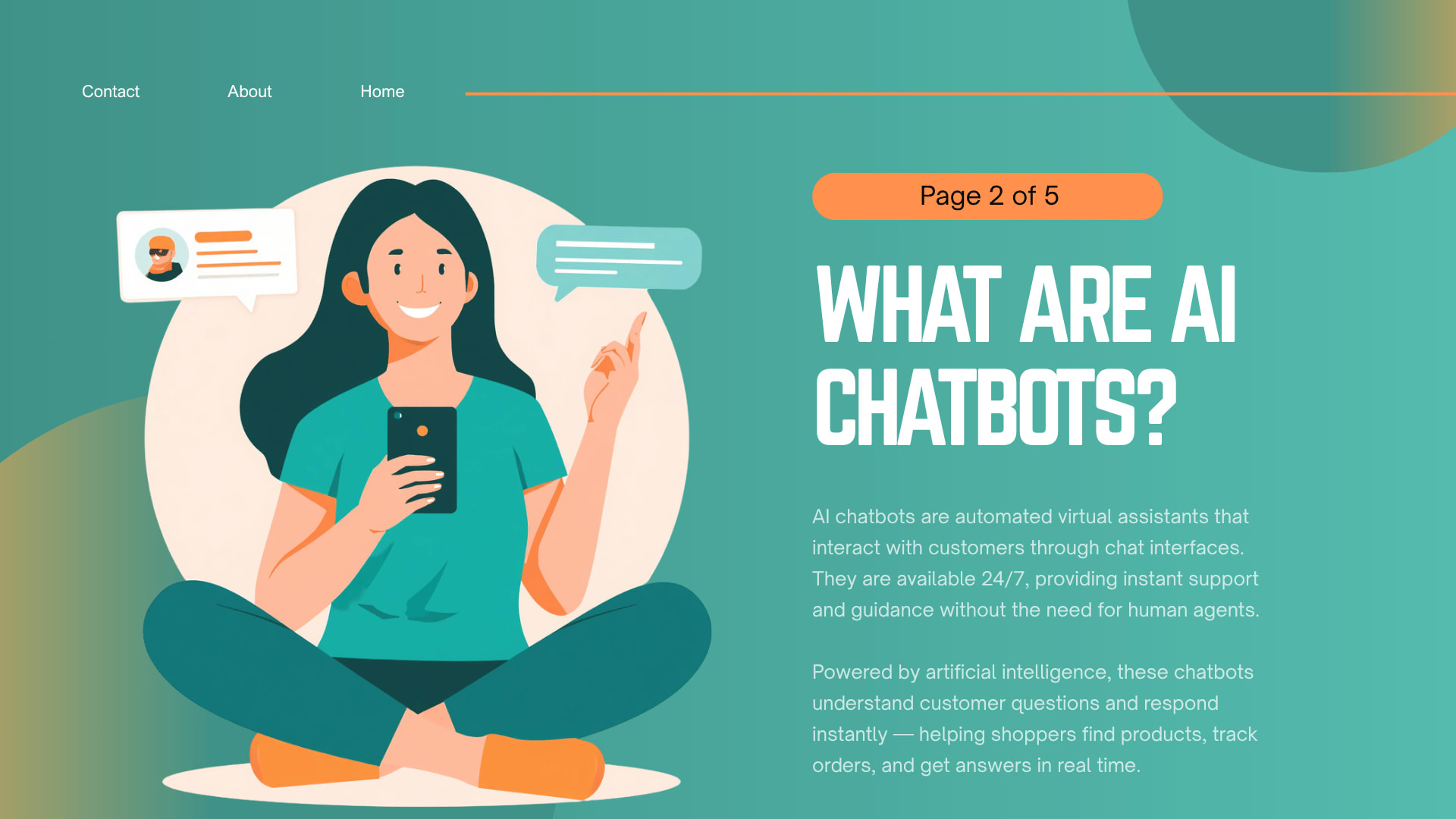
An AI chatbot for ecommerce acts as a virtual assistant that communicates with shoppers in real time. It can guide customers through product catalogs, provide order updates, solve common issues, and even recommend items based on previous behavior.
Businesses across the world are investing in conversational AI because it delivers measurable results. According to research from IBM's guide to conversational AI and Shopify's ecommerce insights, AI-powered customer support and shopping assistants are becoming central to modern ecommerce strategies.
This guide explores how AI Chatbots for Online Stores work, their benefits, implementation strategies, common mistakes, and the future of AI-driven ecommerce.
AI Chatbots for Online Stores
How do AI Chatbots for Online Stores change the way customers shop online?
AI Chatbots for Online Stores transform shopping experiences by providing instant support, personalized recommendations, and round-the-clock assistance. Instead of waiting for human agents, customers receive immediate responses that help them discover products, complete purchases, and solve issues faster.
Traditional ecommerce websites depended heavily on static menus, search bars, and email support. Customers had to browse multiple pages before finding what they needed. Today, an AI chatbot for ecommerce acts like a digital store assistant that interacts with shoppers naturally.
Modern chatbots can:
Answer customer questions instantly.
Suggest relevant products.
Track orders.
Offer discount codes.
Help customers complete payments.
Collect leads.
Support multiple languages.
Reduce customer support workload.
As online competition grows, businesses need smarter ways to engage visitors. AI customer support chatbots make shopping easier while helping stores operate more efficiently.
What makes AI chatbots different from traditional customer support systems?
AI Chatbots for Online Stores differ from traditional support systems because they understand customer intent, automate conversations, and remain available 24/7. Unlike email support or simple live chat tools, AI-powered systems can learn from interactions and provide personalized assistance.
Traditional support methods often involve:
Long response times.
Limited working hours.
High staffing costs.
Repetitive manual tasks.
Difficulty handling large customer volumes.
AI-powered ecommerce support solves many of these problems through automation.
How do AI-powered conversations work in ecommerce?
AI chatbots use technologies such as:
Natural language processing (NLP).
Machine learning.
Customer behavior analysis.
Knowledge databases.
Website training models.
When a customer asks, "Which running shoes are best for beginners?" the chatbot does not simply match keywords. It analyzes intent, product data, previous interactions, and inventory information to deliver relevant suggestions.
Why are online businesses replacing static support systems with AI chatbots?
Businesses are adopting conversational AI for ecommerce because customers expect faster experiences.
Major reasons include:
Rising customer expectations.
Increasing support costs.
Higher website traffic.
Demand for personalized experiences.
Growth in mobile shopping.
Instead of hiring large customer service teams, many brands combine human support with intelligent automation.
Why are customers increasingly expecting instant responses from online stores?
Customers expect immediate answers because ecommerce has become highly competitive. AI Chatbots for Online Stores meet these expectations by reducing waiting times and offering support whenever shoppers need assistance.
Consumers have become accustomed to instant services across:
Food delivery apps.
Online marketplaces.
Streaming platforms.
Banking apps.
Social media.
A shopper who waits several hours for a response may simply buy from another website.
How has customer behavior changed in modern ecommerce?
Today's customers:
Compare products quickly.
Shop across devices.
Expect personalized experiences.
Prefer self-service support.
Want real-time order updates.
Fast communication is no longer optional.
What problems do shoppers face when support is slow?
Slow support often leads to:
Cart abandonment.
Negative reviews.
Lost trust.
Reduced conversions.
Lower customer retention.
For online stores, every unanswered question represents potential lost revenue.
Which types of online stores benefit the most from AI chatbots?
Almost every ecommerce business can benefit from AI Chatbots for Online Stores, but stores with large catalogs, frequent customer questions, and high order volumes gain the most value.
Industries seeing strong adoption include:
Fashion and apparel.
Electronics.
Beauty products.
Home decor.
Healthcare products.
Grocery delivery.
Educational products.
Digital subscriptions.
Can small ecommerce businesses use AI chatbots effectively?
Small businesses often assume AI tools are expensive, but modern platforms have changed that.
Small online stores can use chatbots to:
Answer FAQs.
Capture leads.
Handle order updates.
Recommend products.
Reduce support costs.
Automation allows smaller brands to compete with larger companies.
How do enterprise brands use AI shopping assistants at scale?
Large retailers use AI shopping assistants for:
Customer segmentation.
Product recommendations.
Multilingual support.
Marketing campaigns.
Customer retention programs.
Advanced analytics.
The same technology that powers major brands is increasingly accessible to growing businesses.
Can AI Chatbots for Online Stores increase sales, support, and customer engagement?
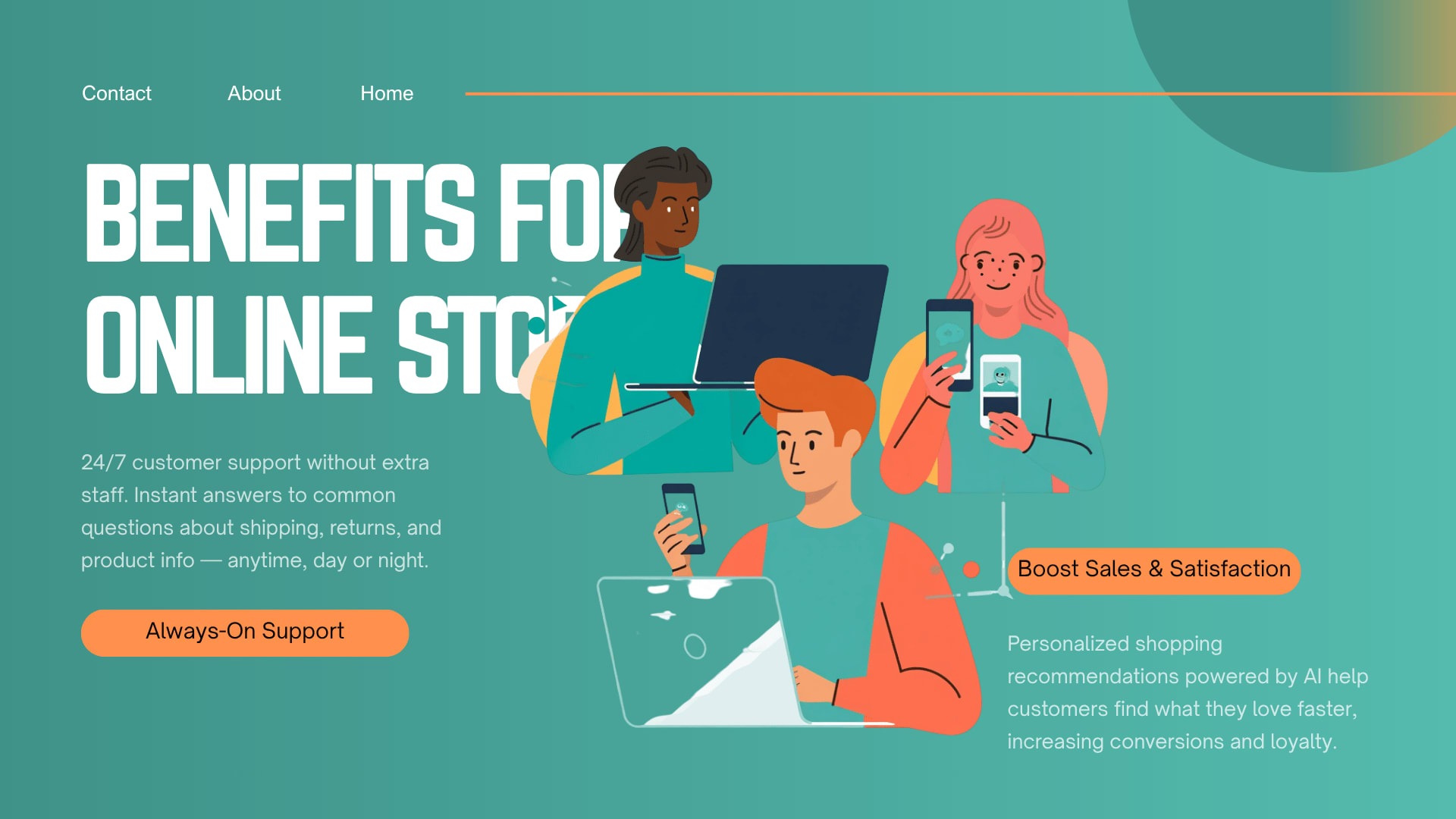
AI Chatbots for Online Stores can significantly increase sales and customer engagement by guiding shoppers throughout the buying journey. They reduce friction, answer objections, and encourage customers to complete purchases.
Businesses use ecommerce chatbots to improve:
Conversion rates.
Customer satisfaction.
Average order value.
Repeat purchases.
Lead generation.
How do AI chatbots help customers find the right products?
AI chatbots improve product discovery by acting as personal shopping assistants. Instead of forcing users to browse dozens of pages, they ask relevant questions and recommend suitable products.
For example:
A customer visits an online cosmetics store and asks:
"Which moisturizer is suitable for sensitive skin?"
The chatbot can instantly recommend products based on ingredients, reviews, and customer preferences.
How does an AI shopping assistant recommend products?
AI shopping assistants analyze:
Browsing behavior.
Purchase history.
Search queries.
Product categories.
Customer preferences.
This creates highly personalized experiences.
Can ecommerce chatbots personalize shopping experiences?
Yes. Personalized recommendations can increase engagement and customer loyalty.
Examples include:
Suggested products.
Bundle offers.
Seasonal promotions.
Location-based recommendations.
Loyalty rewards.
How do AI customer support chatbots reduce abandoned carts?
AI Chatbots for Online Stores reduce cart abandonment by answering customer questions at the exact moment uncertainty appears.
Common concerns include:
Shipping fees.
Delivery dates.
Return policies.
Payment security.
Product availability.
What questions do shoppers usually ask before leaving a website?
Customers often ask:
Is this item in stock?
How long is delivery?
Can I return the product?
Is cash on delivery available?
Are there discounts?
Instant answers remove hesitation.
How can AI sales chatbots recover lost revenue?
AI sales chatbots can:
Send reminders.
Offer coupons.
Recommend alternatives.
Highlight urgency.
Follow up automatically.
A timely message can turn abandoned carts into completed purchases.
Can AI chatbots improve customer engagement after a purchase?
AI Chatbots for Online Stores continue helping customers after checkout by providing updates, collecting feedback, and encouraging future purchases.
Post-purchase engagement includes:
Order tracking.
Shipping notifications.
Feedback collection.
Return support.
Cross-selling.
How do chatbots handle order tracking and delivery updates?
Customers no longer need to contact support teams repeatedly.
The chatbot can instantly provide:
Order status.
Shipping updates.
Delivery estimates.
Tracking links.
Can an AI virtual assistant encourage repeat purchases?
Yes.
Chatbots can recommend:
Complementary products.
Membership programs.
Refill reminders.
Personalized offers.
Strong post-purchase communication improves retention.
How do AI chatbots compare with traditional live chat systems?
AI Chatbots for Online Stores provide scalability, automation, and continuous support, while traditional live chat depends entirely on human agents.
AI ChatbotsTraditional Live Chat24/7 supportLimited business hoursInstant repliesResponse delaysAutomated sales assistanceManual handlingLower operational costsHigher staffing costsHandles thousands of conversationsLimited capacityPersonalized recommendationsHuman-dependent
Which option is more cost-effective for online stores?
For most businesses, AI-powered ecommerce support reduces costs because repetitive tasks become automated.
Companies save money on:
Support staffing.
Training.
Infrastructure.
Customer service operations.
When should businesses combine human agents with AI customer service?
Hybrid models work best.
AI handles:
FAQs.
Tracking.
Product discovery.
Human agents manage:
Complex disputes.
Refund negotiations.
Sensitive situations.
What are the biggest benefits of AI-powered ecommerce support?
AI Chatbots for Online Stores provide faster service, better customer engagement, lower costs, and stronger sales performance.
Key benefits include:
Round-the-clock support.
Faster responses.
Personalized recommendations.
Reduced support costs.
Better customer satisfaction.
Higher conversion rates.
Scalable customer service.
How do chatbots provide 24/7 customer support?
Unlike human teams, AI customer support systems never sleep.
Customers can receive assistance:
Late at night.
On weekends.
During holidays.
Across time zones.
Can conversational AI reduce operational costs?
Businesses often spend significant budgets on repetitive support tasks.
Automation reduces expenses by:
Handling common questions.
Managing order inquiries.
Assisting multiple customers simultaneously.
How do retail AI chatbots improve customer satisfaction?
Satisfied customers typically experience:
Faster support.
Better recommendations.
Reduced frustration.
Easier navigation.
This leads to stronger loyalty and positive reviews.
How can businesses implement AI Chatbots for Online Stores successfully?
Businesses can implement AI Chatbots for Online Stores by identifying customer needs, selecting the right platform, training the chatbot properly, and continuously improving performance.
Many companies rush implementation and later struggle with poor results. A structured approach delivers better outcomes.
What features should businesses look for in an AI chatbot for ecommerce?
The best AI chatbot for ecommerce should support customer service, sales automation, analytics, and seamless integrations.
Important features include:
Product recommendations.
Website training.
CRM integration.
Payment support.
Analytics dashboard.
Multilingual support.
Lead capture.
Order tracking.
Does the chatbot support product recommendations?
Recommendation engines help customers discover relevant products and increase order value.
Can it integrate with payment gateways and CRM systems?
Strong integrations improve efficiency.
Look for support with:
Shopify.
WooCommerce.
Payment gateways.
CRM platforms.
Email marketing tools.
How important are multilingual capabilities?
Global ecommerce brands benefit greatly from multilingual support because customers prefer shopping in their native language.
Does the chatbot provide analytics and customer insights?
Analytics reveal:
Frequently asked questions.
Customer behavior.
Sales trends.
Conversion opportunities.
How can an online store set up an ecommerce chatbot step by step?
Businesses can successfully deploy AI Chatbots for Online Stores by following a structured implementation process.
Step 1: How should businesses define their chatbot goals?
Identify objectives such as:
Increasing sales.
Improving support.
Reducing cart abandonment.
Generating leads.
Clear goals shape the chatbot strategy.
Step 2: Which customer questions should be automated first?
Start with repetitive questions:
Shipping.
Returns.
Product availability.
Payments.
Delivery timelines.
Step 3: How can store owners train an AI chatbot using website content?
Modern solutions simplify training by using:
Product pages.
FAQs.
Blog content.
Support documents.
Platforms such as YourSiteChat allow businesses to train chatbots using website content, reducing manual setup.
Step 4: How should businesses test chatbot conversations?
Before launch:
Simulate customer questions.
Test product recommendations.
Verify checkout assistance.
Review edge cases.
Improve weak responses.
Step 5: How can performance be measured after launch?
Track metrics such as:
Conversion rates.
Customer satisfaction.
Resolution time.
Engagement rates.
Sales growth.
Continuous optimization is essential.
Why are many ecommerce businesses choosing platforms like YourSiteChat?
Businesses increasingly choose chatbot platforms because they simplify ecommerce automation, customer support, and lead generation. Solutions such as YourSiteChat help online stores deploy AI-powered conversations without requiring advanced technical expertise.
Modern ecommerce teams need tools that work quickly and scale with growth.
How does YourSiteChat help automate ecommerce customer support?
YourSiteChat supports:
Automated responses.
Website-based AI training.
Lead generation.
Customer support.
Product assistance.
Sales automation.
Businesses can embed the chatbot into their websites and start helping customers around the clock.
Can YourSiteChat assist with sales, lead generation, and customer engagement?
Yes. AI chatbots are no longer limited to answering questions.
They can:
Capture leads.
Qualify prospects.
Recommend products.
Increase conversions.
Improve customer retention.
How does website-based AI training simplify chatbot deployment?
Traditional chatbot systems required extensive manual configuration.
Modern solutions train directly from:
Website pages.
Product catalogs.
Help centers.
Documentation.
This significantly reduces setup time.
What common mistakes do online stores make when implementing AI chatbots?
Many businesses fail to achieve good results because they implement AI Chatbots for Online Stores without a proper strategy.
Common mistakes include:
Poor chatbot training.
Over-automation.
Generic responses.
Ignoring analytics.
Lack of human support.
Why do some businesses automate too much too quickly?
Customers still need human assistance for complex issues.
Automating everything can create:
Frustration.
Customer dissatisfaction.
Lower trust.
How can poor chatbot training hurt customer experience?
A chatbot trained on incomplete information may:
Give incorrect answers.
Recommend irrelevant products.
Fail to understand customer intent.
Quality training data matters.
Why should businesses avoid generic responses?
Customers expect personalized interactions.
Generic replies often feel robotic and reduce engagement.
What does the future of AI Chatbots for Online Stores look like?
The future of AI Chatbots for Online Stores points toward deeper personalization, smarter automation, and seamless customer experiences across websites, messaging apps, and digital marketplaces.
AI capabilities continue to evolve rapidly.
Industry trends include:
Voice-enabled shopping.
Predictive recommendations.
Hyper-personalization.
Multichannel support.
Emotion-aware conversations.
Will AI shopping assistants become more personalized?
Future AI shopping assistants will understand:
Customer preferences.
Shopping habits.
Seasonal behavior.
Purchase intent.
Personalization will become increasingly precise.
How will conversational AI influence ecommerce growth?
Conversational AI for ecommerce is expected to drive:
Higher conversion rates.
Better customer retention.
Faster support.
More efficient operations.
Businesses that adopt AI early may gain a competitive advantage.
Can AI customer support replace human agents completely?
No. AI customer support will continue to automate repetitive work, but human expertise remains valuable for complex decisions and emotional interactions.
The strongest ecommerce strategies combine both.
What trends should online retailers watch over the next few years?
Retailers should monitor:
AI-driven search.
Smart recommendations.
Generative AI assistants.
Omnichannel experiences.
Predictive customer service.
Advanced ecommerce automation.
The role of AI Chatbots for Online Stores will continue expanding as customer expectations evolve. Businesses that invest in intelligent customer experiences today are positioning themselves for the next phase of ecommerce growth.